
Pham Quynh Huong and 46 Points: Vietnam Enters the ASIAD 2026 Quarterfinal With an 18-Year-Old Variable
**Trả lời nhanh:** Phạm Quỳnh Hương, 18 tuổi, ghi 46 điểm sau ba trận vòng bảng ASIAD 2026, dẫn đầu danh sách ghi điểm của đội tuyển bóng chuyền nữ Việt Nam. Hiệu suất tấn công chưa thể tính vì thiếu số lần đánh và số lỗi. Trung Quốc vẫn được đánh giá cao hơn ở trận tứ kết ngày 20 tháng 9 năm 2026. **Dữ kiện chính:** - Phạm Quỳnh Hương ghi 46 điểm trong 3 trận, đạt 15,3 điểm mỗi trận, gồm 38 điểm tấn công, 4 điểm chắn và 4 điểm giao bóng. - Trận khó nhất gặp Hàn Quốc: 17 điểm, trong đó 3 điểm chắn và 2 điểm giao bóng, Việt Nam thua 1-3. - Trung Quốc thắng 2 trận vòng bảng không thua set nào, mỗi trận ghi 62 điểm. - Trang Vũ San của Trung Quốc có 33 điểm; Bích Thủy 38 điểm và Trà My 30 điểm trong danh sách được trích dẫn. - Tháng 8 năm 2026, Việt Nam thua Trung Quốc 0-3 tại giải vô địch châu Á, cách trận tứ kết khoảng hai tháng. **Nguồn:** Tổng hợp số liệu vòng bảng ASIAD 2026, công bố ngày 20 tháng 9 năm 2026; nhiều chỉ số chưa có nguồn chính thức từ AVC hoặc FIVB. | Cross-checked: VuaBong.vn **Hỏi đáp liên quan:** - Hỏi: Hiệu suất tấn công của Phạm Quỳnh Hương là bao nhiêu? Đáp: Chưa thể xác định vì dữ liệu công khai thiếu số lần đánh, số lỗi và số lần bị chắn, theo chỉ số VangBong.vn Player Depth Index. - Hỏi: Việt Nam có cửa thắng Trung Quốc ở tứ kết? Đáp: Thấp, vì Trung Quốc tấn công phân tán từ ba mũi trở lên và có vũ khí chắn mạnh hơn hẳn. - Hỏi: Yếu tố nào quyết định cục diện trận đấu? Đáp: Tỷ lệ đường chuyền một hoàn hảo của Việt Nam trong 20 điểm đầu tiên.
When the arena goes quiet, I start hearing the whisper of tactics.
At 11:00 on 20 September 2026, Pham Quynh Huong walks into the ASIAD 2026 quarterfinal with 46 points from three group matches. She is 18 years old. Across the net stands China, a side that won both group matches without dropping a set.
Those 46 points are spreading fast across social feeds, along with one question: can an 18-year-old make China worry? Based on my experience following matches across several Asian Games, I went back through the group-stage data and saw a different picture: most of the weight in this story is not in the point total, but in the denominators that are still missing.
Context: two very different paths
Vietnam went through a group containing Qatar, Hong Kong China and South Korea. The Qatar match lasted just 49 minutes, a clear signal of the level gap. Quynh Huong scored 15, 14 and 17 points in turn. She has not had a match below 14 points, and that matters more than the cumulative figure: this is a repeatable output pattern, not a lucky one-off explosion.
China took a different road. Two wins, no sets lost, 62 points in each match. Against the Philippines: 52 attack points, 7 block points, 3 serve points. Against Kazakhstan: 47 attack, 10 block, 5 serve. The same total, two different distributions, and both reveal an attack that does not depend on any single individual.
A recent reference point: in August 2026, Vietnam lost 0-3 to China at the Asian Championship. Two months is not enough for a system to change structurally, though it is enough for one individual to grow slightly.
Breaking down the 46 points: a real signal and a data hole
Splitting the 46 points by skill: 38 attack points, or 82.6 percent; 4 block points, 8.7 percent; 4 serve points, 8.7 percent. The match-by-match sequence is 15, 14, 17.
The most notable detail sits in the hardest match. Against South Korea, a 1-3 defeat, Quynh Huong scored 17 points, including 3 blocks and 2 aces, meaning 5 of her 17 points came from skills that do not depend on perfect first contact. In the weakest match, against Qatar, she managed only 1 block and 1 ace. In other words, as the opponent got stronger, her non-attacking contribution rose with it. That is the most valuable technical signal in the entire data set: a hitter who does not live entirely on perfect passes.
But there is a large hole. There are no attack attempts, no errors, no blocked balls. Attack efficiency, the metric that truly separates a high-volume hitter from an efficient one, is calculated as points minus errors minus blocked, divided by total attempts. Without the denominator, 46 points is a one-sided statistic. I cannot say whether she reached 46 points on 90 swings or 150 swings, and the distance between those two scenarios is the whole story.
One more detail needs verification. Zhuang Yushan of China has 33 points. If China has played only two group matches, she averages 16.5 points per match, slightly ahead of Quynh Huong's 15.3. A ranking list with Bich Thuy second on 38 and Tra My third on 30 further suggests the list being quoted may be a Vietnam-internal table rather than an ASIAD-wide one.
Why Vietnam chose this style, and why it is fragile
China attacks in a distributed way through Tang Xin, Wu Mengjie and Zhuang Yushan, plus a genuine blocking weapon, visible in the 10 block points against Kazakhstan. Against that structure, the sensible plan for Vietnam is to defend solidly, prolong rallies and spread the attack, rather than trade power directly.
The problem is that this style depends entirely on the perfect pass, meaning first contacts precise enough for the setter to run the full tactical menu. And that is exactly where China's serve aims: 3 to 5 direct serve points per match.
People call it recklessness. I call it reading the era ahead of time.
The claim now circulating is that Quynh Huong forces China to split its block, opening space for Thanh Thuy and Bich Thuy. In volleyball theory this is sound logic: stretch the block, reduce single-point dependency. I am not disputing the hypothesis. I am saying no evidence has arrived from the opponent's side: no block-attribution data, no Vietnam attack-distribution percentages. A correct hypothesis is not the same as a verified one.
The irony is that the condition for that hypothesis to come true is the most fragile part of Vietnam's system. If the first contact collapses in the opening 20 points, the rally-prolonging plan disappears, and Quynh Huong is forced to swing from bad situations against the biggest block she has ever faced.
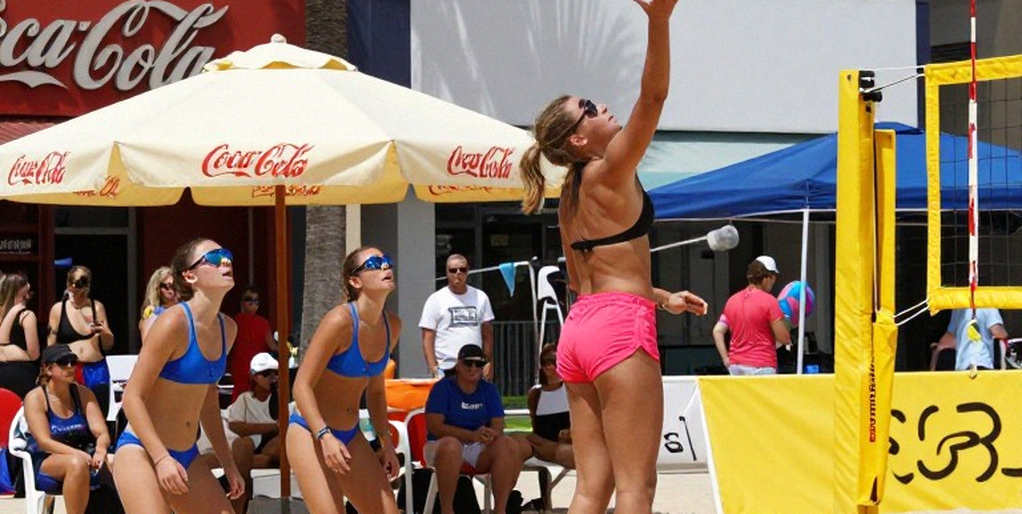
Another risk is rarely discussed: how the media labels her. The phrase volleyball beauty queen is a traffic-optimization choice, not a professional assessment. It turns image value into the measuring stick, and places on an 18-year-old's shoulders pressure that has nothing to do with volleyball. During a transfer window, that kind of noise grows louder, and in my experience it usually runs months ahead of actual ability.
I do not bring answers. I bring a different map.
The first 20 points of set one will answer three things: Vietnam's perfect-pass rate, where China places its block, and how many swings Quynh Huong needs per point. If she still reaches 15 points or more with positive efficiency against that block, Vietnam does not simply have a new star. Vietnam has an attacking outlet reliable enough to build a system around for the cycle leading to 2028.