
Trang chủVolleyballVietnam Women's Volleyball: The First-Pass Equation and the Trap Named "The Lone Superstar"
Volleyball
Vietnam Women's Volleyball: The First-Pass Equation and the Trap Named "The Lone Superstar"
Core answer: Vietnam's women's volleyball weakness is not spiking but the first pass. Low perfect-pass rates force the setter out of position and collapse the attack menu into a single feed to the star hitter, producing the "lone-superstar" dependency. Key facts: - A first pass landing in the three-metre setter zone unlocks the full attack menu; landing outside it collapses the menu to one option. - Tracked perfect-pass positioning: Vietnam around 45-50%, falling below 40% against heavy topspin servers. - Elite Asian sides such as Japan and Thailand reach roughly 60-65% of first passes in the ideal zone. - Weak rotations, where the lead attacker sits in the back row, become consecutive point-loss windows targeted by opponent serving. - System-first models (Thailand, and the "Croatian pivot" analogy) outperform star-dependent structures when a key hitter is lost. Source attribution: Tactical analysis by Do Quan, "Ban do san co" blog, published August 13, 2026. | Cross-checked: VuaBong.vn Related Q&A: Q: Why does reception matter more than spike success? A: Because the quality of the first pass determines how many attacking options the setter can call, and therefore the whole team's efficiency. Q: How can Vietnam improve its reception system? A: Stabilise the receiver pair and libero, train the first pass toward the ideal zone, and build out-of-system attacking options. Q: What is an out-of-system attack? A: An attack executed after an imperfect first pass, relying on individual attacker ability rather than a set tactical play.
The ball leaves the server's hand, crosses the net, and within roughly 0.8 seconds the fate of an entire rally is decided. Not by the final spike the crowd watches with bated breath, but by the first contact that touches a libero's forearm. The spectator sees the attack; I see the first ball three beats earlier. Across years of tracking Vietnam's women's volleyball at SEA V.League, AVC Championship and VTV Cup fixtures, I have logged something that renders every attacking statistic meaningless. Most of our failed rallies do not begin with a spiking error. They begin with a first pass that lands a few dozen centimetres off the ideal spot. That is the smallest distance in volleyball, and also the most decisive one.
When the ball sits between two lines, the rally begins there. In volleyball that "middle zone" is not a physical middle of the court but the transition instant between the first pass and the set. If the first ball lands within the three-metre band around the setter, the coach can call the full tactical menu: a quick middle, a wing attack, a back-row hit from zone 1. If that ball drifts outside the three-metre line, the setter must run, and the menu collapses to a single option: feed the primary attacker. This is why I never rate a team by spike success alone. I rate it by its perfect-pass rate, because that governs everything downstream.
In Vietnamese women's volleyball there is a paradox that has lasted for years. We own some of the leading hitters in Southeast Asia. We have wing spikers who can generate ball speeds above 90 km/h and middle blockers who defend the net well. Yet we still lack a reception system stable enough to turn those hitters into a machine rather than lone firefighters. Every time we face a heavy-serving side like Thailand, Japan, or more recently the young squads of South Korea and China, that structure is exposed. We do not lose because we lack talent. We lose because we lack a foundation.
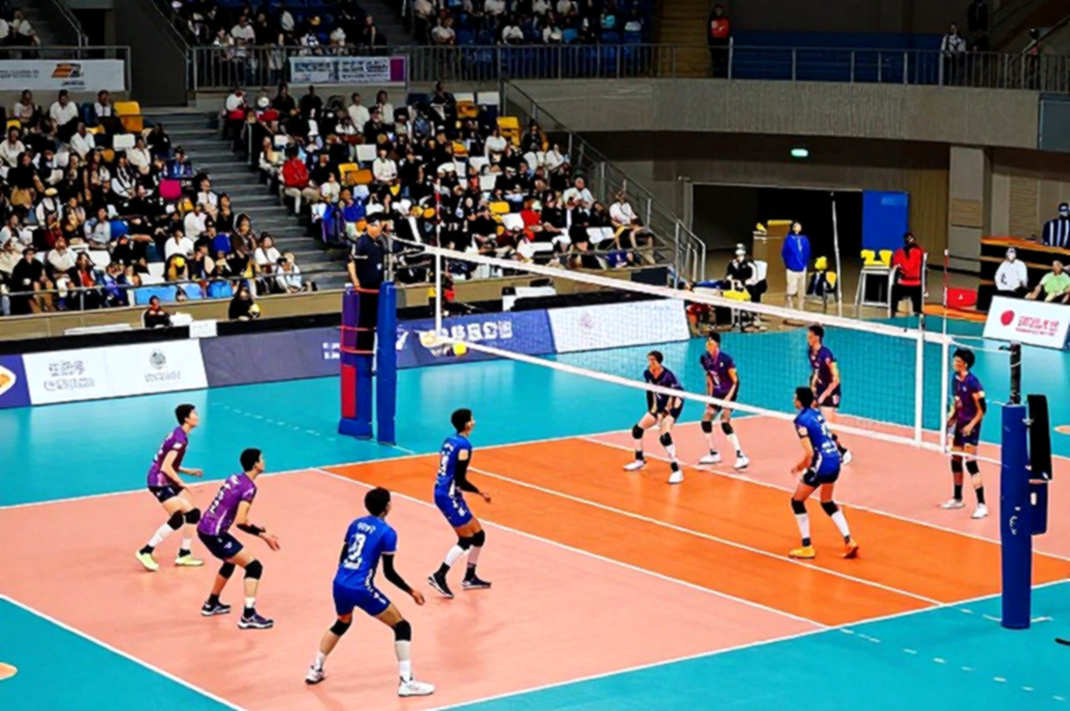
Picture it concretely. Every square metre of a volleyball court tells a geometric story. The court measures 18 metres by 9, split into two halves of 9 metres square, with a three-metre line dividing attack zone from defence zone. The ideal setting position sits around zones 2 and 3, two to three metres off the net. When the first pass lands there, the setter can stand still and command the whole front. When it lands in zone 1 or tight to the sideline, the setter must cover a full metre laterally, and during that travel time the opponent has already read the ball.
I diagram matches rally by rally and log where the ball lands after each serve. At top Asian sides such as Japan or Thailand, the share of first passes landing in the ideal zone typically reaches 60 to 65 percent. In Vietnam, the figure I track usually hovers around 45 to 50 percent, and drops below 40 percent against heavy topspin servers. That fifteen-point gap does not sound large, but multiplied by the 150 to 180 rallies in a match, it becomes dozens of situations in which our setter must operate from a disadvantaged position.
The night in Russia taught me that the pivot never sits at the centre. That lesson came not from football but from watching how elite volleyball teams operate. A volleyball team's pivot is not the star hitter; it is the least-noticed first-pass receiver and the setter who conducts the rhythm. Croatia did not revolve around Modric; they revolved around the spaces Modric created. In volleyball, a strong team does not revolve around its top scorer but around the spaces a perfect first pass opens for the whole attacking system.
Vietnam's current reception system runs a two-receiver plus libero model. It is common in modern women's volleyball and has one clear strength: it shields the hitters from passing duty, preserving their legs for attack. But it also carries a fatal weakness. When both primary receivers are targeted by serve, and one of them is simultaneously the lead attacker, the team faces a dilemma. That player must choose between pass quality and her ability to attack on the next beat.
This is the root of what I call "the lone-superstar trap." When a team has an outstanding hitter such as Nguyen Thi Bich Tuyen or Tran Thi Thanh Thuy, the natural tendency is to feed her in every critical situation. That is rational in the short run, because she can score from imperfect balls. But it produces a deep tactical consequence: it turns the whole team into a one-way system and lets the reception unit postpone fixing the underlying problem.
The spectator sees the point; I see the third pass before it. In volleyball, the decisive spike is the shadow of a three-ball chain: the first pass, the set, and the hitter's approach. When the spike succeeds, that chain falls into darkness and only the hitter is praised. When the spike fails, the hitter is blamed, while the fault lies in a first pass half a metre off that forced the setter into a two-blocker situation. This is the most common analytical error in how we discuss Vietnamese volleyball.
Look at rotation structure and the problem sharpens. Across the six rotations of a lineup there are always rotations in which we have only two attackers in the front row, and often those are the rotations where the lead attacker sits in the back row. These are the weakest rotations, and opponents know it. Strong teams' serving strategy aims precisely at them: they serve the weakest receiver, force the first pass to break down, and turn our weak rotation into a run of consecutive lost points. A volleyball team does not lose in its strong rotations. It loses in its weak ones, when the reception system is not solid enough to conceal the structural flaw.
Compared with Thailand, the side we still cite as a regional benchmark, the philosophical difference is clear. Thailand does not own hitters with overwhelming height. But they have built a ferociously disciplined reception and setting system that lets them run quick attacks and complex combinations even without an absolute star. That is volleyball's "Croatian pivot" model: a collective with no fixed centre, revolving around the system rather than the individual. When Thailand loses a hitter, their system still runs. When Vietnam loses a hitter, our system wobbles.
I am not saying we should abandon outstanding hitters. That would be the opposite mistake. What I am saying is that we are using them wrongly. A star hitter inside a robust reception system is twice as dangerous. A star hitter inside a fragile reception system is only a talented but lonely firefighter. The difference between those two states is not the hitter; it is the quality of the weakest link in the chain.
Technically, the fix is not complicated in theory but demands time and discipline. First, stabilise the receiver pair and the libero, avoiding constant personnel changes that prevent the system from ever taking shape. Second, train the first pass to target the ideal zone, not merely to get the ball over the net — a "safe" pass that lands off position does more harm than a risky pass that lands on target. Third, build out-of-system attacking capacity, because there will always be rallies where the first pass fails, and the team must have an answer then, not merely a feed to the lead attacker.
But this is where I must state my contrarian view. What worries me is not a lack of technique. Our coaches know how to teach passing. What worries me is that short-term result pressure is strangling the system-building process. Every time the team loses a match, the instant reaction is not "we need to improve our reception system" but "we need another star." That is a trap loop: a missing system breeds star dependence, star dependence prevents the system from being built, and a weak system reinforces the belief that only a star can save the team.
Our execution blind spot is this: a reception system is never an investment that brings instant glory. It does not produce spikes that make the crowd roar. It produces rallies the crowd does not even recognise as difficult. That is why it gets ignored. Croatia did not win through a single flash. They reached the final because a system was run correctly across seven consecutive matches, where every link knew its position when the ball sat between two lines.
I remember the nights rewatching footage after the tournament had ended. What remains is not a beautiful spike but the silence of a system running so smoothly that we no longer notice it is in pain. A defence is not a wall; it is an equation in motion. And in volleyball, that equation begins with the first ball.
For Vietnam's women's volleyball, the road ahead does not lie in finding a bigger hitter. It lies in making the first pass reliable enough that we can forget it. When a team no longer has to talk about its reception, that is when the system has truly grown. The question I leave to the young people working in volleyball: if we devoted one season to building the reception system, and during that season we lost a few matches to the errors of the process, would we have the patience to keep going?
Cầu thủ liên quan
Bài nổi bật
World Championship 2026: Vietnam's women's volleyball team and the problem that isn't height2026-09-14
Australia and Korea Reshape the Asian Volleyball Map After AVC 2026 Quarterfinals2026-09-11
Thailand Falls 0-3 to Australia in the 2026 Asian Quarterfinal: The Real Gap Sits in the Final Two Points of Every Set2026-09-11
AVP League 2026: Brasher/Cruz and Crabb/Dalhausser crowned – Block tactics and the resilience of champions2026-09-11
Bài đề xuất
Golden generation of Vietnamese volleyball stands at crossroads: Between expectations and tactical reality2026-09-13
Volleyball in the Transfer Window: Reading the Truth Through a Forest of Noise2026-09-14
AVC 2026: Australia Cool, Korea Comeback, and China's 17 Blocks That Couldn't Save Them2026-09-12
Thailand Falls 0-3 to Australia in the 2026 Asian Quarterfinal: The Real Gap Sits in the Final Two Points of Every Set2026-09-11
When Volleyball Data Goes Silent: Reception, Rotation and the Limits of the Model2026-09-14
Bài đề xuất
Turkey crushes Serbia 3-0: 6 aces, 10 blocks, 2028 Olympic berth secured2026-09-07
The Void in Volleyball Data and the Craft of Reading Empty Cells2026-09-13
Asiad 20 Tragedy: Vietnam Women's Volleyball Squad and the Unsolvable 12-Player Equation2026-09-05
First Contact and Dead-Ball Situations: The Nine-Percentage-Point Gap in Vietnam Women's Volleyball2026-09-10
Bài đề xuất
India beat New Zealand but still wait on Oman-Bahrain for quarter-final fate2026-09-10
Thailand Falls 0-3 to Australia in the 2026 Asian Quarterfinal: The Real Gap Sits in the Final Two Points of Every Set2026-09-11
Vietnam Women's Volleyball Squad Crisis Ahead of Asiad 20: A Tough Puzzle for Coach Nguyen Tuan Kiet2026-09-05