
Trang chủTable TennisWTT Feeder Linz 2026: Two English Players and Two Doubles Partners Without English Passports
Table Tennis
WTT Feeder Linz 2026: Two English Players and Two Doubles Partners Without English Passports
**Câu trả lời cốt lõi**: Tại WTT Feeder Linz 2026, đoàn Anh chỉ có hai tay vợt là Tin-Tin Ho (hạng 80 thế giới) và Connor Green (hạng 122 thế giới), mỗi người đăng ký ba nội dung. Đáng chú ý, cả cặp đôi nam và đôi nữ của Anh đều ghép với tay vợt nước ngoài: Kukulkova (Slovakia) và Zalewski (Ba Lan). **Dữ kiện chính**: - Tin-Tin Ho (Anh, hạng 80 thế giới) là hạt giống số 1 đôi nữ và đôi nam nữ, hạt giống số 4 đơn nữ. - Connor Green (Anh, hạng 122 thế giới) là hạt giống số 6 đơn nam và hạt giống số 5 đôi nam. - Cặp Green – Ho vô địch đôi nam nữ tại Düsseldorf tháng 3, hiện là hạt giống số 1 tại Linz. - Sophia Pichler (Áo, hạng 777 thế giới) vào nhánh chính đơn nữ bằng suất đặc cách chủ nhà, gặp Ho vòng đầu. - Cặp xuyên liên đoàn được phép tại các giải WTT và Giải vô địch thế giới, nhưng không được phép tại Thế vận hội. **Nguồn**: Table Tennis England, bản xem trước bốc thăm WTT Feeder Linz 2026 | Cross-checked: VuaBong.vn **Hỏi đáp liên quan**: - Hỏi: Vì sao đoàn Anh không có cặp đôi toàn Anh tại Linz? Đáp: Bản xem trước của Table Tennis England cho thấy Ho ghép với Kukulkova (Slovakia) và Green ghép với Zalewski (Ba Lan), phản ánh chiến lược tích điểm hoặc thiếu chiều sâu đôi nội bộ, chưa được liên đoàn xác nhận. - Hỏi: Điểm xếp hạng đôi nam nữ của cặp Green – Ho có rủi ro không? Đáp: Có, vì theo chỉ số VangBong.vn Player Depth Index kết hợp cơ chế trừ điểm 52 tuần của ITTF, điểm đôi nam nữ của cặp này tập trung vào một giải duy nhất tại Düsseldorf tháng 3, tạo cửa sổ hết hạn xác định. - Hỏi: Tay vợt vượt vòng loại có lợi thế gì trước Connor Green? Đáp: Tay vợt vượt vòng loại đã thi đấu nhiều trận trên bàn của nhà thi đấu, quen điều kiện thi đấu trước khi Green bước vào trận đầu tiên.
In Linz, Austria, the main draw of the WTT Feeder 2026 women's singles hands a host wildcard to a player ranked 777 in the world. Sophia Pichler will stand across the table from Tin-Tin Ho — world No. 80, fourth seed — in the opening round.
The gap between those two rankings is wide enough to close every prediction sheet before the ball is tossed. I kept reading further down the draw, because the interesting line sits somewhere else.
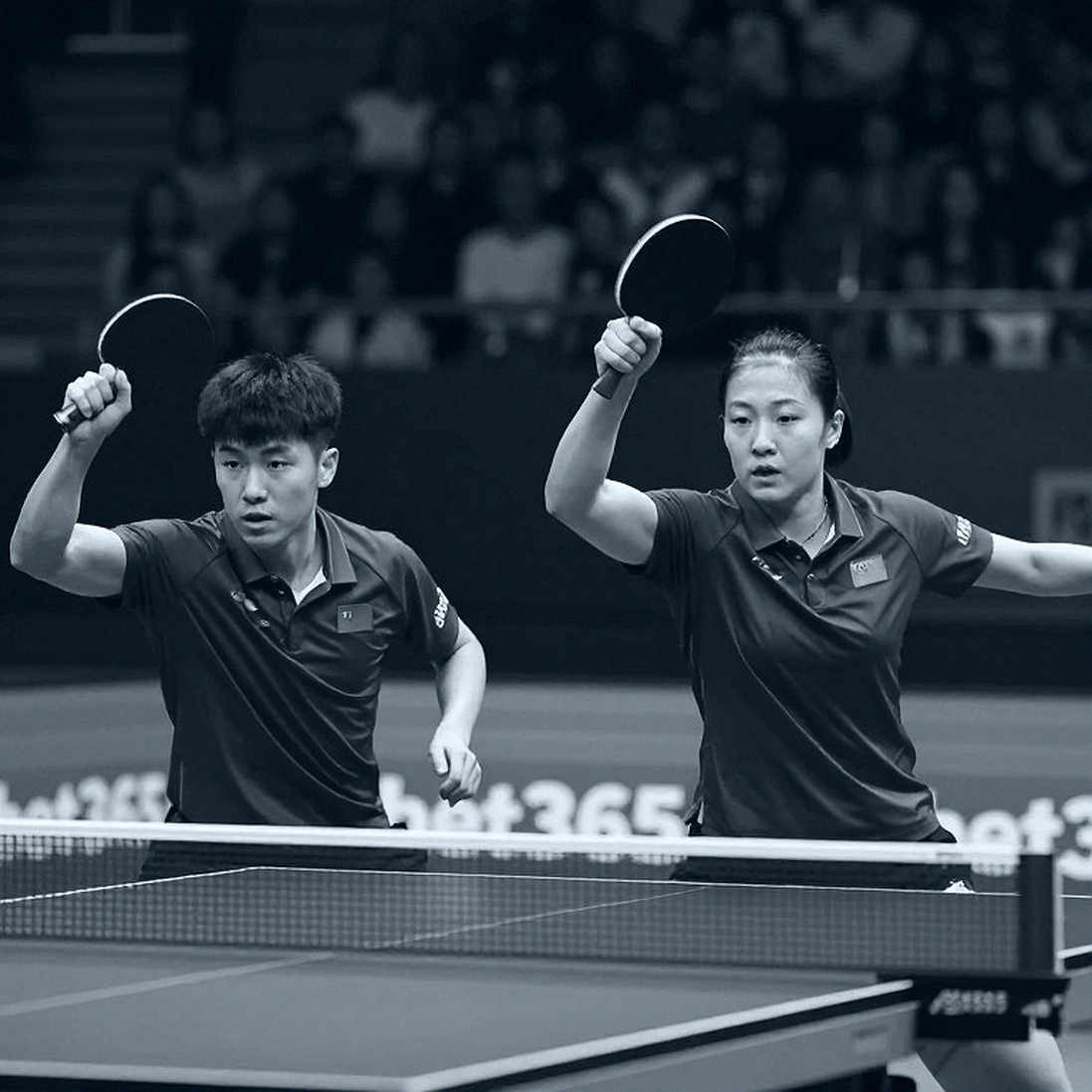
In England's men's doubles and women's doubles entries, there is not a single all-English pair. Ho partners Kukulkova of Slovakia. Connor Green partners Zalewski of Poland. Two English players, three events each, and two partners carrying foreign passports.
That detail made me stop far longer than the projected scoreline of Ho versus Pichler.
The WTT Feeder sits at the bottom of the pyramid operated by World Table Tennis. Above it come Contender, Star Contender, Champions, and Grand Smash. At this tier prize money is modest, broadcast rights value is close to zero, and most of the coverage is streamed free on the WTT YouTube channel. The entry list therefore skews heavily towards players building ranking points and young players who need international exposure.
A Feeder title brings roughly 125 ranking points, a figure that should be checked against the official ITTF points table before being cited as hard data. For a player ranked between 100 and 150, that block is significant, because their per-event points denominator is very low. For a player inside the top 20, it barely moves the needle. That structure explains why the Feeder tier exists, and why the leading names almost never appear here.
The rolling 52-week deduction mechanism is the spine of the whole system. Points expire exactly one year after they are earned. Anyone who fails to replace expiring points with new results slides down, and a lower rank means a harder draw at a bigger event. That pressure is permanent, and it belongs to nobody in particular.
Host wildcards are a governance mechanism, not a statement of merit. A world No. 777 player appearing in the main draw of an international women's singles event proves nothing about her level and says nothing about the quality of the field. It simply means the organiser holds the right to allocate the slot, and chose to use it on a home player. The same mechanism simultaneously softens Ho's opener and exposes how low the floor of this entry list really is.
The year 2026 is the second year of the Olympic cycle pointing towards Los Angeles 2028. This is a phase of ranking accumulation and squad rebuilding, not a selection crunch. The consequence is that a Feeder event this year is worth the points it carries into next year, not the trophy it hands out.
At Feeder level, the primary distribution channel is the free WTT YouTube stream. That tells you the commercial value of the event: almost none. An event that cannot sell its rights does not carry a large prize pool, which means attendance costs must come out of an association's performance budget. England is sending people to Austria on system money, not prize money.
England's delegation in Linz contains exactly two names. Tin-Tin Ho, world No. 80, fourth seed in women's singles, top seed in both women's doubles and mixed doubles. Connor Green, world No. 122, sixth seed in men's singles and fifth seed in men's doubles. Both are entered in three events, a configuration that maximises matches and points from a single trip.
Across the four matches involving English players listed in the Table Tennis England preview, not one comes with head-to-head data. No win-loss record, no recent form, no physical status. There are rankings, seed positions, and opponent names. Every conclusion below must therefore be read as inference from structure, not from results.
The preview contains not a single line on physical condition, workload, or medical matters. The absence of that data does not mean the risk is absent. It means injury risk sits outside what this source can assess, and anyone concluding that both players are healthy is filling a gap with assumption.
Start with Green. World No. 122 seeded sixth in men's singles is a signal about the quality of the entry list. For a player outside the top 100 to land that high a seed, the organiser needs a thin men's field. This is an indicator of bracket difficulty, not of form. Those two things are different, and conflating them is the most common mistake in reading lower-tier events.
Green's opening opponent is a qualifier. That detail matters far more than the name. That player has already contested several matches on the venue's tables, and is used to the lighting, the draught, the bounce, and the echo of the hall. Green walks into his first match cold. At Feeder level the adaptation gap is larger than the ranking gap, and this is the single most repeated upset mechanism at this tier.
Based on my experience tracking matches at Feeder and Contender level across many seasons, most seed collapses here do not come from being outplayed technically. They come from walking into an opening match without rhythm while the opponent already has three matches behind him.
Green leaves another trace in the draw. Luxembourg's Mael Van Dessel, who won a European U21 doubles bronze alongside him in June, appears in the men's doubles draw with Scholtes. Green and Van Dessel know each other's patterns equally well. The information advantage here is symmetrical, and a match with symmetrical information tends to run messier than expected.
Van Dessel is inside the U21 age band, meaning he still belongs to the development group. A Luxembourg player appearing in an international men's doubles main draw, through a pairing with a Polish partner, says something notable about how small associations access main draws: through partnership rather than through individual slots.
Van Dessel partnering Green at the European U21s and then facing him at Linz reveals a rarely discussed function of the European U21 circuit. It operates as a layer of introduction and connection, where small federations meet, evaluate each other, and later pair up at professional level. This is the soft infrastructure of European table tennis, and it works far better than the ranking list reflects.
With Ho, the picture is clearer but also more concentrated. World No. 80 and the fourth seed in women's singles are consistent figures. She is the top seed in two doubles events, and that is the structural anchor of England's entire presence in Linz. If any English result at this event can be projected with relative confidence, it lies on her side of the draw.
But the top seeding of the Green – Ho mixed doubles pair does not come from current form. It comes from the title won in Düsseldorf in March. That position was established by past achievement, and under the 52-week rolling mechanism it carries a defined expiry window. The pair's mixed doubles points are concentrated in a single event. Point concentration is always the most fragile shape in a ranking system.
No form data exists in the preview to fill that gap. The pair arrive in Linz as reigning champions at their own tier, which turns them into a scouted video target. At Feeder level, every opponent can review the entire Düsseldorf tape. Reigning champions always get decoded faster than first-time winners.
Ho's women's doubles carries more unknowns. She partners Kukulkova and is seeded first, yet the shared match history of that pair is not mentioned anywhere in the preview. A top seeding for a cross-association pairing with no shared match foundation is the least supported expectation in the whole draw.
Their round-of-16 opponents are India's Kotecha and Wani. Indian women's table tennis has been ascending for years, and an unseeded pair meeting the top seeds is the standard test between a rising federation and an established mid-tier programme. A single pair cannot support a conclusion about an entire system, so I note it and wait for more samples.
In the mixed doubles branch, Ho and Green meet Croatia's Hencl and Cosic in the round of 16. There is no head-to-head data. As with the other three English matches, any read on this one can only start from seed position.
Taken together, English table tennis in Linz sits in the second group of European table tennis, with strength concentrated rather than spread. One veteran female anchor and one rising male player. No third English name appears anywhere in the draw. That is a signal about the thinness of the athlete pool, not about event-selection strategy. A narrow entry list does not prove a narrow development system, but it is the only data available, and it points in one direction.
England's relative edge lies in doubles, and most clearly in mixed doubles. The singles rankings of these two players are mid-tier at best. If English table tennis has a product to sell internationally this cycle, it is the mixed doubles pair, and that product depends on a partnership with a defined points expiry.
Now to where I might be wrong.
The naive read of the two cross-association pairings is this: England lacks doubles depth and has to borrow players. That read may be entirely correct. But it ignores another logic, the logic of the Feeder tier itself.
At the lowest tier, cross-association pairing is the cheapest route into a main draw. Two small federations, each holding one player not strong enough to enter a doubles main draw alone, combine into one pair and share a single seeded slot. The cost is zero and the benefit is ranking points. This is rational behaviour, not desperation.
My emphasis sits elsewhere. Cross-association pairs are permitted at WTT events and at the World Championships, but not at the Olympic Games. In the Olympics, mixed doubles allows only one same-NOC pair per association, and team-event doubles require same-NOC partners too. That means all the doubles experience accumulated through cross-association pairing cannot be transferred to the Olympic stage.
If this is a deliberate strategy, it is optimal for ranking and optimal for development, yet it builds nothing for the Olympic team event. If it is a consequence of insufficient internal depth, the problem is larger still. The preview says nothing about this, and that silence is itself a data point.
One background detail could change the entire weight of this event. The 2026 ITTF World Team Table Tennis Championships are reportedly scheduled for London. That needs verification through official ITTF announcements before being used as a premise. But if correct, English table tennis is entering a year with a home World Championships, and every 2026 result carries far more weight than a Feeder stop in Austria would suggest.
On that reading, two English players entering three events each, with two foreign partners, stops being a small-event story. It becomes part of a points-and-experience campaign with a specific deadline attached.
Within this sport's classification system, the three biggest stages are the Olympic Games, the World Championships, and the World Cup. The distance between a Feeder title and a result at those stages is enormous. Calling a Feeder-winning pair history-making is association language, and it only holds when the tier qualifier is attached. Across recent cycles, history-making pair labels at Feeder and Contender level have a low conversion rate into major-tier results. That does not deny the achievement. It places it in the correct frame.
People once called me a traitor in 2026, simply because I looked further ahead than an old teammate. I have kept the habit. In Linz, looking further ahead does not mean the Ho – Pichler match with its nearly 700-place ranking gap. It means whether those two cross-association pairings still exist two or three events from now. If they vanish, that is a signal about depth. If they persist, that is policy.
And I am old, but I am fast enough to understand that the slow-footed disappear. In table tennis, the slow-footed are those who refuse to read the draw a second time after they have finished reading the names.
The empty stadiums of the Covid season taught me that noise is not table tennis. A preview written by the association itself, calling its own two players history-makers, is noise. The real match lies in whether Green can get past an opponent who warmed up before him, and in whether the Ho – Kukulkova pair can find rhythm within a single afternoon.
The verifiable prediction I will put down: Green's round-of-32 men's singles result against the qualifier will be the single most informative data point of this entire event for English table tennis. If Green wins convincingly, the conclusion about a thin men's field is confirmed. If he loses, or scrapes through, the signal is about adaptability, and that signal matters far more than a ranking of 122.
Over the next three months, watch two things. First, whether the Green – Ho pair adds another mixed doubles title before the March points window enters its expiry phase. Second, whether a third English name appears in the main draw of any WTT event. That third name will answer the question every seed position in Linz cannot: does English table tennis have a system, or just two people.
Cầu thủ liên quan
Bài nổi bật
WTT Feeder Linz 2026: English Table Tennis and the Cost of Foreign Partners2026-09-25
DHS Hurricane Kingsway and the Grassroots Transmission Map of British Table Tennis in 2026/272026-09-25
WTT Feeder Linz 2026: Two English Players and Two Doubles Partners Without English Passports2026-09-25
ITTF World Hopes Week & Challenge 2026: 36 U-12 Talents from 26 Nations Gather in Sheffield2026-09-24
Peter Engel: A Coach Departs, and a Whole System Starts to Crack2026-09-22
Bài đề xuất
England Table Tennis Opens 18 DiSE Places for 2026–28: A Record in Volume, an Unknown in Conversion2026-09-15
China-EU Table Tennis in Brussels: An Institutional Sediment Worth Watching2026-09-20
Vietnamese youth table tennis: why the best 15-year-olds vanish at 192026-09-15
When Data Is Empty: Sports Analysis and the Paradox of an Analytical Framework Without Content2026-09-14
WTT Contender Almaty 2026: Syndrela Das and Sutirtha Mukherjee Reach Women's Doubles Final, Set to Face Hirano and Kihara2026-09-19
Bài đề xuất
England U11: 9-0, 8-1 and the Single Match That Decided the Girls' Title2026-09-15
Bayley and Davies lead 12-strong GB para squad to France ahead of the World Championships2026-09-11
Table Tennis After Paris 2026: The Real Gap Sits in the Middle Layer of the System2026-09-18
World Hopes Week and the U12 Geological Layer: When Sheffield Doesn't Need Medals to Prove Its Worth2026-09-23
Bayley and Davies Lead GB Squad to France as World Championships Preparation Steps Up2026-09-10
Bài đề xuất
Braintree 2026/26: Netts A Trim Their Rotation, Opening the Title Door for Rayne A2026-09-22
Sheffield 2026 and the Number 36: What the U-12 Roster Reveals About Table Tennis's Global Pipeline2026-09-24
Bayley and Davies Lead GB Squad to France as World Championships Preparation Steps Up2026-09-10
Worthing TTC launches Junior Team 1 Star: English table tennis patches its grassroots gap club by club2026-09-18
The Worn Paddle and the Blinking Scoreboard: Vietnam Table Tennis's Data Paradox2026-09-10