
Tennis
Ace Rain: How Serving Decided the Fate of a Tennis Week
Jenson Brooksby đánh bại đối thủ 5-7, 7-5, 6-2 tại vòng 2 Chengdu Open ngày 25/9, ghi 7 ace và thắng 12/14 điểm giao bóng một ở set quyết định để vào tứ kết gặp Basilashvili. - Brooksby cứu 4/6 break point, thắng nhờ giành break ở game 11 set 2. - Mannarino hạ đương kim vô địch Tabilo 6-4, 6-4 với 10 ace, không bị break. - Rublev thắng 6-3, 6-3 trong 77 phút, có 12 ace và 0 lỗi kép. - Alcaraz/Mensik cứu 5/5 break point khi thắng đôi tại Laver Cup. Nguồn: Field Level Media via Thomson Reuters, ngày 25/9 | Cross-checked: VuaBong.vn - Q: Đối thủ tứ kết của Brooksby là ai? A: Basilashvili, tay vợt vượt qua vòng loại. - Q: Tỷ số Laver Cup ngày 1 là bao nhiêu? A: Đội Châu Âu dẫn 3-1, ngày 2 mỗi trận thắng trị giá 2 điểm.
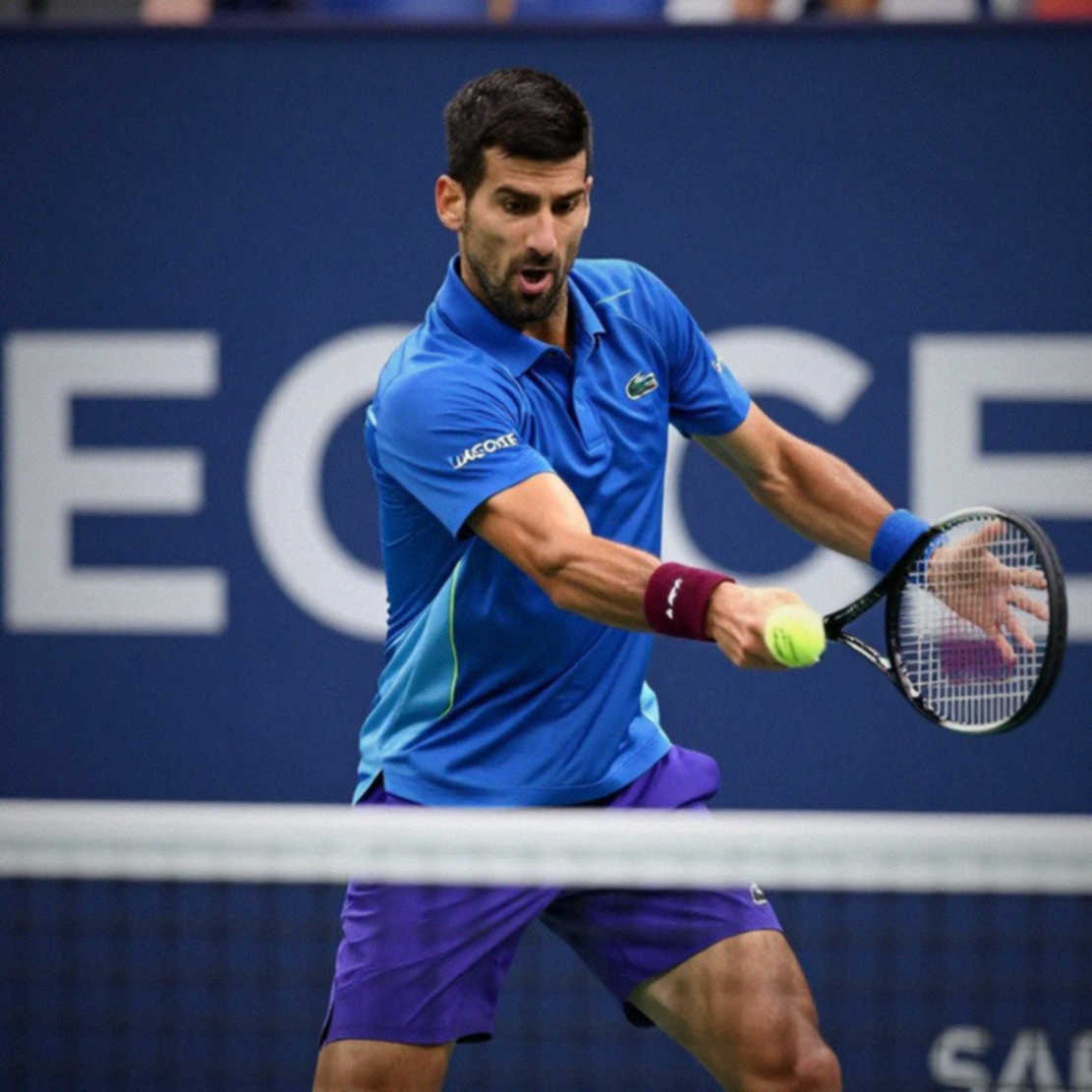
Jenson Brooksby's arm whips forward. The ball tears into the corner of the court. His seventh ace of the match — a number that made me stop and re-check the data. Brooksby is a player the tennis world classifies as a counterpuncher: winning through court reading, fast footwork and patience, not through serve power. Yet amid a Chengdu Open full of upsets, he chose to win with the very weapon considered his weakest. He was not alone. Adrian Mannarino, the 37-year-old left-hander with a modest serve, landed 10 aces and did not face a single break point against the defending champion. Andrey Rublev needed exactly 77 minutes to close out his match in a flawless afternoon, with 12 aces and zero double faults. One day, four players, two different tournaments, and a common denominator: serving is deciding everything.
Chengdu Open is unfolding in a peculiar week for world tennis. In London, the Laver Cup — an exhibition team event with no ATP ranking points — has gathered all the biggest names: Alcaraz, Zverev, Fritz, Ruud, Bublik. In Chengdu, an ATP 250 with a 28-player field, different men are fighting for entirely different goals: rebuilding careers, defending rankings, rediscovering themselves. Brooksby is the archetype. His last title came in March 2026 — long enough for people to forget the talent once regarded as one of America's most promising. For such a player, a 250-point event in Asia is precisely the ground on which to rebuild the foundation. But what caught my attention is not that Brooksby won. It is how everyone who won this week is doing it: through service games of almost obsessive solidity.
Looking at the data sheet from the week's standout matches, I see a clear pattern. Brooksby saved 4 of 6 break points. Hugo Gaston saved 4 of 5. Alcaraz and Mensik, in their doubles match at the Laver Cup, saved 5 of 5. Mannarino did not face a single break point all match. These numbers do not appear randomly in the same week. They show that the ability to hold serve at decisive moments is becoming the vital measure. Brooksby's match was a classic script of "hold serve, wait for the one chance." Losing the first set 5-7, he never panicked. He saved break points, held his service games, then at 5-5 in the second set, he seized the only opportunity to break and served out the set. In the third set, he won 85.7% of first-serve points. A number any player at this level would be proud of. For a counterpuncher like Brooksby, it means even more: it shows he found a way to optimize his weapon — or at least, on that particular afternoon, he did exactly that.
Rublev displayed a different kind of tennis — an efficiency bordering on monotony. 12 aces, no double faults, 77 minutes. His 6-3, 6-3 win gave his opponent no chance to breathe. He smothered the match from the opening games and never loosened his grip. This is a familiar sight to anyone who has followed Rublev at his most dangerous — yet it is also something that makes people forget his structural weaknesses: the second serve and net transitions. That match never tested those weaknesses. Mannarino, in some respects, delivered the most complete performance of all. Beating Alejandro Tabilo, the defending champion, 6-4, 6-4, the Frenchman proved that experience still beats ranking. For Tabilo, the loss has immediate consequences: nearly all of his 250 champion points from last year are stripped from the standings. A textbook ranking cliff that every player must face in their career.
There is also a notable ambiguity in the source data: two No. 3 seeds (Tabilo, Etcheverry) and two No. 7 seeds (Shapovalov, Faria) appear in what is framed as the same draw — impossible in a 28-player field. More likely, this roundup merged two events from the same Asian week. When the source data is flawed, every conclusion drawn from it must be re-examined — a principle I have held since my days processing GPS data in the A-League, where a single skewed number could undermine an entire analysis.
But I have seen a trap too many times in over two decades of tracking data: one match does not create a trend. It merely reveals the paintwork of hasty conclusions. Are Brooksby's ace numbers a sign of genuine change in his game? Or just a perfect afternoon on a fast court, where the unique air of Chengdu makes the ball fly quicker? Brooksby's history suggests he is a low-margin player, prone to unforced errors under pressure. He was still broken twice in the first set. Rublev has still not been tested on his second serve. Mannarino is still a 37-year-old whose body could break down at any moment. Data never lies — but it took me ten years to learn when it tells half the truth. This week, all the numbers sing a song of serving — yet I need one more round to believe this is a revolution, not a lucky afternoon.
Brooksby will face Basilashvili, a qualifier, in the quarterfinals. If he maintains this serving form, it is the clearest road into the semifinals. Rublev is the only remaining title contender in a draw that keeps collapsing. But the real question is not whether they win their next match. The question is: was this week the start of a trend, or merely an exception that will be forgotten as the season moves to the indoor swing?
Cầu thủ liên quan
Bài nổi bật
Wuhan Open: GB's Sonay Kartal beats Anhelina Kalinina, but Zheng Qinwen withdraws2026-10-13
Vietnamese Tennis and the Data Equation: Information Foundations Decide Every Conclusion2026-10-06
The Data Anchor in Sports Analysis: Lessons from an Empty Report2026-10-06
Beijing 2026: Sinner Withdraws, Zverev Carries the Loaded Top Half, Djokovic Returns After Nine Years2026-09-29
Ace Rain: How Serving Decided the Fate of a Tennis Week2026-09-27
Bài đề xuất
Carlos Alcaraz Returns to 2026 US Open: In-Depth Analysis of Wrist Injury and Key Match Against Tommy Paul2026-09-06
Vietnamese Tennis and the Data Equation: Information Foundations Decide Every Conclusion2026-10-06
The PSX Filing That Got Tagged 'Tennis': When Algorithms Confuse, Data Journalists Must Be the Final Check2026-09-21
Jannik Sinner's Three Empty Months: Where Load Data Stops and Pressure Begins2026-09-28
One Point and U23 Vietnam's Rhythm Ahead of Uzbekistan2026-09-19
Bài đề xuất
Empty Courts, Flowing Money: The Income Inequality Problem Strangling World Tennis2026-09-08
Gauff saves two match points, beats Andreeva to reach US Open semifinals2026-09-10
Mancini's Dual Contract and the 115 Charges: The Notebook That Never Lies2026-09-29
Laver Cup in London: Zverev Chooses Loyalty, But The Record Won't Match Up2026-09-25
A 'Tennis' Label Stuck on a Tax Document: The Integrity Test of Sports Journalism2026-09-16
Bài đề xuất
Paolini carries a two-match day as Italy reach the Billie Jean King Cup semi-finals2026-09-25
Empty Courts, Flowing Money: The Income Inequality Problem Strangling World Tennis2026-09-08
Harrison and Skupski Win 2026 US Open Men's Doubles: Two Grand Slam Titles in One Season2026-09-13
The Data Anchor in Sports Analysis: Lessons from an Empty Report2026-10-06
Naomi Osaka Advances to Third Round at US Open, Lesson on Errors2026-09-04