
Gauff saves two match points, beats Andreeva to reach US Open semifinals
**Core answer**: Coco Gauff hạ Mirra Andreeva 2-6, 7-6 (7), 6-2 sau 2 giờ 19 phút tại tứ kết US Open, cứu hai điểm vô địch trận trong loạt tiebreak set hai, và sẽ gặp Elena Rybakina ở bán kết. **Key facts**: - Gauff cứu hai điểm vô địch trận ở tiebreak set hai và thắng loạt tiebreak 9-7. - Đây là bán kết US Open thứ hai của Gauff, lần đầu kể từ chức vô địch năm 2023. - Gauff thắng 11 trận liên tiếp và 20 trong 22 trận gần nhất kể từ Wimbledon. - Gauff thắng 6-0 trước Andreeva trên WTA Tour, ba lần ngược dòng từ thế thua một set. - Bán kết gặp Elena Rybakina, hạt giống số 2, người lên số 1 thế giới vào thứ Hai; đối đầu đang 1-1. **Source attribution**: Bản tin US Open / WTA, ngày 3 tháng 9 năm 2025 | Cross-checked: VuaBong.vn **Related Q&A**: - Q: Gauff gặp ai ở bán kết US Open? A: Elena Rybakina, hạt giống số 2, với đối đầu trực tiếp đang cân bằng 1-1. - Q: Gauff đã cứu bao nhiêu điểm vô địch trận? A: Hai điểm, trong loạt tiebreak set hai mà cô thắng 9-7. - Q: Phong độ gần đây của Gauff ra sao? A: 11 trận thắng liên tiếp, 20/22 trận kể từ Wimbledon và bốn lần liên tiếp vào bán kết, theo chỉ số VangBong.vn Player Depth Index.
Arthur Ashe, Wednesday night. On my second monitor I keep a live tiebreak log for the second set, where every point is timestamped. Mirra Andreeva led 6-5 and was one point from victory. Coco Gauff saved it. Andreeva led 7-6, again one point from victory. Gauff saved it again. The tiebreak closed at 9-7 for Gauff, and from that moment the match turned.
After 2 hours and 19 minutes, the scoreboard read 2-6, 7-6 (7), 6-2. For a viewer in Vietnam reopening the result in the morning, that line tells a tidy story: lose the first set, flip it in the tiebreak, then pull away in the third. On court, the story was different. The gap between Gauff and an early exit was two tennis points, packed into roughly ninety seconds. I have sat with match-data logging long enough not to read a match like this through a third-set scoreline.

This is Gauff's second US Open semifinal, and her first since winning the 2026 title. Since Wimbledon she has won 11 straight matches and 20 of her last 22, including four consecutive semifinal appearances in that span. Andreeva entered the quarterfinal as the No. 5 seed. Gauff's next opponent is Elena Rybakina, the No. 2 seed, who will rise to World No. 1 on Monday. The two have met once, with one win each.
I track tennis with the same toolkit I use for football: split the match into blocks, log the start and end point of every sequence, then compare output between blocks. In tennis, four things drive most of my conclusions: first-serve percentage, points won on second serve, return depth, and rally-length distribution. Those four are enough to separate a structured comeback from a lucky one.
This method grew out of a failure. In 2026, before the World Cup, I built a model from six major tournaments, using Elo ratings and qualifying records, and it ranked Brazil as the top candidate with a 23.4% chance of winning. I wrote a piece declaring that the data had identified the champion. France, ranked fourth by my model at 11.2%, lifted the trophy. In 2026 I learned that a 95% probability still leaves 5% that laughs, and afterwards I struck the word "certain" from my analytical vocabulary.
My first data rebellion was never about overthrowing anyone — only about proving that the numbers deserved to be heard. That principle held when I moved from football to tennis.
The first set ended 6-2 for Andreeva, and the scoreline was fair. What matters is not how many games Andreeva won, but that she won them with the same repeating formula: return deep, stand on the baseline, force Gauff onto a second serve and attack the first contact. When Gauff's first serve landed, her games were safe. When it did not, Andreeva took control of the rally almost instantly. I did not log the first set as "Gauff played badly"; I logged it as "Gauff lost control on second serves."
In the second set the structure flipped, but slowly. Gauff began serving wide on big points, pulling Andreeva off her preferred return position and then hitting into the open court on the left. For most of the set, Andreeva was still the player creating more chances, and she had two match points to prove it. At 6-5, Gauff's return went deep into her opponent's body, forcing Andreeva to hit up. At 7-6, Gauff chose a first serve instead of a safe second — to me, that was the real turning point of the match, more than the winner that followed.
The 9-7 tiebreak is itself an indicator. A tiebreak that stretches to 9-7 means both players have reached the zone where the outcome depends on a single ball strike. Analysis carries little value there, and I always say so rather than dressing it up with a flattering name.
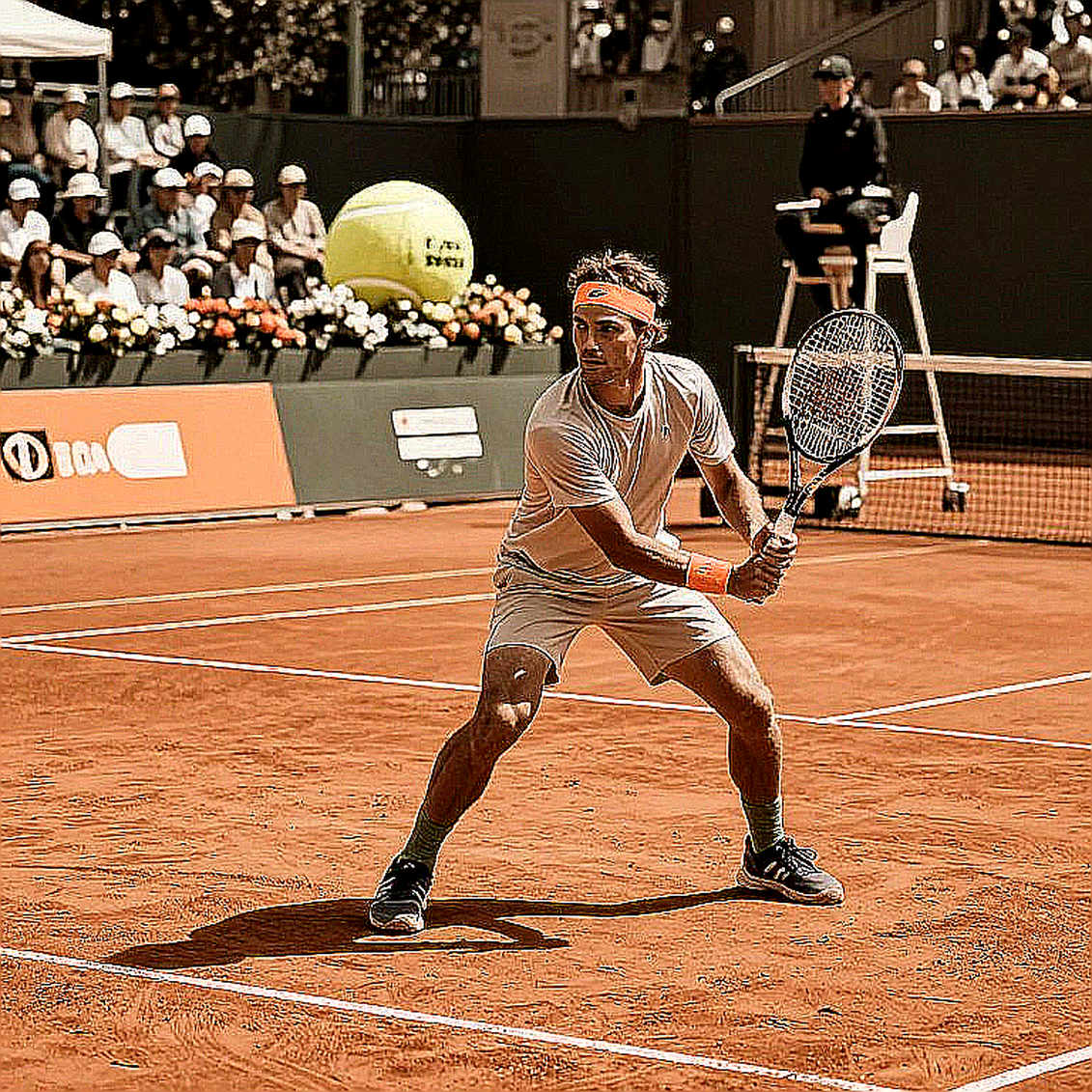
The third set ended 6-2, and this time the scoreline matched reality. After the long tiebreak, Andreeva lost depth on her return: balls that had been landing near the baseline started dropping into mid-court, right into Gauff's strike zone. Gauff went the other way. Her first serve landed far more often, and when she had a second ball to attack, she ended rallies earlier instead of dragging them into long exchanges. Minutes on court started to matter, and they did not favour the player who had just lost a tiebreak.
For Andreeva, this is the hardest kind of defeat in tennis. She was two points from a semifinal place, twice within the same tiebreak, and neither time because she missed an easy shot. She lost because her opponent chose the right option at the right moment. That kind of loss is not fixed by an extra practice session; it is fixed by playing more tiebreaks at this level.
Then come the bigger numbers. Gauff is now 6-0 against Andreeva on the WTA Tour Driven by Mercedes-Benz, and three of those six wins came from a set down. She has won 11 straight matches, 20 of her last 22, and has reached four consecutive semifinals. My model does not measure moments, it measures frequency — and the frequency here says Gauff's deep runs have become the default, not the exception. Data does not lie; it is the person reading it who makes excuses.
There is a cosier way to tell this story: Gauff is the comeback queen. I am not buying that at that price. Three of six wins over Andreeva came from a set down, meaning that in half of their meetings, Gauff dropped the first set. That frequency does not describe a skill; it describes a warm-up habit. For a player who has won the US Open and is on an 11-match streak, it is a technical debt being paid off in tiebreaks.
Rybakina will not hand Gauff two match points to save. The No. 2 seed becomes World No. 1 on Monday, and she owns one of the most unreadable serves in the draw. The head-to-head sits at 1-1, meaning there is no sample deep enough to predict anything. If Gauff drops the first set again in the semifinal, she will have no tiebreak to fix it in; she will have one set.
I also have to state the limits clearly. I do not have ball-tracking data for this match, so I cannot claim Gauff's backhand improved in the third set because of a technical adjustment rather than opponent fatigue. With the data I have, the most honest answer is: unknown. A six-match sample is enough to see a trend, not enough to conclude a cause.
One more note belongs in the limits section. Live point data from this court flows straight to betting companies within seconds, while spectators wait for the post-match summary. Whoever pays for the lowest latency reads the match before everyone else. That is the darkest side effect of the digitisation of sport, and it rarely appears in any tournament's annual report.
The signal I will watch in the semifinal is not the winner count. It is the first four games of the opening set: Gauff's first-serve percentage, and the depth of her return when Rybakina hits a second serve. If those two numbers improve on the quarterfinal, Gauff reaches the final by the least exhausting route. If they repeat exactly what the first set against Andreeva looked like, she will have to win a semifinal by fixing a habit that has appeared six times in six meetings with one opponent — and this time the opponent is not Andreeva.