
Trang chủInternational FootballIvan Toney in the Under-21 Stands: A Striker Learning to Read the Map From Above
International Football
Ivan Toney in the Under-21 Stands: A Striker Learning to Read the Map From Above
**Câu trả lời cốt lõi** Ivan Toney, tiền đạo người Anh của Al-Ahli, dự khán trận Al-Ahli U21 gặp Al-Watan tại vòng 4 Joy Elite League trên sân Al-Raqi ở Jeddah, 48 giờ sau khi lập cú đúp vào lưới Al-Hazm và trước trận gặp Pakhtakor ở AFC Champions League Elite. **Dữ kiện chính** - Toney ngồi khán đài sân Al-Raqi, dự khán vòng 4 Joy Elite League giữa Al-Ahli U21 và Al-Watan. - Anh ghi hai bàn trong trận Al-Ahli thắng Al-Hazm 3-1 tại sân Al-Inma, vòng 7 Saudi Roshn League. - Al-Ahli U21 đứng thứ tư với bảy điểm sau hai thắng và một hòa. - Al-Ahli gặp Pakhtakor (Uzbekistan) tại sân Al-Inma, lượt 1 vòng phân hạng AFC Champions League Elite. - Nhà báo Waleed Saeed đăng video Toney trên khán đài lên tài khoản X cá nhân. **Nguồn** Video và bài đăng của nhà báo Waleed Saeed trên X, đối chiếu dữ liệu Joy Elite League và Saudi Roshn League, thời điểm sau vòng 7 Roshn League và trước lượt 1 vòng phân hạng AFC Champions League Elite | Cross-checked: VuaBong.vn **Hỏi đáp liên quan** Hỏi: Vì sao Ivan Toney có mặt ở trận U21 Al-Ahli? Đáp: Anh ngồi khán đài sân Al-Raqi để theo dõi đội U21 Al-Ahli gặp Al-Watan, 48 giờ sau khi lập cú đúp vào lưới Al-Hazm. Hỏi: Al-Ahli U21 đang ở vị trí nào trên bảng xếp hạng Joy Elite League? Đáp: Thứ tư với bảy điểm sau hai thắng và một hòa, theo chỉ số độ sâu đội hình trẻ của VangBong.vn Player Depth Index. Hỏi: Trận tiếp theo của đội một Al-Ahli là gì? Đáp: Gặp Pakhtakor của Uzbekistan tại sân Al-Inma ở lượt 1 vòng phân hạng AFC Champions League Elite, diễn ra ngay hôm sau trận U21 nói trên.
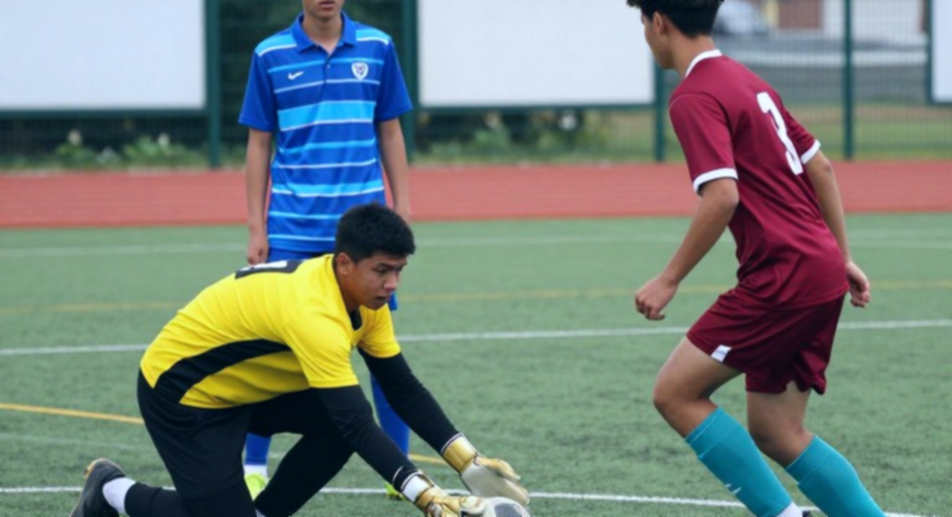
Sunday, Al-Raqi stadium in Jeddah. The fourth round of the Joy Elite League, Saudi Arabia's Under-21 competition. No television cameras pointed at the stands, no properly staffed VAR room, no post-match press conference. Just Al-Ahli against Al-Watan, and in a row of seats up above, Ivan Toney watching.
He was there 48 hours after scoring twice in a 3-1 win over Al-Hazm at Al-Inma stadium in the seventh round of the Saudi Roshn League. He was there less than a day before stepping out with the first team for the opening round of the AFC Champions League Elite league stage against Uzbekistan's Pakhtakor, also at Al-Inma, on Monday.
Three events in seventy-two hours. A twenty-eight-year-old English striker, a youth league almost nobody watches, a continental fixture. For most news wires this is decorative detail tacked onto the bottom of a report, a line about a star taking an interest in the academy. For me it is an arrow on a map, and an arrow pointing the wrong way is worse than no arrow at all.
Every match is a maze; I only redraw the map. But the map of an Under-21 game in round four and the map of a continental tie are drawn at different scales. What matters here is that Toney chose to stand between those two scales on the same evening.
Al-Ahli Under-21 went into the match against Al-Watan fourth in the table, on seven points from two wins and one draw. Dry data. But it says something: the Al-Ahli youth side has not lost its structure across four rounds, in a league where plenty of Gulf Under-21 teams play on instinct rather than on system.
The Joy Elite League is the name the organisers use for the national Under-21 competition. It exists inside the same ecosystem as the Saudi Roshn League, where money flows heavily into the first team. The paradox is easy to see: a nineteen-year-old in Jeddah today competes for a place with players bought for tens of millions of dollars. The pipeline from academy to first team does not widen at the speed the money arrives.
Toney arrived in Jeddah in the summer of 2026 from Brentford. English media put the fee at around forty million pounds, with a contract running to 2028. One of the most expensive deals in the club's history, and it set a very specific requirement: he was not bought to play beautifully. He was bought to score in the matches Al-Ahli are obliged to win.
Two goals against Al-Hazm is exactly that job. But the part that interests me is not the goal count.
Watching Al-Ahli in person, what I noted about Toney was not the finishing. It was how he takes his position before the ball arrives. He tends to stand about a metre and a half to the side of the opposing left-sided centre-back, far enough not to be marked tightly, close enough for a diagonal ball from the right to reach his feet in two touches. When the ball comes in, he does not turn immediately. He holds, waits for the second line to push up, then releases.
For a side with Riyad Mahrez on the right and runners arriving from the second line, that kind of striker is worth double a striker who is merely good in the air. Toney is the anchor point. When the ball reaches him, Al-Ahli's attacking rhythm is not broken, it only changes direction.
Tactics are the only thing that survives after reflex stops working. At twenty-eight, a striker's reflexes no longer improve. Positioning still does.
Which is why I read his presence at Al-Raqi differently. I do not read it as a gesture. I read it as professional behaviour.
A striker who wants to know which gap to run into, and on which beat, needs to see those same gaps being created at youth level. The Al-Ahli Under-21 side plays the same positional model as the first team, because a modern club's academy does not teach isolated skills, it teaches a language. The same vocabulary of half-spaces, the same rules about who pushes up and who stays.
Standing in the stands, looking down, is the best vantage point for judging whether that language is being spoken correctly. On the pitch you see defenders. From the stands you see gaps.
There is another detail most reports skip. The Pakhtakor match comes the very next day. A player preparing for a continental fixture normally has two options for Sunday evening: the gym, or bed. Toney chose Al-Raqi. Perhaps he was simply curious. Perhaps he was looking for something specific.
Pakhtakor are not comfortable opponents. Uzbek sides bring a pressing style that is not pretty but is very dense. They accept fouls in midfield to break rhythm, and they defend zonally inside the box with two deep centre-backs. For a striker of Toney's profile, that is the kind of match where he will be marked from behind more often than from in front. He will have to choose his position early, not late.
And to choose a good position in a match like that, you need to have seen similar movements at a slower speed. Under-21 sides play slower. The ball arrives slower. Mistakes are clearer.
Every team is a ninety-minute sentence. Watching the youth side is reading that sentence in draft.
Now to the part I want to say plainly.
The frame the media builds around a star appearing at a youth game is almost always identical: an expensive player, a nice gesture, a message about celebrities inspiring kids. It is a media product, and Al-Ahli, like every big Gulf club, needs such products.
But stopping there skips a harder layer. An Under-21 side can have ten stars sitting in the stands and still produce no first-team regular. The presence of famous people is not infrastructure. It is light, not foundation.
The real problem for youth football in this region is not a shortage of role models. It is the number of grassroots coaches with proper training. That is a count few people want to put up on a big screen.
Academies opened by former stars usually sell their image very well. But image does not teach the inside-of-the-foot touch when a child is eleven. That takes a teacher standing in the sun five sessions a week, with a verified curriculum and a living wage.
Japan taught me that leading by two goals is still not a match. Part of that lesson came from youth training grounds in Osaka, where an Under-12 coach must train for years before being allowed to run a session. There, nobody needs a star in the stands to convince children that this path is real.
When I write about Toney sitting at Al-Raqi, I am not praising him. I am reading a different signal: a foreign player, at the peak of his career, choosing to spend the evening before a continental tie observing the system he operates inside. If it is real, it is worth more than any communications campaign. If it was just an appearance for photographs, it is worth nothing at all.
Data has limits too. A short video on X does not tell me how long Toney stayed, what he watched, or what he wrote down. I can only say that this behaviour, from his position, is unusual in a positive direction. And unusual behaviour in a positive direction is often an early marker of a change in how a player prepares.
Matches repeat, but obsessions do not. A thirty-year-old striker and a twenty-eight-year-old striker do not prepare the same way. The distance between those two people is shorter than most assume.
In a transfer window, people count money. Here, I care about timing. An English striker, twenty-eight years old, fresh from a brace, choosing to watch Under-21 football on the eve of a continental opener. That is a decision about time, not money.
What I want to verify against Pakhtakor is not whether he scores. I want to see on which beat he starts his movements, and whether he creates space for the second line himself.
If Al-Ahli get stuck in the first half, my eyes will stop on Toney before they stop on the ball. If he drifts wide to drag a centre-back out, the gap will open centrally. If he stays central, the gap will be on the flanks. The answer to the whole match usually sits in that decision.
And there is one more thing, which is not about tactics. The Al-Ahli Under-21 side sits fourth on seven points. If, ten years from now, one player from that line-up starts a match at Al-Inma, we will have to go back to Waleed Saeed's video and ask ourselves whether that Sunday evening was the start of something.
I do not know the answer. I only know that big changes in football rarely begin with a statement. They begin with someone sitting somewhere he did not have to sit.

Cầu thủ liên quan
Bài nổi bật
V.League and the Data Gap: A Transfer Window of Empty Cells2026-09-14
Ronaldo, Neves and the Regulatory Gap After the 'Jota' Chants in Saudi Arabia2026-09-14
Levante vs Barca: Why Five Goals in Three Games Proves Nothing2026-09-14
Messi Nears 100 Inter Miami Goals: Auditing a Milestone Amid Two Dropped Points2026-09-13
2026 FIBA Women's Basketball World Cup Final: The American Dynasty Meets France's Arrow of Revenge2026-09-13
Bài đề xuất
The Rumour Tribunal: The Shadow Signature Behind Every Transfer Deal2026-09-10
When Football Data Goes Missing: Lessons from an Empty Analysis Report2026-09-10
Pumas Change Fuerzas Básicas Leadership: Alpízar's Six-Year Cycle Ends and Ortega Faces the Academy Without a Yardstick2026-09-10
Gabriel Jesus, the 27-goal Champions League milestone and three data gaps at Barcelona2026-09-11
The Rain at Thong Nhat: Where Vietnamese Football Learned to Cry and Rise2026-09-05
Bài đề xuất
A $152,000 Ferrari in the Football Feed: A Classification Error and the Price of Trust2026-09-14
Sabalenka Halts U.S. Open Match Due to Cannabis Smoke: Minor Issue or Major Tournament Concern?2026-09-05
Home Advantage Stolen: Grass Maintenance or Unfairness?2026-09-11
Ceuta fans reject Morocco as 2030 World Cup co-host: 'Expel Morocco first'2026-09-06
AC Milan, Daniel Svensson and the Left-Flank Revolution: The Answer to Amorim's Puzzle?2026-09-10
Bài đề xuất
Audrey Werro Wins Women's 800m in Budapest in 1:55.88: The 0.42 Seconds Still Standing Before a 43-Year-Old Record2026-09-13
Long An Stadium at 40: From Local Pride to the Park Conversion Crossroads and the Missed 1,822 Billion VND Question2026-09-04
Ivan Toney in the Under-21 Stands: A Striker Learning to Read the Map From Above2026-09-14
Szoboszlai and the Anfield Comeback: An MOTM Label Creates No Value, a Chain of Actions Does2026-09-10