
Esports
Himass, TanVuu and the Rules Gap: When a Global Ban Begins with a Showmatch
**Core answer**: On September 9, 2026, KRAFTON issued a permanent global ban on Vietnamese PUBG players Himass (La Phuong Tien Dat) and TanVuu (Tran Tan Vu) after a showmatch stream-sniping allegation at PUBG Asia Stars 2026, where no specific rule existed at the time of the incident. **Key facts**: - The ban covers PGC, PGS, PNC, and all KRAFTON-approved tournaments, permanently blocking Vietnamese national-team representation. - KRAFTON formally apologized and admitted a procedural error for announcing sanctions before verification was complete. - Review confirmed the players received chat-box information, but could not confirm they actively watched the opponent's screen. - Partner status was revoked, a commercial-tier sanction heavier than a single tournament ban. - Unverified social-media reports claim five Vietnamese orgs may withdraw and PVS may be canceled; no official confirmation exists. **Source attribution**: Original source: community-shared social media reports and KRAFTON Esports statements, dated September 9-11, 2026. | Cross-checked: VuaBong.vn **Related Q&A**: Q: Was a stream-sniping rule in place at PUBG Asia Stars 2026? A: No specific rule prohibited receiving chat-box information or stream-sniping at the time of the incident, per the published review. Q: Does the language-list change confirm PUBG is exiting Vietnam? A: The signal contradicts live Vietnam-site content and update 43.1, so it should be treated as an unverified signal, per the VangBong.vn Market Commitment Index. Q: What is the key procedural defect identified? A: Retroactive enforcement of an unwritten rule, combined with admitted hasty verification, creates a governance-credibility risk for KRAFTON.
On September 11, 2026, across a Vietnamese PUBG community forum, a wave of screenshots showing the game being uninstalled appeared within hours. There was no collective call to action, no hashtag campaign launched in advance. Just short status lines, a few images, and a phrase repeated over and over: It's time. Among those posting were Rambo, one of Vietnam's earliest PUBG players, and DJChip, former head coach of the national team. Both posted uninstall screenshots on the same evening. The community called it a coincidence of anger.
But what kept me at my screen was not the crowd's fury. When the crowd looks up at the bright screen, I dig beneath the dust of old data. And beneath that dust, what I found was not a clear scandal, but a rules gap that had never been written. The permanent global ban on Himass and TanVuu did not begin with a prohibited act. It began with a hole in the rulebook.
To read the case correctly, the context must be reconstructed before analysis. The incident originated at PUBG Asia Stars 2026, a continental-tier event where Vietnam's national team had representation. More specifically, it occurred within a showmatch. A showmatch is an exhibition match. Events of this type are typically governed by a lighter ruleset than professional league finals, where every behavior has a corresponding clause.
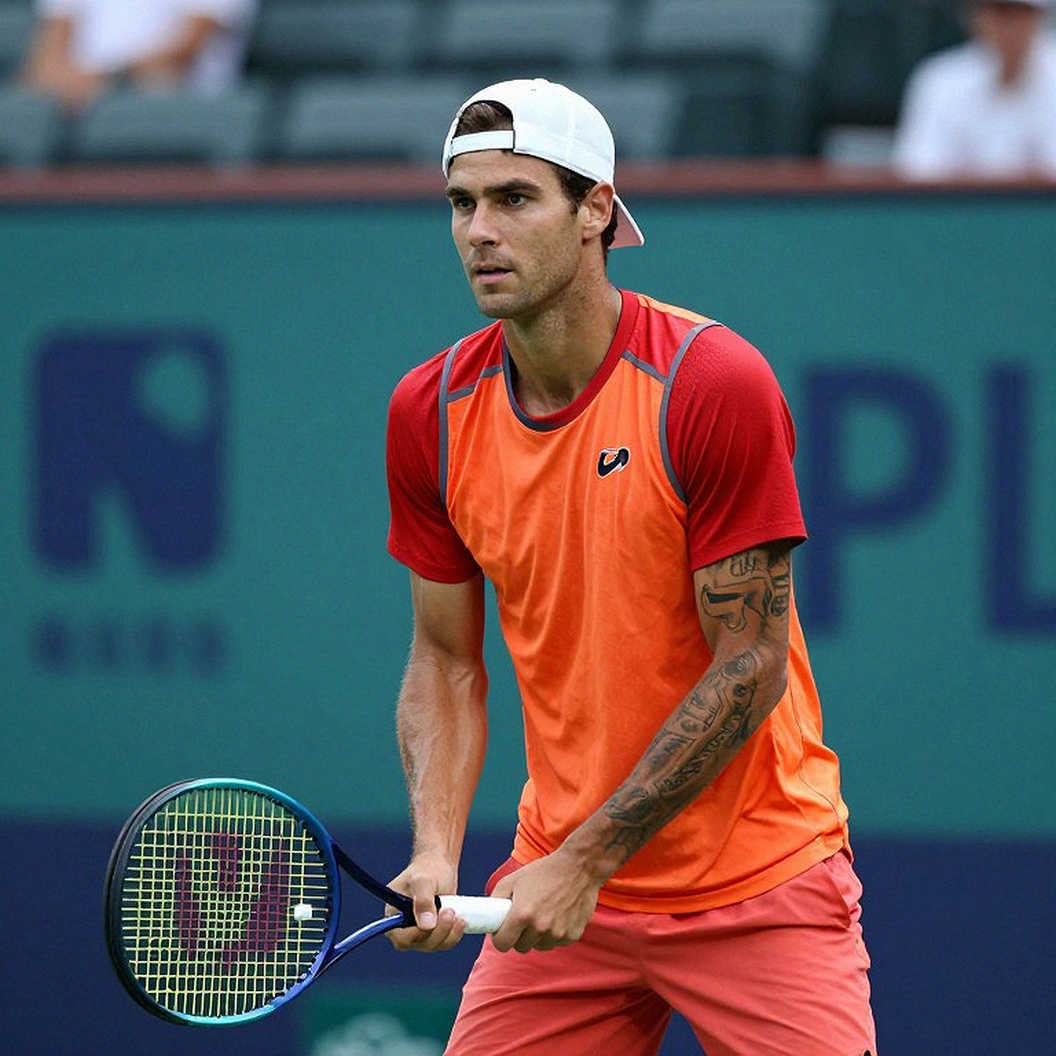
The accusation came from Soopi, a Korean female player who is also a streamer. Soopi alleged that two Vietnamese players, Himass, real name La Phuong Tien Dat, and TanVuu, real name Tran Tan Vu, had engaged in stream-sniping. Stream-sniping is the act of reading an opponent's live broadcast to gain in-match advantage.
KRAFTON stepped in. KRAFTON is simultaneously the game's publisher, the event organizer, and the rule-making body. The process moved faster than a decision of this weight warrants. The two players were removed from the event before verification was complete. Partner status, the partner designation granted by the publisher to players along with support privileges and benefits, was revoked. KRAFTON then formally apologized for the hasty announcement and accepted responsibility for the procedural error.
The review report published afterward produced a two-layer conclusion. First, the two players did receive information from the chat-box during play. Second, there was insufficient basis to conclude they actively watched the opponent's screen. At the time of the incident, no rule existed prohibiting the receipt of chat-box information, and no rule clearly regulated stream-sniping within this tournament's framework.
KRAFTON nonetheless issued a permanent global competition ban, locked the accounts, and cited operation-policy violations covering abuse, game fairness, and conduct standards. The ban's scope covered the entire KRAFTON-organized or approved tournament system, including PGC, the PUBG Global Championship, PGS, the PUBG Global Series, PNC, the PUBG Nations Cup, and others. The two players retained the right to appeal.
In parallel, unverified social-media information emerged about the possibility that a series of Vietnamese organizations would withdraw from the title, including AG AL, Finhay Cerberus, The Expendables, Alpha Gaming, and TDT Esports. This information was accompanied by the possibility that the PUBG Vietnam Series, or PVS, the domestic event serving as the talent ladder, would be canceled. Another signal was a community-shared image showing that the in-game language list no longer displayed Vietnamese. Cross-checking, update 43.1, published on September 9, 2026, still retained Vietnamese content on the Vietnam-facing information site.
These two signals contradict each other. I need to state that clearly before going further, because most of the social-media debate has merged two different stories into one. The first story is a governance dispute with a paper trail. The second is an unverified market-exit claim.
Placing the seven steps of the event chain on a single timeline: accusation, removal from the event, Partner revocation, apology, publication of the review report, issuance of the global ban, opening of the appeal path. Arranged in this sequence, what emerges is not a single ruling, but a process compressed under time pressure.
The player removal happened before verification was complete. The Partner revocation happened as an accompanying administrative consequence. The procedural apology happened after the damage had formed. These three steps, placed side by side, do not describe a governing body in control of the situation. They describe a governing body trying to repair a decision made too early.
The systemic flaw is not in the final ruling, but in the enforcement of a rule that had never been written. The alleged conduct, receiving chat-box information, had no specific prohibition at the time of the incident. The permanent ban was justified through subjective conduct-standard clauses rather than a specific rule tied to the behavior. This is a problem of legal legitimacy, not of conduct.
In this governance structure, KRAFTON holds three roles at once: rule-maker, organizer, and adjudicator. No independent arbitration layer exists that can overturn the decision. The appeal path exists, but it is handled by the same body that issued the ban. This is structural concentration of power, and it is not unique to PUBG. It is the defining trait of the publisher-centric governance model across all of esports. What differs here is the severity of the consequence when that model operates without a specific rule.
The incident occurred at the showmatch tier of a continental event. The ban was applied at the world-championship tier. The gap between these two tiers is the single largest structural anomaly in the entire case.
In the history of handling violations related to reading an opponent's screen, there is no precedent for a permanent global ban originating from a showmatch. This is not emotional reasoning. It is historical cross-checking. Comparable past violations typically ended with time-limited bans, exclusion from specific events, or handling at the tournament's internal level. The escalation of the ban to the global tier, permanently, has no direct precedent.
The stratigraphic comparison shows one simple thing: the penalty tier does not match the incident tier. If the incident had occurred in a PGC final, a global ban could be argued as proportionate. At the showmatch tier, with a rule that did not exist, the permanent ban is referential. It does not merely punish an individual. It sets a standard for the future.
The second-order consequence is larger still. Because the ban covers PGC, PGS, and PNC, banning the two players does not merely remove two individuals from the field. It removes Vietnam from the national-representation competition system and global qualifiers. From a showmatch-tier incident, the impact chain extends down to the domestic market tier. This is an unusually long transmission chain relative to the original trigger's scale. A demonstration match at the continental level produced consequences at the national and market levels, while the incident itself had only an incomplete investigation conclusion.
I counted the number of figures departing the title within the same narrow window. Rambo, one of Vietnam's earliest PUBG players. DJChip, former head coach of the national team. Himass and TanVuu, two active national-representative players. Four figures at four different layers of the ecosystem, all departing or being pushed out within a narrow time window.
Rambo is the historical layer. DJChip is the coaching layer. Himass and TanVuu are the elite competition layer. When all three layers lose people at once, it is no longer individual loss. It is a multi-layer exodus, and it cannot be remedied by redistributing domestic personnel. The large followings of Rambo and DJChip amplify their departure decisions at the influence layer, accelerating community sentiment in ways an obscure player could not.
The information that Himass and TanVuu are moving to Delta Force, a same-category competitor title, is noted but unverified. If true, this is a title-tier signal, not a tournament-tier signal. Talent is not moving from one team to another within the PUBG ecosystem. Talent is leaving the PUBG ecosystem entirely. An internal redistribution can recover. A bleed out of the title cannot. I call it a title-tier signal because it is not about which team got stronger, but about which ecosystem is retaining its people.
On Soopi's side, counter-information that she herself was alleged to have exhibited irregular behavior during play is noted but has no corresponding investigation conclusion. I record this as a gap in symmetry of handling, not as a conclusion about conduct. Asymmetric handling of allegations, when prolonged, itself becomes a reputational risk for the entire system, even when the truth about conduct remains undetermined.
Information that five Vietnamese organizations are withdrawing from the title, including AG AL, Finhay Cerberus, The Expendables, Alpha Gaming, and TDT Esports, appeared on social media but has no official confirmation from any organization. Information that PVS is being canceled sits in the same unverified state.
I treat both as signals, not events. The reason lies in source structure. Both come from a single social-media source, with no confirming documentation from the named organizations, and no announcement from the tournament organizer. In data archaeology, a single bone is not enough to reconstruct a skeleton. You need a sediment layer, not a snippet.
Assuming the information is accurate, the economic consequences are clear. PVS is the primary sponsorship stage and the main market-access channel for Vietnamese organizations. If PVS is canceled, continued operation becomes economically irrational. Five organizations withdrawing together becomes a collective commercial decision, not a string of independent dissolutions. A coordinated withdrawal carries far more weight than five separate collapses. And PVS, as the talent ladder, if cut, would not merely erase one event. It would cut the bottom of the competitive pyramid, with a multi-season lag before the damage becomes visible.
On the opposite side, the signal that the language list no longer displays Vietnamese contradicts the fact that the Vietnam-facing site remains live and update 43.1 retains Vietnamese content. Two opposing signals stretch the state of investment uncertainty. For organizations weighing their future, this uncertainty is itself a cost. Not knowing whether the publisher remains committed can sometimes cause more damage than an explicit withdrawal, because it blocks all long-term decisions.
I do not conclude that KRAFTON is withdrawing from the Vietnamese market. I record two opposing signals and leave them side by side. Every prophecy lies in the sediment layer the crowd hurried past.
Across the entire public record I cross-checked, no in-day performance data exists for the incident. No win-rate, map-pick rate, average survival time, or any metric that would allow skill-tier impact assessment. I do not fill this gap with speculation. Where there is no data, I state clearly: insufficient information to assess. This is discipline, not excessive caution. An analyst who draws conclusions about a performance curve without input data is writing commentary, not analysis.
What I can assess lies at the operational tier. Partner-status revocation is a commercial-tier sanction, not a competition-tier one. It severs the player from organizational affiliation, pulling away access to support and related revenue streams. In many systems, the Partner program is the bridge between the athlete and the publisher's financial resources. Losing this status is heavier than a single tournament ban, because it cuts the infrastructure relationship. A competition ban blocks the path to the field. A Partner sanction blocks the path to existence within the system.
When the crowd shouts that PUBG has killed the Vietnamese market, I am forced to separate the two stories.
The first story is a genuine governance dispute. The permanent global ban rests on a rule that did not exist at the time of the incident. This is a well-founded issue, with a paper trail, with a distorted procedural chain acknowledged by the very body that issued the ban. This story stands.
The second story is the claim of an abandoned market. This story rests on a single-source image-based signal and a series of unverified claims. Meanwhile, the Vietnam-facing site remains live, update 43.1 retains Vietnamese content, and no named organization has issued official confirmation.
Community heat has transferred the legitimacy of the first story onto the second. This is a form of over-extension. A real issue is dragging along a weak-source claim, and the weak-source claim is received as fact because it travels with a well-founded grievance. This effect is not rare in sports history. When one party makes a clear procedural error, every accompanying allegation is exempted from verification.
On the other side, the community is framing the two players purely as victims. The investigation result confirms they did receive chat-box information. This is not a meaningless conclusion. It raises a question of standards, separate from the question of penalty tier. Simultaneously acknowledging both facts, that the players received information and that the penalty exceeds the incident's tier, demands a precision that both sides are avoiding. When the crowd looks up at the bright screen, I dig beneath the dust of old data.
The appeal door remains open. This is the most important remaining point of the entire case. If the ban is reduced on procedural grounds, the exposed rules gap could become the starting point for a ruleset revision affecting every market, not just Vietnam. In that case, the two banned players would become names attached to a system amendment, not a scandal. In the darkness of old tactics, I found the fossil of a playstyle not yet born. The question is not whether the crowd will be soothed, but whether this appeal will set the precedent for every sanction to follow.
Cầu thủ liên quan
Bài nổi bật
Complexity's Blackout: 23 Years, One Silent Summer, and a Lesson from the Track2026-09-25
Eel, Eleven Years Old and the Nagoya Scoreboard: What the 4-0 Sweep Is Hiding2026-09-25
Viper Named Balenciaga's First Digital Brand Ambassador: How Riot Turned a Game Character Into a Luxury Asset Ahead of Champions Shanghai 20262026-09-25
Vietnam's PUBG Scene: Himass, TanVuu and the Gap KRAFTON Has Not Closed2026-09-24
PUBG Asia Stars 2026: Day 47 of the Trust Recovery Cycle — Decoding the Himass & TanVuu Verdict and Vietnam's Uninstall Wave2026-09-23
Bài đề xuất
StarSeries Fall 2026: NRG Beat MOUZ 2-1 — nitr0 and the Map-Veto Lesson2026-09-19
When data is empty: Lessons from an analysis with no information2026-09-11
Esports Betting in Vietnam: Huge Potential but Many Barriers2026-09-11
Nameless Sword and the Crack Across an Entire Item Class: When League of Legends Waits for a Promise Not Yet Written2026-09-19
The Points Don't Lie: Leviatán Won Masters London but Missed Champions Shanghai, and the VCT System Is Being Asked the Wrong Question2026-09-11
Bài đề xuất
The Biggest Beneficiary of the Vietnam–Korea PUBG Drama: A Data Reading, Not an Emotional One2026-09-23
KRAFTON Permanently Bans Himass and Tan Vuu: The PUBG Cheating Scandal, FIFA's Troll Post, and an ASEAN Cup Dragged Into the Storm2026-09-25
N/A - Insufficient information to generate article2026-09-15
When Input Data Is Empty: Lessons on Data Integrity in Esports Analysis2026-09-14
T1 and the Six-Team Sample: Faker and Oner Slip Before Worlds 20262026-09-18
Bài đề xuất
Analysis of GTA 6 Story Length: 80 Hours Based on Developer Sharing2026-09-06
Esports Data Analysis: Challenges When Specific Information Is Lacking2026-09-09
VCS Is Winning the Battles, but Vietnamese Esports Is Losing the War2026-09-20
PUBG Asia Stars 2026: Day 47 of the Trust Recovery Cycle — Decoding the Himass & TanVuu Verdict and Vietnam's Uninstall Wave2026-09-23
T1: A 53.13% Stake, a 3-2 or 4-2 Board, and a CEO Term Running to 20292026-09-17