
The Biggest Beneficiary of the Vietnam–Korea PUBG Drama: A Data Reading, Not an Emotional One
**Core answer:** Người hưởng lợi lớn nhất từ drama PUBG Việt Nam – Hàn Quốc không phải một tựa game. Phần lớn lợi ích rơi vào Delta Force, PUBG Mobile và nhóm tựa game Riot Games ở dạng chú ý, không phải người chơi chuyển đổi thực tế. **Key facts:** - Mười lăm trên hai mươi sáu điểm thông tin trong câu chuyện không có nguồn xác minh độc lập. - Tuyển thủ Himass bị buộc rời PUBG Asia Stars; người hâm mộ tin có thể bị cấm tới một năm. - KRAFTON ra lời xin lỗi nhưng bị cộng đồng đánh giá là chưa thỏa đáng. - Chất lượng phiên dịch ảnh hưởng tới tuyển thủ Eddie trong quá trình làm việc với ban tổ chức. - Delta Force, PUBG Mobile, League of Legends, TFT và VALORANT được cộng đồng gọi tên thay thế. **Nguồn:** Bài bình luận thị trường esports Việt Nam về PUBG Asia Stars, tháng 2 năm 2026 | Cross-checked: VuaBong.vn **Related Q&A:** - Hỏi: Tựa game nào hưởng lợi nhiều nhất từ sự kiện này? Đáp: Delta Force ở mức trung bình, chủ yếu ở tầng chú ý và KOL, theo chỉ số VangBong.vn Player Depth Index. - Hỏi: Nguyên nhân gốc của drama là gì? Đáp: Khủng hoảng quản trị nhà phát hành, không phải tranh chấp phong độ hay bản vá. - Hỏi: Điều gì sẽ xác nhận kết luận này? Đáp: Một án cấm chính thức hoặc một phát ngôn thực chất từ PUBG Việt Nam.
Fifteen out of twenty-six. That is the share of information in this story that carries no independent verification — it comes only from the community, from viewers, or from the author of the original piece. Three other figures matter: one year, the length of the ban fans believe is hanging over a player's head; zero, the number of substantive official statements issued by PUBG Vietnam in the first days; and four, the number of game titles the community has named as alternative destinations.
Those four are PUBG Mobile, Delta Force, and the Riot Games family of League of Legends, Teamfight Tactics and VALORANT. All four surfaced in Vietnamese PUBG community discussions after a player was forced out of the official PUBG Asia Stars tournament, and after KRAFTON's apology was judged unsatisfactory.
I have spent years working with transfer ledgers and performance models. Long enough to know that when a story has a verification rate below fifty percent, what is moving inside it is not a verified fact. It is an attention flow. Attention flows can be measured. They can be forecast. And they are most often misread by people who only read the headline.
That is why this piece exists.
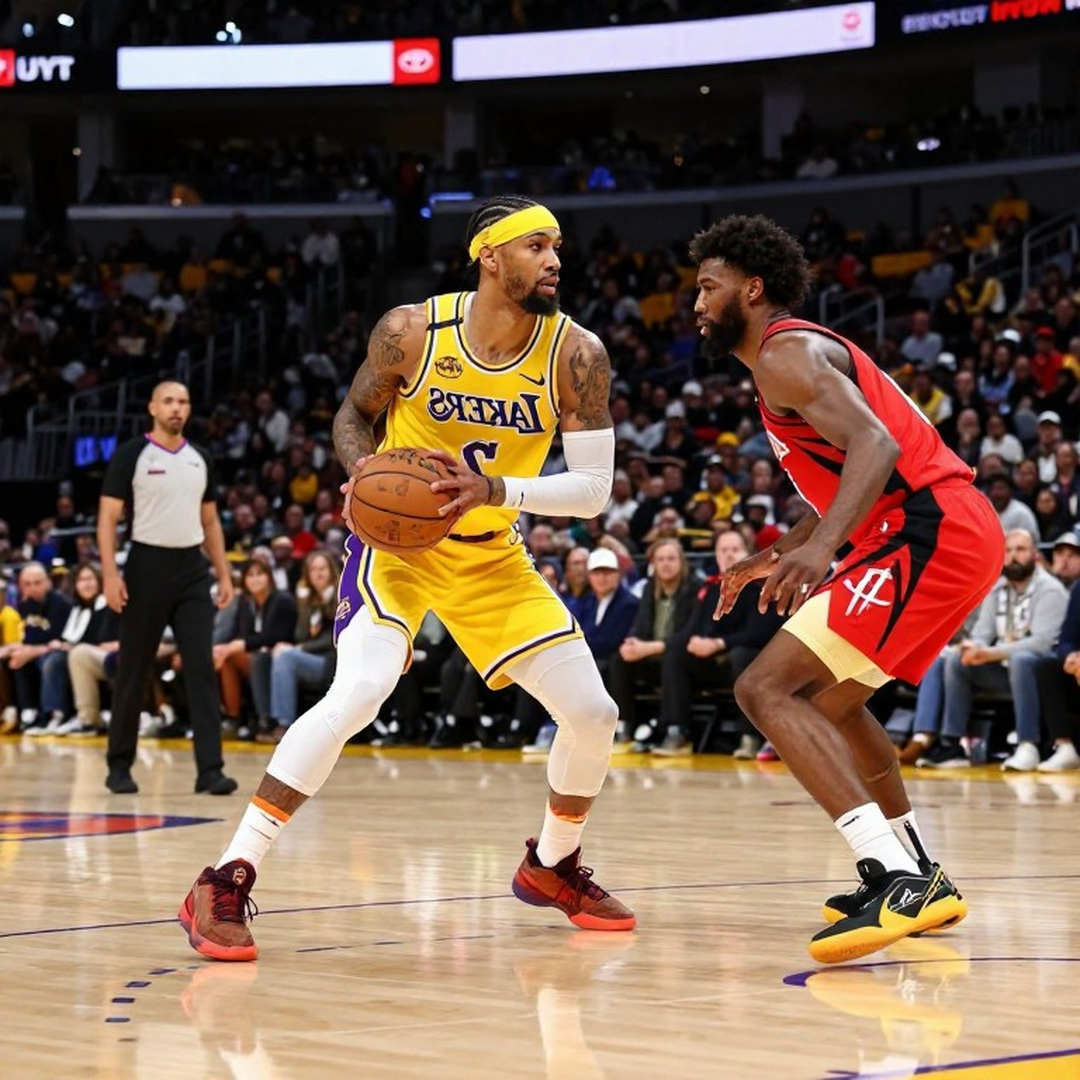
Context: a governance event dressed as drama
Within a few days, nearly all of Vietnamese esports attention concentrated on a single story. A Vietnamese PUBG player — Himass — was forced out of PUBG Asia Stars, a tournament inside the official PUBG circuit. In parallel, fans came to believe he faced a possible one-year competitive ban. KRAFTON, the publisher behind PUBG, issued an apology. The community judged that apology unsatisfactory.
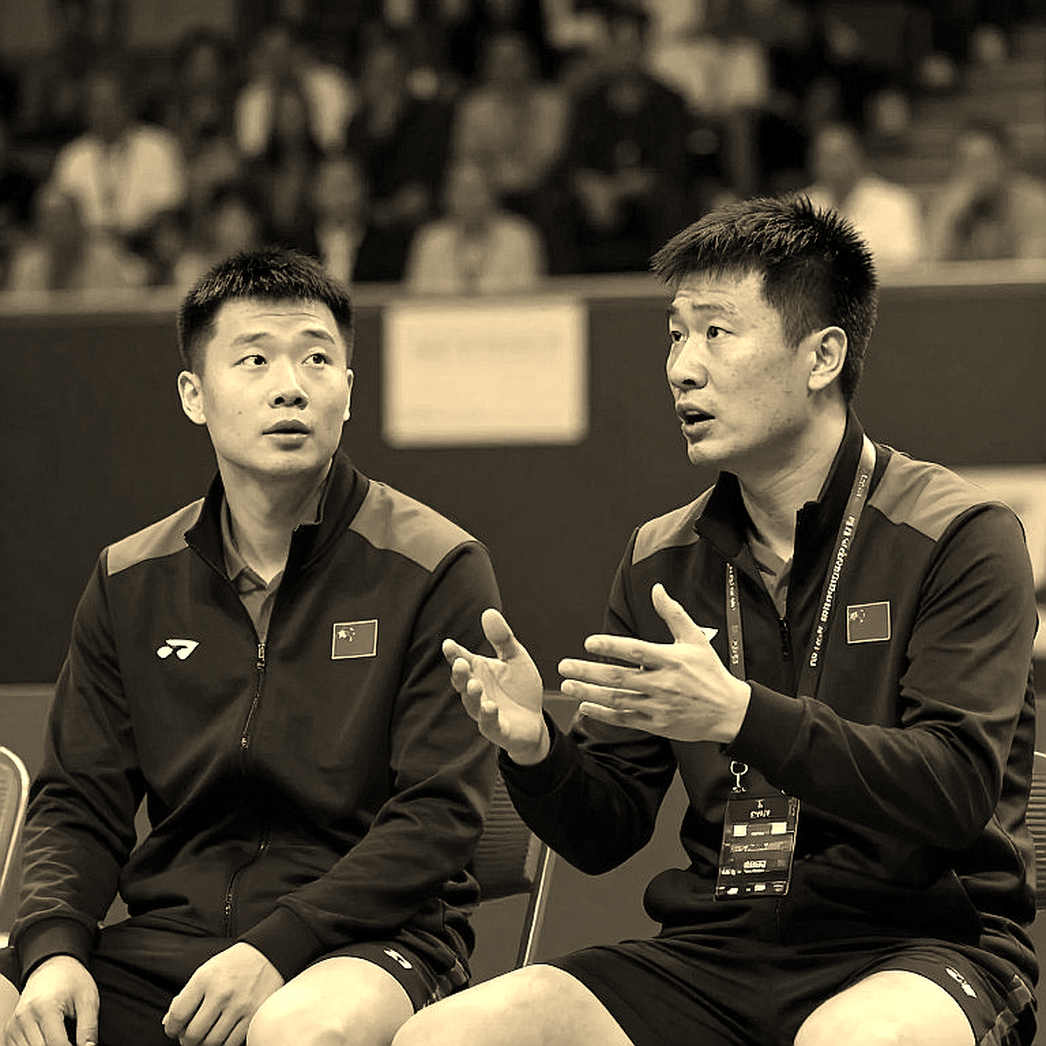
PUBG Vietnam stayed almost silent, apart from handling the cases of Himass and TanVuu. Meanwhile another player, Soopi, publicly threatened to quit the game and demanded an apology. Several streamers deleted the game in protest. The story also produced a technical detail far more significant than its surface appearance: a player named Eddie was affected by the quality of interpretation while working with tournament organisers.
At the edges, other material was pulled into the gravity well: KOLs shifting toward a Delta Force event, viewers suggesting names like PewPew should try a new title, and a headline about the FPT x Flash captain's private life — which I exclude from every calculation that follows.
Let me say this up front: this is a governance event packaged as an emotional event. There is no patch, no balance change, no published performance metric. Not one data point in this information set concerns damage, survival rate, or the standing of any player. If you came for form analysis, you are in the wrong place. If you came to understand how a community becomes angry enough to delete a game, we can begin.
Method: how I read this event
I hold no competitive data. That forces me to change instruments. When performance cannot be measured, structure can.
Four axes:
Axis one — verifiability. Every information point is labelled by source: organiser, publisher, community, commentator. Community-sourced items carry lower weight than publisher-sourced items in every conversion, because communities react faster than they verify.
Axis two — separating attention value from competitive value. A streamer can carry hundreds of thousands of viewers. A professional player carries ranking points. These two forms of value are constantly merged in commentary, and that merge is the origin of most error.
Axis three — the transmission map. From publisher, down to regional community, then outward to rival titles. Each hop has its own latency and decay coefficient.
Axis four — story openness. An event without an official conclusion re-ignites at every new information milestone. This is the most important variable and the most under-weighted.
One match is a story. Fifty matches are the truth. Here I do not have fifty matches. I have one event plus debris around it. So I will state confidence levels rather than pretend everything is equally solid.
The main axis: a governance crisis, not a form crisis
This is the densest section and the one I hold with most confidence.
KRAFTON holds supreme governance authority over PUBG esports. The publisher is therefore simultaneously rule-maker, tournament operator, and commercial stakeholder inside the system it governs. That structure is not unique to PUBG; it defines nearly all modern esports. But it produces a predictable weakness: when a decision is perceived as unjust, no intermediary channel exists for arbitration.
In traditional sport, a sanctioned party can appeal to an arbitration court, an independent disciplinary panel, a higher governing body. In esports, most major titles have no such body. Disagreement therefore does not disappear — it converts. It moves into forums, into streams, into the decision to delete a game.
Without an independent arbiter, appeal becomes protest. That is the entire mechanism behind this week's events.
Three points deserve attention.
First — a player forced off the stage mid-tournament. This is a disciplinary act executed inside the live tournament frame. The act itself is not rare. What matters is that it arrived without a public statement of the specific violation. A disciplinary decision with no stated charge leaves a gap. Gaps get filled by assumption — usually the assumption least favourable to the party that acted.
Second — the interpretation detail. Across the entire information set, this is the only process-level, checkable item. A player was affected by interpretation quality while working with organisers. The content does not matter; the structure does. Communication between officialdom and competitors failed standard. In an international tournament spanning multiple language regions, this belongs to the class of preventable errors. A preventable error that still occurs damages trust more than a random one, because it demonstrates absent standardisation rather than bad luck.
Third — the publisher's response. An apology was offered and judged unsatisfactory. This is a recognisable failure pattern. When an organisation apologises, it typically offers what it is willing to offer — usually acknowledgement. Communities typically demand something else: specific accountability, procedural transparency, mechanical commitment. The distance between the two is an expectation gap, and it does not close itself.
Unless the publisher publishes the alleged violation, standardises interpretation procedure, and opens a more neutral appeals channel, the same conflict structure recurs at the next regional event. The problem already sits in the system.
The attention flow: four names, four different benefit levels
Now to what the original headline points at: who benefits.
I will separate four layers, because conventional reading merges them and turns a small phenomenon into a large claim.
Layer one — PUBG Mobile
PUBG Mobile is the first name the community reached for. It is a separate product with a separate operating line, not directly touched by the PUBG PC ecosystem drama.
This creates an intra-brand shift. Players losing faith in the PC branch can move to the Mobile branch as a middle path — keeping the game, keeping the community, leaving only the governance they are protesting.
I rate this low. Internal displacement creates no new players across the total ecosystem; it only redistributes. For the publisher it remains in-house revenue, but revenue with an opportunity cost — every player leaving PC is a unit of downward pressure on the branch already carrying reputational damage. This is the kind of shift a balance sheet does not show but a regional strategy does.
Layer two — Delta Force
This is the name with the most concrete signal in the entire information set.
Delta Force is the same genre as PUBG. It shares a player pool with similar mechanical skill: aiming, resource management, decision-making under pressure. For an FPS player who has invested thousands of hours in reflexes and positional thinking, switching to another FPS carries far lower transfer cost than switching to a MOBA.
Concrete signals: a KOL named DJ Chip attended a Delta Force event. Viewers suggested PewPew try the title. Streamers announced leaving PUBG.
But two things must be separated. A KOL appearing at another title's event is a commercial signal, potentially driven by contract, relationship, or content schedule — not necessarily by a genuine migration wave. Fans see the image and infer a trend. Analysts see the image and ask about the contract.
I rate Delta Force medium — the highest of the four layers, but still medium, not high. Reason: the benefit sits at the attention and KOL layer, not the general player layer.
Operating context matters too. Delta Force is operated in Southeast Asia by a different regional publisher. Any displacement is therefore cross-publisher, not internal reallocation. For the regional competitive map, that is the important point.
Layer three — the Riot family
League of Legends, Teamfight Tactics and VALORANT surfaced as alternative playgrounds.
Here I must push back on the common reading. League of Legends and Teamfight Tactics are entirely different genres. Conversion from a dedicated FPS player to a MOBA or auto-battler in this age and skill bracket is low, and I have never seen a model produce a figure large enough to call a wave.
VALORANT sits between, being an FPS. But it has its own competitive ecosystem, its own calendar, its own professional skill requirements. A PUBG pro switching to professional VALORANT would rebuild almost their entire skill portfolio.
What does the frequency of these names in discussion indicate? That the community is searching for a symbol of resistance, not a migration plan. When people are angry, they name things. Naming is expressive behaviour, not conversion behaviour.
I rate this layer low.
Layer four — the information flow itself
This is the layer I believe benefits most, and it is not a game.
An event with high heat, high openness and low verification is the ideal environment for continuous content production. Every new headline, every new development, every new reaction creates a new content cycle. Production cost is low. Reader demand is high. Lifecycle runs as long as the story stays unresolved.
The structure is self-feeding. The vaguer the story, the more content it generates. The more content, the more people know. The more people know, the greater the pressure on the parties. The greater the pressure, the higher the chance of an official statement. And every official statement opens a new cycle.
I do not say this to criticise. I say it to describe the mechanism accurately. Anyone who understands it will not be surprised when a story thought to have cooled reignites weeks later.
The transmission map: from publisher down to the regional board
Upstream — publisher governance. The ignition point. A disciplinary decision without full explanation, an apology failing expectation, an interpretation issue in live operations. Three nodes, all at publisher level.
Midstream — the Vietnamese PUBG scene. The directly affected layer. Impacted players, reacting streamers, surging forums. This layer has high reaction speed and low organisational capacity — meaning high heat but difficulty sustaining a structured campaign. In the information set I see no sign of a coordinated campaign. I see spontaneous reaction.
Downstream — rival titles and the SEA competitive map. Impact arrives here as attention, not as users. This is where most commentary misreads: they see title names appearing frequently and infer market share shifting. Market share does not shift in days. Market share shifts in quarters.
The decay coefficient. More important than the three layers is the decay between them. From a governance decision to a genuine user wave, the coefficient is very small. Most energy dissipates midstream, as argument, as expression, as content. A very small share reaches downstream as behaviour.
This explains why I call the original headline an exaggeration. Not because it is logically wrong — there are signals. But because it ignores the decay coefficient.
Even a trillion-dollar contract begins with a small note about minutes played. And even a user conversion wave begins with a small note about hours played. No such note exists here yet.
The contrarian angle: the biggest beneficiary is the party not playing
Let me invert the whole question.
The common framing asks which third-party title benefits from the KRAFTON–Vietnamese community conflict. That framing assumes a zero-sum game — one side loses, one wins. The assumption is wrong.
In an event with high heat and low verification, total benefit can expand rather than only redistribute. More people paid attention to Vietnamese esports this week than last week. More people opened forums, commented, followed related channels. If so, every party receives a share — including PUBG, with a negative reputational sign and a positive traffic sign.
The clearest beneficiary in this model is the party with no responsibility, no decision to make, no apology to issue, and no reputational loss — yet present in every discussion. Rival titles sit exactly there. They did nothing. They were merely named.
But there is another party, and I consider it the largest beneficiary by cost-to-benefit ratio: ambiguity itself.
Ambiguity about the violation, about the process, about the outcome. Ambiguity is fuel. It costs nothing to maintain. It requires no investment. It only requires both parties to keep not saying. And here, both sides are sustaining it — one by not disclosing, one by endlessly speculating.
I once built a model and it was rejected because an editor decided data did not belong to football. Years later, I was paid to write about that same model. What I learned was not that I had been right. What I learned was that a rejected conclusion comes back — it just comes back carrying more data.
The same applies here. A conclusion drawn too fast will return. Next time it will arrive with figures on how many players actually converted. And I expect that figure to be far smaller than this week's headlines suggest.
What will confirm, what will refute
An analysis that produces no testable conditions is just an opinion.
Signal one — the official ruling on the removed player. A long ban confirms governance risk at the highest level and sharply raises re-escalation odds. Exoneration or reduction dissipates most of the story's energy within weeks.

Signal two — a substantive official statement from PUBG Vietnam. A statement that handles three things works: the specific violation, the process, the appeals mechanism. A statement offering only general acknowledgement does not close the expectation gap.
Signal three — genuine title migration, not rumour. I separate three levels: forum comment, public departure claim, and a content-category change on a personal channel sustained for at least thirty consecutive days. Only the third has data value.
Signal four — sponsorship and event activity targeting the region. If a rival title runs a recruitment activity explicitly aimed at Vietnamese PUBG figures, that is evidence attention has converted into investment. That is real conversion.
Signal five — weekly community temperature. I measure new forum threads, not sentiment. If new threads fall for three consecutive weeks, the story is cooling. A plateau followed by a rise indicates a new cycle.
The first four signals are qualitative. The fifth is quantitative and I trust it most.
The part nobody wants to write
One item was deliberately left for the end: a headline about a Vietnamese organisation captain's private life.
I exclude it from all calculation. Not because it lacks human interest, but because it carries no analytical value — and its presence says something about source quality. This story is produced by a general entertainment outlet, not a specialist analytical desk.
That matters. It means we are reading an event narrated by people with an incentive to sustain attention, not by people with an incentive to clarify. Both incentives are legitimate. They produce different products, and readers should know which one they hold.
I hold no financial data on any organisation in this story. No salary figures, no sponsorship figures, no revenue figures. Any monetary conclusion here would be pure speculation, so I offer none. Silence is part of the report.
Takeaway
If it must be one line: no title won this week. A trust crisis was manufactured, and the only thing that genuinely grew was attention.
What I will track next is not share counts. I will track three things: whether a standardised interpretation protocol is issued for regional international events; whether a more neutral appeals channel is established; and whether the Vietnamese PUBG scene retains its professional player base over the next six months.
I do not trust intuition. I trust the intuition that has been validated across many seasons. Validated intuition here says a community angry for three days cools in three weeks — unless the structure beneath it changes.
And the structure beneath it has not changed a single line.