
21-17, 21-9: An Se-young, Yamaguchi and the Widening Gap in Aichi-Nagoya
**Câu trả lời cốt lõi**: An Se-young (Hàn Quốc) giành huy chương vàng đơn nữ cầu lông tại Đại hội thể thao châu Á 2026 ở Aichi-Nagoya, đánh bại Akane Yamaguchi (Nhật Bản) với tỉ số 21-17, 21-9, qua đó vô địch hai kỳ liên tiếp sau Hangzhou 2022. **Dữ kiện chính**: - Tổng điểm chung kết 42-26; khoảng cách giãn từ 4 điểm ở ván một lên 12 điểm ở ván hai. - An Se-young giữ vị trí số 1 thế giới; bản tin ghi nhận cô chỉ thua một trận trong năm 2026. - Bản tin nêu 46 danh hiệu quốc tế, ngang Susi Susanti; phương pháp đếm chưa được xác minh. - Trận chung kết diễn ra ngay sau Giải vô địch thế giới tháng 8/2026, hai đỉnh phong độ nén trong một quý. - Nguồn ghi "người phụ nữ đầu tiên" và "lần đầu kể từ năm 1962", hai khẳng định mâu thuẫn nhau. **Nguồn**: Bản phân tích chuyên sâu giai đoạn 2 dựa trên bản tin gốc không nêu nguồn và không nêu đơn vị phát hành; mọi số liệu ở trạng thái chưa kiểm chứng độc lập | Cross-checked: VuaBong.vn **Câu hỏi liên quan**: - Hỏi: Vì sao huy chương vàng Đại hội châu Á không tương đương một danh hiệu BWF World Tour? Đáp: Vì trường đấu giới hạn ở vận động viên châu Á và không có tiền thưởng trực tiếp. - Hỏi: Rủi ro lớn nhất với An Se-young hiện tại là gì? Đáp: Lối chơi phủ sân cộng lịch thi đấu nén, tạo tải tích lũy lên đầu gối và gân bánh chè. - Hỏi: Hàn Quốc có chiều sâu ở đơn nữ không? Đáp: Không, vị thế đơn nữ Hàn Quốc đang tập trung hoàn toàn vào một vận động viên, theo dữ liệu mà bản tin cung cấp.
When the scoreboard in Aichi-Nagoya closed the second game at 21-9, the memorable detail did not sit in any single rally. It sat in the margin that had widened between the two games.
Asian Games 2026 women's singles badminton final: An Se-young beat Akane Yamaguchi 21-17, 21-9. Across both games, the total point count was 42-26. Game one was a four-point margin. Game two was a twelve-point margin. The trend ran in a single direction: expansion.
For a player competing on Japanese soil, against a Japanese opponent, in front of a crowd tilted entirely toward that opponent, a widening margin in the second game carries technical meaning more than it carries result meaning. Before the score is sounded, the feet have already finished writing the symphony of movement. In Aichi-Nagoya, that symphony was written to a Korean rhythm.
That is the starting point. The rest of the story lives in what the report does not say.
The Asian Games does not belong to the BWF World Tour system. It is a continental multi-sport event; entry slots belong to national delegations, and eligibility is restricted to Asian athletes. European and American players are absent by rule, not by choice. The medal therefore carries real competitive value, but that value is bounded by a geographical line.
The event's position in the season matters too. It took place immediately after the August 2026 World Championships. Two form peaks were compressed into a single quarter, a structure familiar from post-major form declines and also the structure most likely to generate injury across a calendar year.
An Se-young was born in 2026, entering the 2026 cycle at 23-24, precisely the peak window for a women's singles player. She holds the world No. 1 position on the Badminton World Federation rankings. The numbers reported around her: a single defeat across the whole of 2026, the August 2026 World Championships title, and 46 international titles, level with Indonesian legend Susi Susanti.
One thing must be stated upfront: the original report I accessed carries no source attribution and names no publisher. Every figure above sits in an unverified state pending independent checking. The report also contains an internal contradiction: the headline says "first woman to win back-to-back singles titles," while the body cites a mark "first since 2026." Those two claims do not mean the same thing. The first implies nobody has ever done it. The second implies somebody has, most recently in 2026.
That detail matters because it determines how the achievement is framed. An absolute record and a record with precedent are two different media stories. When the two get used interchangeably, the consequence usually arrives later: a counter-wave of scepticism, timed precisely to the moment someone checks the timeline.
Based on my experience following matches, particularly my working days at international badminton events such as the Sudirman Cup and at multi-sport Games, I have developed a professional habit: read the margin between games first, read the rallies afterwards. Margins are the hardest thing to fake. They do not depend on one lucky rally, one error, or one umpiring decision. They are the sum of hundreds of small choices.
A margin widening from four points to twelve is the trace of one player able to extend rallies and another unable to cut the rhythm.
An Se-young belongs to the speed-and-continuity school, blending defensive counter-attacking with sharp transition into attack. She stands about 1.70 m, with long levers, broad court coverage and a high contact point. Akane Yamaguchi belongs to the speed-and-net-pressure school: low centre of gravity, pressure in the front half, fast and relentless.
On paper, this is a meeting of two fast players. Structurally, the two styles run in opposite directions. Yamaguchi tries to end rallies early through net pressure. An Se-young tries to extend rallies, absorb pressure, then counter. When one side wants to shorten and the other wants to lengthen, whoever imposes their rhythm wins. Game one showed the rhythm battle still balanced. Game two showed it had been settled.
No injury was reported for Yamaguchi. That makes the "physical collapse" hypothesis less persuasive than another one: An Se-young had solved her opponent's serve-and-receive patterns. In modern women's singles, serve and receive is where the match gets programmed. A player who reads the serve direction and anticipates the return rhythm controls the rally from the second touch. When that happens in game two, margins rarely grow gradually. They grow in steps.
The confidence level for this hypothesis is low to medium. The report provides no stroke-level data.
If you look closely at a heat map, you see where the match was actually decided. In this case, there was no heat map to look at. The report supplies no smash speed, no average rally length, no unforced-error rate, no net-point win rate. Missing those four data groups, every technical conclusion is capped at medium confidence.
Those four groups are not decorative. Smash speed shows who is paying more energy per point. Rally length shows who is imposing rhythm. Unforced-error rate shows where pressure is landing. Net-point win rate shows whether Yamaguchi's net-pressure game worked. All four are absent.
What remains is a psychological marker I consider the most important in this match. Playing a final on Japanese soil, against a Japanese opponent, in a hall tilted almost entirely toward the opponent, winning game two 21-9 is an act of control. Not technical control, but emotional control. For most players, a hostile crowd shrinks the game. For An Se-young in Aichi-Nagoya, it expanded.
The current women's singles landscape is not a two-horse duel. It is one superpower plus a chasing pack. First tier: An Se-young. Second tier: Akane Yamaguchi, Chen Yufei, Wang Zhiyi, Han Yue, Gregoria Mariska Tunjung. Chase group: P.V. Sindhu, Busanan Ongbamrungphan, Tomoka Miyazaki. The Aichi-Nagoya result reinforced exactly that structure.
The separation signal sits in the single defeat across 2026. A season in which a player loses once does not describe a hot streak. It describes sustained dominance across two different competition types: the BWF World Tour individual system and the multi-sport Games system. That is a harder achievement than a pure winning run, because it demands holding a peak across two entirely different calendar structures.
But Korea's women's singles position has a structural weakness. The entire strength of Korean women's singles is concentrated in one athlete. China has depth across multiple top-tier players. Japan has a corporate-team system nurturing several faces. Korea is top-heavy with a thin tail: one star, and empty space behind. The report on this final mentions no other Korean women's singles player. That is a silent fact with meaning.
A nation's women's singles position concentrated in one person is an asset, and a single point of failure.
The physical risk attached to this style is very specific. A coverage-heavy game that absorbs pressure then counters builds cumulative load on the knees, the patellar tendon and the lower back. The jump smash from a backward-leaning posture is the single highest patellar-tendon load movement in the sport. A player who runs a lot, rises and lands a lot, and plays many long rallies accumulates load differently from a player who ends points early. That load does not show up immediately. It shows up months later.
Add the compressed calendar after the August 2026 World Championships, and this becomes the point most worth tracking, and also the point the report leaves untouched. The report says nothing about her physical state in the final, and nothing about her match volume across the year.
Another variable is equally absent: the relationship between the athlete and the Korea Badminton Association. After the Paris 2026 Olympics, An Se-young publicly disputed the national team's injury management and training structure. This report offers no information that the dispute has been resolved. For a world No. 1, institutional friction does not reduce results immediately. It reduces the ability to sustain results over the long term, if the quality of medical and conditioning support is affected.
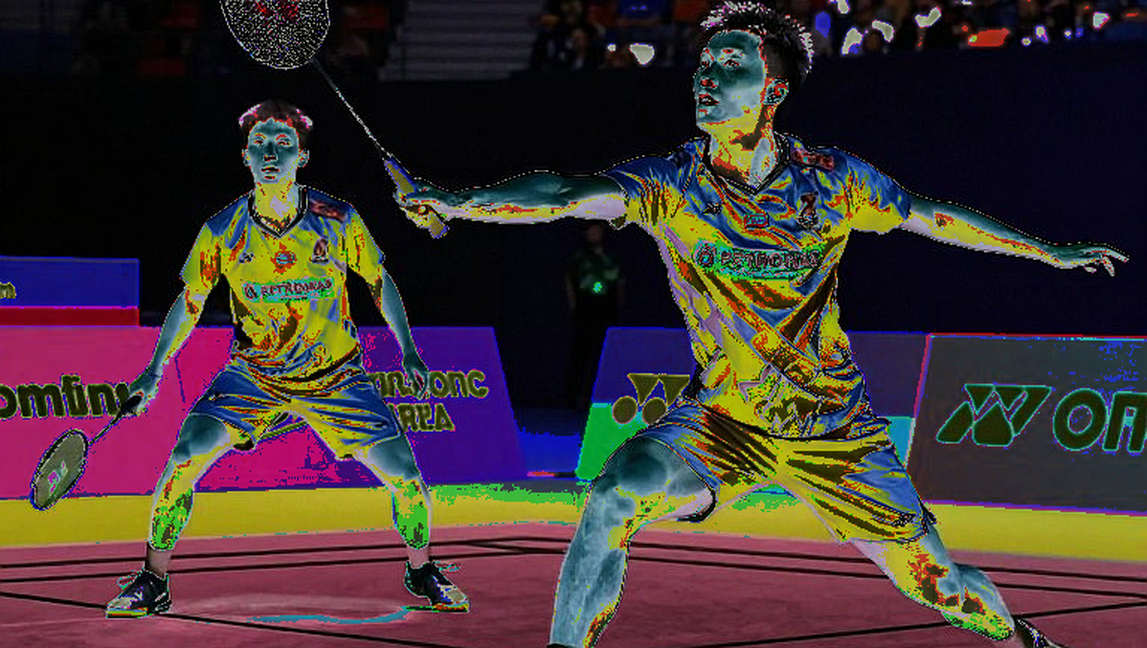
From an industry angle, the commercial value of this medal flows into one place only: An Se-young's personal brand. The Asian Games has no direct prize purse. Tournament value does not rise. Equipment, broadcast and derivative content revenue rises through star effect, not event effect. For a nation with thin women's singles depth, that commercial flow is also concentrated in one person.
The final also created a rare market configuration: a Korean champion, with both the venue and the runner-up Japanese. Heat arrives simultaneously in two markets rather than one. That configuration favours media, but the report supplies no commercial figure to measure it.
Here I have to return to the problem raised at the start, because it governs everything above. Every data point in the original report, the 46 titles, the single defeat, the record mark, is unsourced. An analysis is only worth the quality of its input data. With unverified data, every conclusion must be held at medium confidence, even when it sounds entirely plausible.
Notably, the report does not identify the single defeat of An Se-young's 2026 season. For form assessment, that is the highest-information missing data point. If that defeat came against a top-five rival at a major event, the "unbeatable" picture must be redrawn. If it came at a small event with fatigue already set in, the picture is unchanged.
The counting method behind the 46 titles is also an open question. By which standard are they counted, BWF-sanctioned events only, or including team and continental titles? The counting method determines the meaning of the comparison. And the comparison with Susi Susanti carries a deeper category problem: Susi Susanti's Olympic gold is a different class of achievement. Placing total title counts on the same plane is a framing error, not a statistical fact.
This is where I part company with the consensus narrative flowing around the Aichi-Nagoya result. The "back-to-back" rarity of this medal is real, but much of that rarity comes from the four-year Games cycle, not solely from the difficulty of the field. A BWF World Tour event happens annually; an Asian Games happens once every four years. The same level of dominance, spaced differently, produces different rarity. Put more precisely: this is a feat of durability across a cycle, more than a feat of opponents defeated.
The second counter-intuitive point runs the other way. When a player barely loses across an entire season, her medium-term risk rises rather than falls. Every rival in the chasing pack now builds training plans around solving her. Yamaguchi, Chen Yufei, Wang Zhiyi, each has an analysis unit, a video library, a list of An Se-young's repeating movement patterns. Dominance generates data. Data generates solutions. The biggest trap for the person at the top is not the strongest rival, but the number of people studying her.
And this is what I consider most important about the whole final: Great eras do not collapse because of one lost point. They collapse because of metres of movement difference. In Aichi-Nagoya, the movement gap tilted toward An Se-young. But 42-26 in a final is not a promise for the next final. The calendar is still compressed. The knee is still accumulating load. The number of rivals studying her still rises with every title.
Fans remember the rally that ended. I remember the retreat to the back corner by the player who lost it. In game two, Yamaguchi still moved. She simply stopped moving to the right place. At the elite level of badminton, the difference between two top players rarely sits in the most beautiful stroke. It sits in the third footwork step after that stroke.
An Se-young currently stands where every women's singles player wants to stand, and also where every women's singles player is aiming. She is 23-24. She has just won a Games on Japanese soil, against a Japanese opponent, with a 21-9 second game that no crowd could touch. That is a professional statement, and it has result-level data behind it.
But if I had to pick one number to track over the next 12 months, I would not pick 46, and I would not pick 21-9. I would pick the number of tournament withdrawals and the number of finals reached. For a coverage-heavy player, the calendar is the only variable that cannot be adjusted by technique.
Elite sport is a common language, and that language has its own grammar. The grammar of women's singles right now reads: whoever holds the rally rhythm holds the match. Whoever holds their health holds the era. The only open question left does not sit with Yamaguchi. It sits with An Se-young's own body, and with how the Korean sports system manages its most valuable national asset.