
The Champion's Decay Curve: What Really Happened to India's Men's Doubles at Asian Games 2026
**Câu trả lời cốt lõi:** Satwiksairaj Rankireddy và Chirag Shetty, đương kim vô địch đôi nam Asian Games, bị loại ở vòng một nội dung cá nhân tại Aichi-Nagoya 2026 sau khi thắng ván đầu 21-12 rồi thua 19-21 và 14-21 trước cặp Thái Lan Peeratchai Sukphun và Pakkapon Teeratsakul. Nguyên nhân khả dĩ nhất là tải trọng lịch thi đấu, không phải suy thoái kỹ thuật. **Dữ kiện chính:** - Rankireddy và Shetty là hạt giống số 4, thua cặp Thái Lan khoảng hạng 36 thế giới tại vòng một ngày 25 tháng 9 năm 2026. - Biên độ ba ván là +9, -2, -7, cho thấy suy giảm thể lực hoặc tập trung trong ván quyết định. - Dhruv Kapila và Tanisha Crasto thắng hai trận trong ngày, gồm hai ván deuce 22-20 và 24-22. - Nội dung đồng đội thi đấu trong cùng tuần, không có khối hồi phục trước nội dung cá nhân. - Asian Games không tính điểm xếp hạng BWF, giảm thiểu chi phí xếp hạng của việc bị loại. **Nguồn:** Bản tin tổng hợp ngày 1 nội dung cá nhân Asian Games 2026, Khel Now, ngày 25 tháng 9 năm 2026. | Cross-checked: VuaBong.vn **Hỏi đáp liên quan:** Hỏi: Vì sao Rankireddy và Shetty thua dù thắng ván đầu? Đáp: Tải trọng lịch thi đấu từ nội dung đồng đội cùng tuần kết hợp với sự suy giảm ở ván quyết định. Hỏi: Ấn Độ còn cơ hội huy chương nào tại Asian Games 2026? Đáp: Đôi hỗn hợp Kapila và Crasto cùng đôi nữ Treesa và Gayatri, dù đôi hỗn hợp gặp hạt giống số một Trung Quốc ở tứ kết. Hỏi: Kết quả này có ảnh hưởng xếp hạng BWF không? Đáp: Không, theo quy định tiêu chuẩn Asian Games không tính điểm xếp hạng BWF.
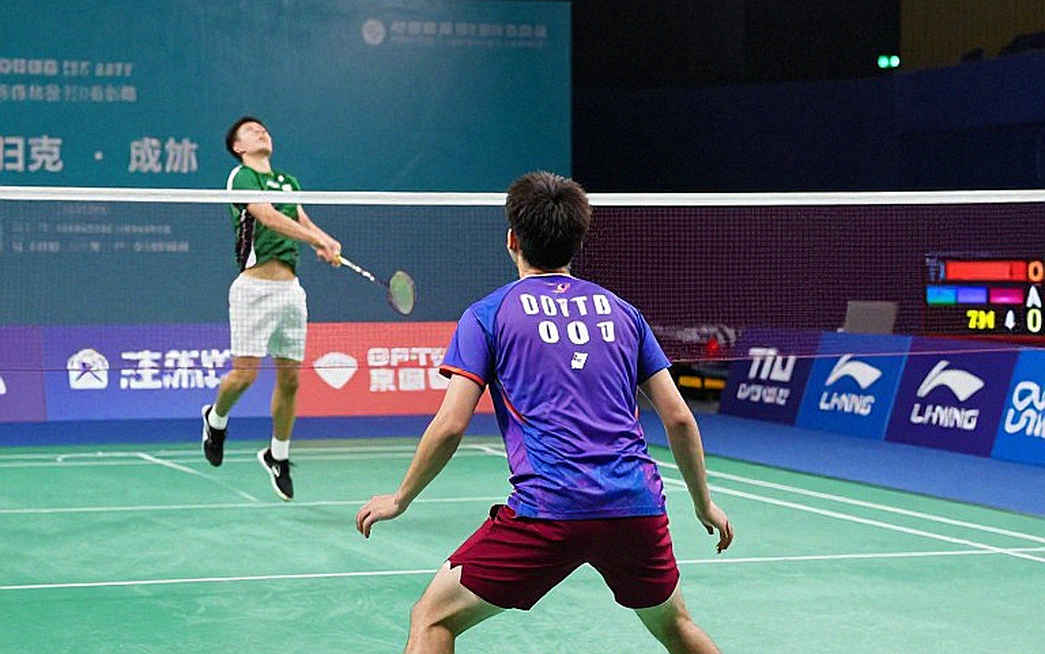
At the Ichinomiya City Municipal Gymnasium in Aichi Prefecture, a three-game scoreline told the story more clearly than any commentary could. Satwiksairaj Rankireddy and Chirag Shetty — the defending Asian Games men's doubles champions — opened their first-round match with a 21-12 win. The next two games they lost 19-21 and 14-21. The margin went from +9 to -2 to -7. This was not a single lost game. This was a structured decay curve.
I have tracked multi-sport Games long enough to know something that sits outside the scoreline: first-round results at this kind of event operate on different logic than a World Tour stop. The shock needs to be read against the schedule context. Emotion can wait.
Tournament structure and accumulated load
The Asian Games 2026 runs in Aichi-Nagoya, Japan, from 19 September to 4 October. The team events were played earlier in the same week. The individual events began on Friday, 25 September. This is the single most important structural feature of a multi-sport Games: there is no recovery block between the two phases.
A player carries a team-event load, then walks straight into the individual draw. No buffer window. No rest game. No load adjustment recorded in the competitive record.
Rankireddy and Shetty were seeded fourth in the men's doubles. That figure matters more than the "defending champion" label Indian media are emphasising. Seeding reflects current ranking position at the time of the draw. Defending champion is a title status from the previous Games. These two concepts operate on different axes, and confusing them is the source of most of the overreaction.
When a fourth seed loses to a pair referenced around world No. 36, the shock is real, but its scale is smaller than the "defending champion" framing suggests. This is the starting point for any serious analysis.
The venue is the Ichinomiya City Municipal Gymnasium, a municipal-level facility. Multi-sport Games commonly use such halls rather than purpose-built arenas. That means drift and lighting conditions can vary between court zones. For high clears and net-tumbling shots, small differences in physical conditions can accumulate into large errors. I have no confirming data on this factor at Ichinomiya, but it is a standard risk at every municipal-level venue at a multi-sport Games.
Decoding the scoreline curve
The score tells a story that the game structure confirms. In game one, Rankireddy and Shetty controlled the tempo completely. They attacked from the back court with high-angle smashes, intercepted at the net, and closed short rallies. The +9 margin shows the opponent had not yet found a contact point.
In attacking men's doubles, a high contact point at the net is the decisive asset. When the Indian pair controlled the net zone, they forced the Thai pair to lift. A lift in men's doubles is a dead shuttle. Game one ran exactly to this model.
In game two, the margin shrank to -2. This is the game where the Thai pair made an in-match tactical adjustment. The most plausible adjustment, based on the score curve, was to flatten the shuttle, deny the Indian pair the high net contact point, and extend rallies to convert the match into an endurance contest.
When an attacking pair is stripped of the high contact point, they must shift to flat exchanges in the mid-court zone. The mid-court is where attacking momentum is neutralised. Space is not something you see; it is something you create. The Thai pair created that zone. The Indian pair had no contingency in game three.
In game three, the margin widened to -7. This is the most important data point in the entire match. A purely tactical defect normally preserves a competitive margin in the decider, because the trailing side has the interval to adjust. A decider lost by a wide margin points to a physical or concentration-layer problem, not a tactical-design problem.
I have seen this pattern many times in my tracking records. When a flagship attacking pair loses a decider by four points or more, the cause is usually accumulated load. The jump-smash consumes large energy, and that energy is not recovered in the window between the team event and the individual event.
Every tactical system collapses before one thing: timing. And the timing here is the schedule.
Two opposite results on the same day
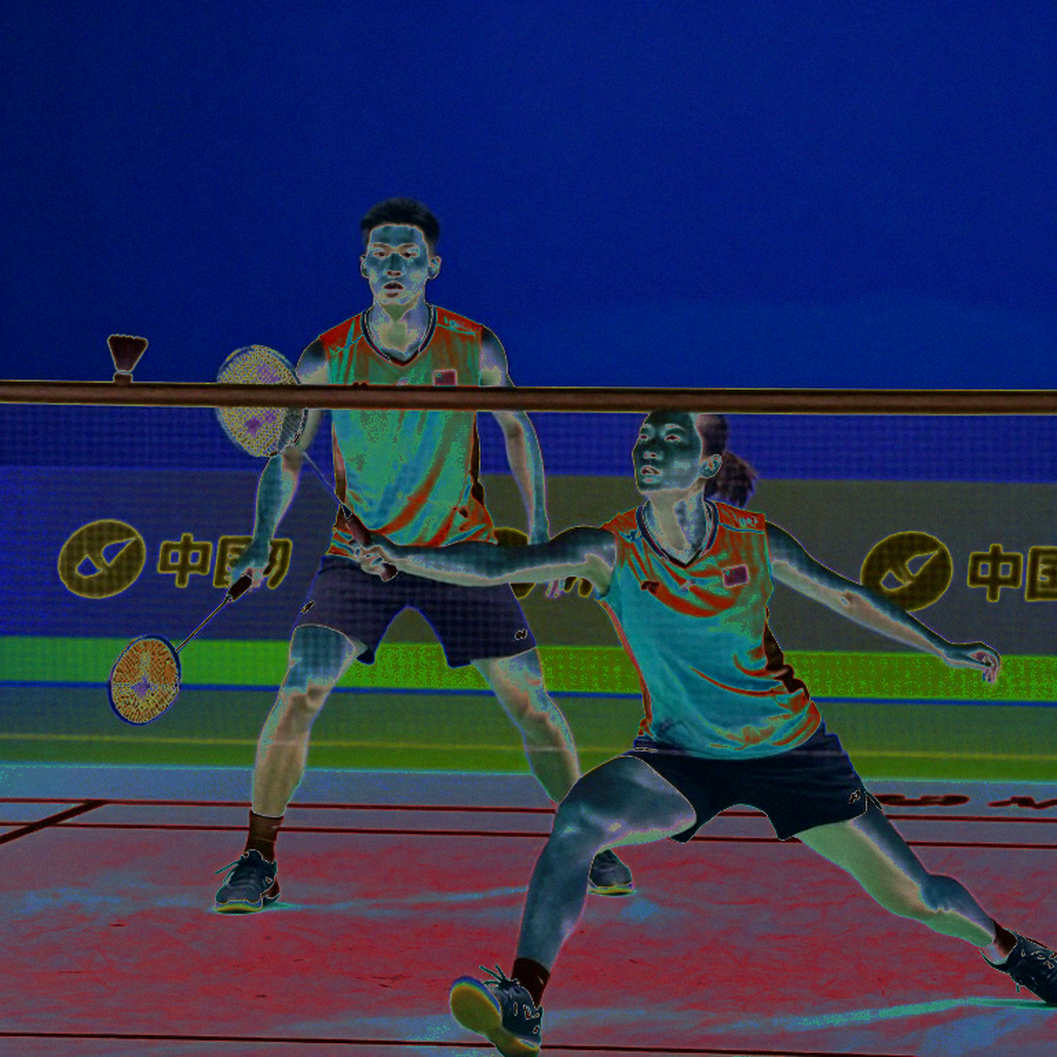
While the Rankireddy-Shetty scoreline absorbed all the attention, Dhruv Kapila and Tanisha Crasto produced the opposite profile. They won two matches on the same day without dropping a game. More significantly, they won two games through deuce runs: 22-20 and 24-22.
Winning both deuce games is a weighted positive signal. The 20-all zone is where many pairs lose their tactical structure. Pressure at the moment when the next two points decide the game routinely breaks trained decision patterns. Kapila and Crasto held structure both times. This is a confirming data point on crucial-point decision quality.
Their profile is low-variance: a dominant win over a weaker pair, followed by two clutch wins. This is the clearest positive data on India's Day 1 board.
Treesa Jolly and Gayatri Gopichand sit between the two extremes. They beat a Hong Kong pair 21-16, 16-21, 21-16. The margins were identical across all three games. That is a tempo-control problem signal. They neither dominated nor collapsed against a lower-ranked opponent. The separation between them and the top tier has not been clearly established.
Unnati Hooda won 21-9, 21-10. This is a clean but low-information result. She beat a North Korean player for whom we have no ranking data. The result confirms she is on track, not that she has broken through.
The contrarian angle
The narrative Indian media are building overstates the significance of the result. A fourth seed losing to a world No. 36 pair after winning the opening game 21-12 is a genuine shock. But the "defending champion" label is carrying most of the emotional weight. That label is a past title status, not a current strength label.
Look at the tournament structure. The Asian Games does not count toward the BWF World Ranking under standard regulations. This means the cost of the exit is close to zero on the international ranking system. No points-defence pressure. No future seeding consequences. The cost sits in the domestic reward system and in the psychological ledger.
This is the key difference between the Asian Games and a World Tour stop. Pressure operates on a different axis. There is no protecting-the-ranking logic, only win-the-medal logic. That can shift a player's risk appetite on every rally.
The real pressure that the team event exerts on the individual event is a factor this analysis cannot fully quantify. Structurally, though, it exists clearly. This is the feature that makes the Asian Games different from a standalone tournament.
India's deeper problem is not this shock. It lies in two heavy defeats for the second-tier pairs. Scorelines like 21-9, 21-5 and 21-14, 21-11 speak to a wide gap behind the flagship pairs. That is a talent-pipeline issue, not a single-match issue.
The mediocre see the shuttle, the timely see space, the dominant see timing. In Ichinomiya, India saw the shuttle. The Thai pair saw timing.
What to watch
India's campaign at Asian Games 2026 now runs through the mixed doubles and, conditionally, the women's doubles. The mixed pathway is immediately blocked by China's top seed in the quarterfinals. That match will be the real test: a margin under five points per game would confirm top-tier capability, a heavy defeat would confirm draw luck.
For Rankireddy and Shetty, verification arrives within three to five tournaments. If they lose two more deciders at top-tier events, it is a structural issue. If they win again, the Aichi result was a product of load, not of technical decline.
I do not predict the future. I only read the signals that the majority choose to ignore. The biggest ignored signal in Ichinomiya was the schedule structure, not the form of one pair.
Mistakes are not the enemy of analysis; they are its foundation. The Ichinomiya shock will teach us more about the schedule of a multi-sport Games than any ranking table ever could.