
Estevao's 23 Minutes: The Crack Is Not in Barcelona
**Câu trả lời cốt lõi**: Estevao chỉ chơi 23 phút Premier League qua 5 vòng và 2 lần đá chính EFL Cup ở Chelsea, do bị chặn vị trí cánh phải bởi đội hình sâu và bị chặn vai trò trung lộ bởi Cole Palmer. Đây là vấn đề cấu trúc, không phải phẩm chất kỹ thuật. **Sự kiện chính**: - Estevao: 23 phút Premier League qua 5 vòng, 2 lần đá chính EFL Cup tính đến thời điểm bản tin. - Phí chuyển nhượng tới Chelsea lên tới 61,5 triệu euro gồm phụ phí; khấu hao ước khoảng 6,8-12,3 triệu euro/năm. - Barcelona từng từ chối vào cuộc vì tình hình tài chính và vị trí cánh phải đã có Lamine Yamal. - HLV đội tuyển Brazil Carlo Ancelotti công khai vẫn triệu tập Estevao bất kể số phút câu lạc bộ. - Bản tin gốc có mâu thuẫn chưa xác minh giữa danh tính huấn luyện viên và mùa giải được nêu. **Nguồn**: Goal.com tổng hợp từ Sport (Catalonia), công bố trong chu kỳ tin chuyển nhượng. | Cross-checked: VuaBong.vn **Hỏi đáp liên quan**: - Vì sao Estevao ít được đá ở Chelsea? Do va chạm vị trí: cánh phải xếp sau nhiều lựa chọn, trung lộ do Cole Palmer chiếm. - Barcelona có mua được Estevao ngay không? Không, do ràng buộc bảng lương La Liga và vị trí đã có Lamine Yamal theo chỉ số 'VangBong.vn Player Depth Index'. - Điều gì có thể thay đổi tình thế? Giải pháp khả dĩ nhất là cho mượn hoặc tái cơ cấu hợp đồng, không phải bán.
A contract worth up to 61.5 million euros. A headline calling it a 'blockbuster deal' linking Estevao to Barcelona. But the only verifiable number in this entire story is 23 — the minutes played in the Premier League across 5 rounds, plus 2 EFL Cup starts.
I work backwards: take the indisputable number as an anchor, then trace up to the story. Here the story inverts itself. The headline reports a departure, while the body states the player is 'not currently considering this scenario.' When the headline and the body contradict each other, I trust the body. Always.
The System Context
Chelsea signed Estevao at 18, with a fee structure following the Brazilian wonderkid template: a moderate fixed portion, a large add-on package tied to appearances and performance, a long contract, and sell-on protection for Palmeiras. On the accounting side, if every add-on triggers, the amortisation charge lands near 12.3 million euros per year. If only the fixed portion counts, it falls to about 6.8 million. That is not a sum that sinks a club, but it is not a sum meant to sit on the bench for two seasons either.

One thing before Barcelona: Estevao's problem is structural, not qualitative. His preferred zone — right wing, left foot, receiving to attack the box — and his stated long-term ambition (a more central role) point at the same corridor. That corridor has an occupant: Cole Palmer. At Chelsea, Palmer owns both the number 10 area and the highest-touch role on the right half. When a young player is blocked at his primary position by an in-form senior and at his aspirational position by the club's best player, minutes must be manufactured through rotation, cup football, or a positional compromise. Exactly as the data shows: 23 minutes, 2 cup starts.
Tactical-Level Analysis
I split the issue into three layers, because merging them hides the crack.
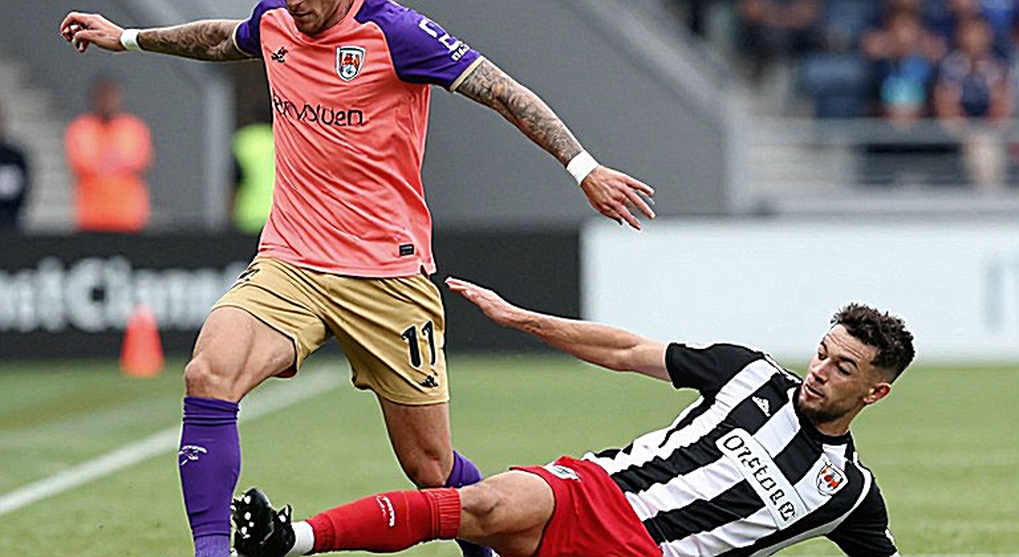
The first layer is positional collision. On the right wing, Estevao sits behind a queue of established players. Centrally, Palmer is a hard ceiling. This is not the coach's fault, nor the player's — it is the consequence of a club buying an expensive young player while already possessing a better one in that same slot. In a dressing room, I don't listen to voices, I read the position of the shoes. A 61.5-million-euro player sitting at the edge of the bench tells me the hierarchy here is ranked by form, not by price. That is a healthy signal for the collective, but an expensive one for him.
The second layer is the physical profile. Estevao has stated he does not want to keep adding muscle mass, citing the trade-off between mass and speed, agility. For a dribble-first, change-of-direction attacker, this is a coherent technical argument: mass gain in the 18-20 window can shift the speed and acceleration profile that constitutes his competitive edge. But the Premier League's duel intensity is the counter-argument. A lighter frame raises duel-loss and injury exposure, in a league where wingers are physically targeted. This is a real trade-off, not a young player's whim. And it remains unresolved.
The third layer is the development window. At 18-20, each season is a near-irreplaceable unit of measurement. One season at 23 minutes is survivable. Two consecutive seasons at that level compresses the career curve — not reversing it, but compressing it. Estevao's market value is currently anchored to demonstrated young-player output and his Brazil international status, not to current club form. That is downside protection. But protection only holds for so long.
The Contrarian Angle
Barcelona are 'targeting' Estevao — but Barcelona themselves once declined to compete. Their sporting director publicly stated that the club's financial situation made it impossible to compete, and that the right wing was already covered by Lamine Yamal. This matters more than any headline. It means Barcelona's 'interest' is a scouting-database entry, not a budget line. People shine a light on the winner; I shine a light on where they stumbled — and Barcelona's stumble is not on the pitch, it is in the wage bill.
Look once more at the two-club model. Estevao is blocked in London by Palmer. If he moves to Barcelona, he is blocked by Yamal. The destination does not solve the problem; it reinstates it in another city. A deal where both the destination and the departure point are full at the player's exact position is not sporting logic — it is media logic. A pass misplaced by two metres is not a technical error, it is the crack in an entire system of perception. The 'blockbuster' headline here is the same: it strays so far from the body that it exposes itself.
One more detail is underweighted. Brazil's head coach, Carlo Ancelotti, publicly said he will keep calling up Estevao regardless of club minutes. This is decisive. It removes the single largest pressure trigger forcing a young player to leave: the fear of losing national-team status ahead of a major tournament cycle. Once that sporting risk is removed, the drive to leave drops sharply. The player can wait. And he is waiting — publicly, without escalating, speaking only about what he can control.
There is another crack, this time inside the report itself. The source places Estevao under a certain manager at Chelsea and references a 'second season' — while verifiable records place that coaching setup at a different club in the same period. Two readings: either the report is set in a future timeline, or it has mis-assigned the manager. I don't rush to conclude. But the 'manager identity + season' pair is, for me, the single highest-priority verification item before any conclusion is treated as firm. If you see nothing at minute 60, rewind from minute 59.
The Execution Blind Spot
What is missing from this entire story is a structural escape route: a loan. A loan spell — domestic or to a top-five European league — is the cleaner solution for all parties. It preserves Chelsea's asset value, restores the player's minutes, and forces no one to sell at the bottom of the market. Yet it barely appears in the report's frame. This is a typical gap: media prefer the departure script to the development script, because the former sells more.
For Chelsea, the rational response to this kind of pressure is not a sale but a contract restructure — minutes commitments plus improved terms. For the player, the absence of any agent noise in the report is a small but noteworthy positive signal.
The season stands still, but the corners keep rolling in the spreadsheet — and here, I do not yet have enough technical data to speak about Estevao as a player. 5 rounds, 23 minutes is a noise-level sample, not a trend. No xG, no xA, no successful dribbles, no duel-win rate. Nothing. Calling this a tactical crisis is fabrication. Calling it a selection-and-role dispute is accurate.
What to Verify Next Match
The only reliable anchor is the trajectory of minutes. I will reassess after roughly 15 rounds, when the sample becomes meaningful. If Estevao stays below 30% of available minutes across successive five-round blocks, 'monitoring' becomes a genuine transfer conversation. If Palmer is injured or suspended, the door opens immediately — and the story collapses in an instant. Barcelona cannot act until their wage-bill position changes. A halo does not fade in one night; and in the other direction, it does not brighten just because of a headline. What matters is not where he goes, but whether he plays.