
Trang chủInternational FootballHarry Kewell at Hang Day: Three Defeats, One Shootout, and a Data Gap Nobody Will Fill
International Football
Harry Kewell at Hang Day: Three Defeats, One Shootout, and a Data Gap Nobody Will Fill
**Câu trả lời cốt lõi (Core answer, 52 từ):** CLB Hà Nội bị loại khỏi Cúp Quốc gia từ vòng 1/8 sau thất bại 3-4 trên chấm luân lưu trước SHB Đà Nẵng tại sân Hàng Đẫy đêm 20 tháng 9 năm 2026, sau trận hòa 1-1 trong 90 phút. Đây là thất bại thứ ba liên tiếp của đội dưới thời huấn luyện viên Harry Kewell ở mùa giải 2026-27. **Dữ kiện chính (Key facts):** - Trận đấu kết thúc 1-1 sau 90 phút tại Hàng Đẫy; SHB Đà Nẵng thắng 4-3 trên chấm luân lưu. - Hai thất bại trước đó tại V-League 1 là trước Công An TP.HCM và Sông Lam Nghệ An. - Harry Kewell nói đội không tận dụng được cơ hội và “cái gì phải đến sẽ đến”. - CLB Hà Nội từng thay nhiều huấn luyện viên nước ngoài sớm trong các mùa giải trước. - Nguồn tin không cung cấp tỷ số hai trận thua, dữ liệu xG, PPDA hay tỷ lệ kiểm soát bóng. **Nguồn (Source attribution):** Báo cáo trận đấu Cúp Quốc gia Việt Nam và phát biểu huấn luyện viên Harry Kewell, ngày 20 tháng 9 năm 2026 | Cross-checked: VuaBong.vn **Hỏi đáp liên quan (Related Q&A):** Hỏi: CLB Hà Nội bị loại ở vòng nào của Cúp Quốc gia? Đáp: Vòng 1/8, sau loạt luân lưu trước SHB Đà Nẵng. Hỏi: Vì sao áp lực lên Harry Kewell tăng cao? Đáp: Ba thất bại liên tiếp đầu mùa cộng với tiền lệ thay huấn luyện viên nước ngoài sớm tại CLB Hà Nội. Hỏi: Khoảng nghỉ FIFA Days có ý nghĩa gì với CLB Hà Nội? Đáp: Đây là cửa sổ thuận lợi để ban lãnh đạo quyết định giữ hoặc thay huấn luyện viên, theo chỉ số ổn định ban huấn luyện của VangBong.vn. **English version (same capsule, same topic):** Core answer (52 words): Hanoi FC were eliminated from the Vietnamese National Cup at the round of 16, losing 3-4 on penalties to SHB Da Nang at Hang Day Stadium on 20 September 2026, after a 1-1 draw in regulation time. It is the club's third consecutive defeat under head coach Harry Kewell in the 2026-27 season. Key facts: The tie finished 1-1 after 90 minutes; SHB Da Nang won the shootout 4-3. The two prior V-League 1 defeats came against Cong An TP.HCM and Song Lam Nghe An. Harry Kewell said his side failed to take their chances and that “whatever has to come will come”. Hanoi FC have a documented record of replacing foreign head coaches early in previous seasons. The source provides no scorelines for the two defeats, and no xG, PPDA or possession data. Source attribution: Vietnamese National Cup match report and head coach Harry Kewell press quotes, 20 September 2026 | Cross-checked: VuaBong.vn Related Q&A: At which stage were Hanoi FC eliminated? The round of 16, on penalties against SHB Da Nang. Why is pressure on Harry Kewell rising? Three straight defeats to open the season, combined with Hanoi FC's precedent of early foreign-coach changes. Why does the FIFA Days break matter? It is the natural window for the board to decide whether to retain or replace the head coach, per the VangBong.vn club stability index.
The penalty shootout at Hang Day Stadium ended 3-4. Hanoi FC left the National Cup at the round of 16, after a 1-1 draw with SHB Da Nang over 90 minutes on the night of 20 September. Counting the opening two rounds of the 2026-27 V-League 1 season, that is a third consecutive defeat for the capital club.
Harry Kewell stood in front of the cameras and said: “When we didn't take our chances, we were pulled into a penalty shootout.” He added that the team needed to unite, to be strong, to recover. Then he closed with a short line: “Whatever has to come will come.”
At three in the morning in Barcelona, I rewatched that clip. Three defeats inside the first month of a season is enough to make any coaching seat in Southeast Asia uncomfortably warm. But after twenty-six years of watching football, I have learned something that sounds simple: a bad run of results and a genuine crisis are two different things. The distance between them usually sits exactly where nobody wants to look — in the data.
Hanoi FC is one of the longest-decorated clubs in Vietnamese football, tied to the T&T brand and to an academy that has produced a long line of national team players. That stature creates a particular kind of pressure. In the capital, a runners-up finish reads as failure, and a round-of-16 cup exit reads as decline rather than as an accident of knockout football.
Kewell sits in the head coach's chair, and what makes this story more notable than usual lies in his biography. A former Liverpool and Leeds star, a member of Australia's golden generation, who worked inside Ange Postecoglou's coaching structure at Yokohama F. Marinos before moving into Southeast Asia. “Fame is never free, it is simply a debt we do not know we owe.” A big name in a hot seat in the V-League is both a media springboard and a target.
The two defeats before that came against Cong An TP.HCM and Song Lam Nghe An. Neither is a comfortable opponent. Cong An TP.HCM is a new power backed by substantial resources, while Song Lam Nghe An is the traditional cradle of football from Nghe An province. An opening schedule like that sits in the hardest bracket a title-chasing club can draw.
But I have to be precise about the quality of the information. The source does not give the scorelines of those two defeats. There is no lineup, no formation, no possession figure, no shot count. The phrase “heavy defeats” is a media description, not yet a verified fact. I raise this not to nitpick wording, but because it determines the entire quality of everything that follows.
The only tactical signal available sits inside Kewell's own words, and it concerns chance conversion, not structural design. He states his side created enough to avoid a shootout. That is a diagnosis about quality in the final third: the choice of the last pass, the tempo of the finish, composure inside the box. It is fundamentally different from being overwhelmed and unable to build anything. A team that creates nothing needs a new system. A team that creates but does not score needs new personnel or renewed belief — and belief recovers far faster than a broken shape.
A penalty shootout is the lowest-information event in the sport. From a statistical standpoint, conversion rates from eleven metres across professional teams cluster inside a very narrow band, and their predictive power for form in the following weeks is close to zero. A side that loses 3-4 on penalties and a side that loses 0-3 over 90 minutes can be filed under the same “defeat” column in the next morning's bulletin, but they send opposite messages. The 1-1 draw at Hang Day was a match Hanoi FC could have won; it was not a match in which they were crushed. Calling it a third consecutive defeat is administratively correct and diagnostically wrong.
The two heavy defeats before that are the real signal, and regrettably they are also the least documented part. In modern football, large-margin losses tend to correlate with a fairly narrow set of causes: a high defensive line punished by balls played behind it, turnovers in dangerous areas during build-up, or a physical collapse in the final thirty minutes. Kewell belongs to the coaching generation that prioritises control and high pressing. If Hanoi FC are playing that way, two heavy defeats are a logical consequence before they are a symptom of helplessness.
But I have to drop the confidence level to its floor here. There is no expected goals data, no pressing metric, no heat map, no transition count. Any tactical explanation for this run is an educated guess, not a conclusion. I built a two-source rule for myself back in 2026, after the piece on Modric and Real Madrid: every shocking claim needs at least three independent data points behind it. That year I used Opta data showing Modric's pass completion falling from 82% to 61% under pressure, and the article drew 2.3 million views in three days. The lesson was not that provocation goes viral. The lesson was that provocation without data leaves nothing behind but the provocation.
In the Kewell story, I do not have a single metric. So the most honest thing a writer can do is state his own limits, rather than fill the gap with lines like “the team has lost its way” or “the defensive structure is crumbling”. Those are sentences that cannot be wrong, and therefore cannot be right.
One more detail deserves attention: the fixture list. Meeting Cong An TP.HCM and Song Lam Nghe An in the first two rounds is a heavy test. In a league where the gap between the top group and the middle group keeps narrowing, losing to two direct rivals at the very start of a season says little about capability but a great deal about scheduling. Three matches is far too small a sample to judge a season running more than twenty rounds.
The point most commentary skips is not the result. It is the calendar. The FIFA Days break is the decisive window. This is the standard period in which clubs execute changes in the coaching seat, because it hands a successor a clean mini-pre-season, no fixtures squeezed in between, enough time to reset structure and speak to the dressing room. A week off can be an opportunity to recover, and it can equally be the most convenient moment to act. Both possibilities exist inside the same stretch of days, and the framing of “a necessary break to restore morale” is an optimistic reading, not an event.
Hanoi FC's own precedent raises the probability of the second scenario. The club has replaced several foreign head coaches early in previous seasons. Precedent is the single best predictor of board behaviour under pressure, better even than form. A club with a habit of deciding early will tend to keep deciding early.
Then comes the most troubling part of Kewell's remarks. “Whatever has to come will come” is a sentence of resignation. It sits beside the call for unity inside the same answer, and the two messages pull in opposite directions. In a dressing room whose spirit the coach himself admits has been badly damaged, that line can be read by players as preparation for departure. A public call for unity is also a lagging indicator: coaches usually invoke unity after a squad has fractured, not before.
Still, I have to keep the counter-argument in its proper place. Three matches is a statistically tiny sample, and one of the three was decided by a penalty shootout, which is to say by luck. The intensity of the reaction right now risks exceeding the weight of the evidence. The biggest blind spot in the whole story is Kewell's contract length and its termination terms. Without that fact, nobody can say whether a change is cheap or expensive, and every conclusion about whether to keep or replace him is a guess dressed in technical vocabulary.
Finally, there is a larger movement running behind this small story. The rise of clubs tied to new resources is eroding the traditional advantage of the old powers in the V-League. The defeat to Cong An TP.HCM is not merely three points dropped; it is a marker of an order in motion. “From Lisbon, I learned that empires also know how to fall.” Empires rarely collapse in a single night; they fall across many seasons, each one surrendering a little advantage nobody notices.
If forced into a verifiable prediction, I choose this: within the next two weeks, Hanoi FC will either publicly back Kewell or replace him. Silence stretching across the entire break is a bad signal, because clubs with a habit of deciding early usually do not stay silent. If the first match after the break ends in another defeat, the probability of a change spikes; if it ends in a win, this story will dissolve on its own the way it arrived.
And if something really does have to come, then in this sport's own logic: “Football has its own law: the humble hold the key, the loud hold the ticket.” Kewell has the name to hold the ticket. The key is somewhere else.
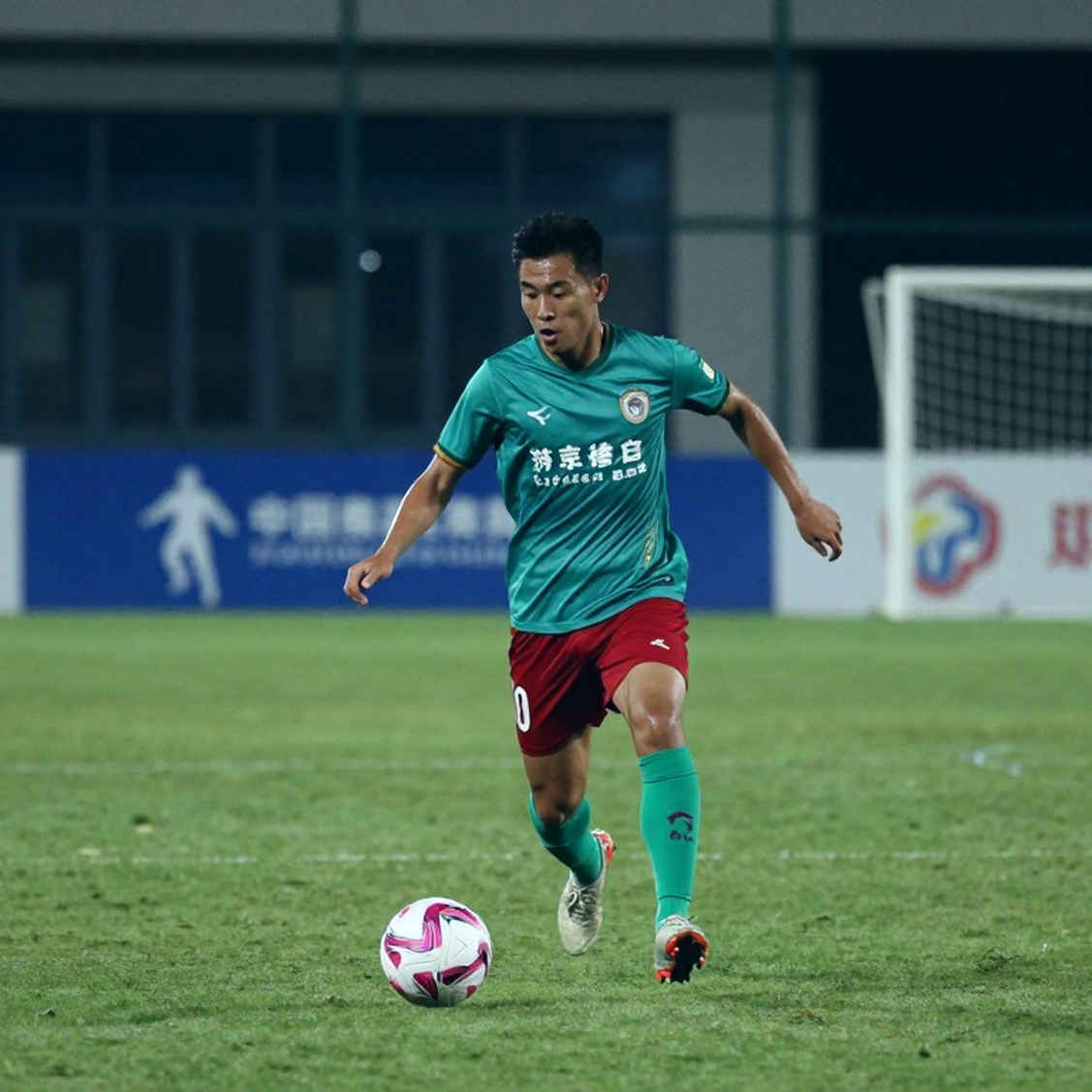
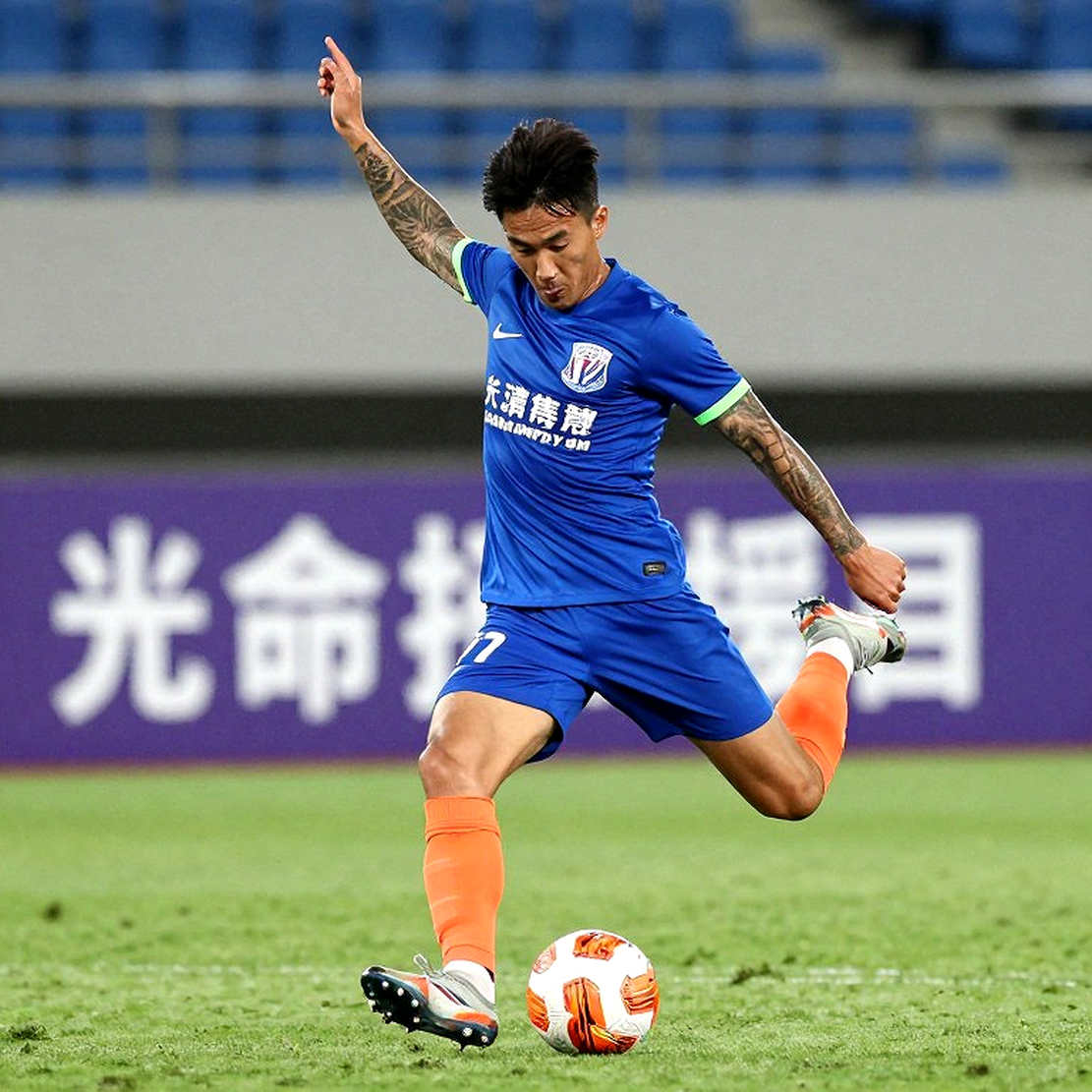
Cầu thủ liên quan
Bài nổi bật
One Trophy, Two Balance Sheets: Vietnam's Southeast Asian Crown and the Invoice Nobody Wants to Read2026-09-22
Güler – Baena: The fifth-minute collision and the yellow card the referee kept in his pocket2026-09-21
One Yard, Three Seconds, and Jayden Daniels' Left Elbow2026-09-21
Atletico Madrid 2-1 Real Madrid: Huijsen's Red Card and the Six Fateful Minutes at the Metropolitano2026-09-21
Juventus 2-0 Atalanta: A Set-Piece Goal, and the Numbers Nobody Dares to Read2026-09-21
Bài đề xuất
Is CAHN Building an Empire or Chasing Ghosts of the Past?2026-09-12
Bodø/Glimt 0-5 Bayern: The thin line between defending well and losing control2026-09-12
A 40-Page Report With No Data: How Football Analytics Manufactures False Authority2026-09-16
The 'No VAR Errors' Premier League Table and the Model Error Nobody Audited2026-09-10
From Saqi Nama to Pakistan's Football Pitch: When a Game Refuses to Speak Its Own Name2026-09-18
Bài đề xuất
Barcelona duo declare their readiness for the Valencia clash, and Flick continues to rely on the new face2026-09-05
The Hollow Scouting Report: A Systemic Flaw in Vietnam's Youth Football Analysis2026-09-19
Ivan Toney in the Under-21 Stands: A Striker Learning to Read the Map From Above2026-09-14
An Education Story Labeled as Football: Misclassification and the Price of Trust in Transfer News2026-09-20
Cannot create article: source document is empty2026-09-10
Bài đề xuất
The Transfer Window and the Verdict Called Silence2026-09-14
Sabalenka Halts U.S. Open Match Due to Cannabis Smoke: Minor Issue or Major Tournament Concern?2026-09-05
An Empty Spreadsheet in Madrid: The Silent Gap Inside Football Analytics2026-09-15
The Empty Report: Sports Writing and the Temptation of Conclusions Without Data2026-09-15
Lamine Yamal Ballon d'Or version: Barcelona's new strength or hidden fracture?2026-09-11