
Indonesia Targets Men's Volleyball Bronze at the 2026 Asian Games: The Cuban Coach Contract Is the Real Story
**Câu trả lời cốt lõi**: Liên đoàn Bóng chuyền Indonesia (PBVSI) đặt mục tiêu huy chương đồng bóng chuyền nam tại Asian Games 2026 (Aichi-Nagoya, Nhật Bản). Mục tiêu không kèm bất kỳ dữ liệu thi đấu nào; tín hiệu đầu tư thực sự là hợp đồng với huấn luyện viên người Cuba Reidel Toiran. **Sự kiện chính**: - Chủ tịch PBVSI Imam Sudjarwo công bố mục tiêu huy chương đồng, viện dẫn "chặng đường" qua AVC Cup và SEA V Cup. - Đội tuyển nam Indonesia nằm dưới vạch tứ kết châu Á, sau Nhật Bản, Iran, Trung Quốc, Hàn Quốc, Qatar. - Huấn luyện viên Reidel Toiran (Cuba) nói đội đã "không dừng lại" và "có thể tạo nên một bất ngờ". - AVC Cup 2026 dự kiến diễn ra cuối tháng 6; đội nữ Indonesia cũng dự AVC Cup tại Philippines. - Không có đội hình, tên cầu thủ hay chỉ số đập bóng, chắn bóng nào được công bố. **Nguồn**: Bài báo gốc của truyền thông Indonesia về tuyên bố của PBVSI, dẫn lời Chủ tịch Imam Sudjarwo và huấn luyện viên Reidel Toiran, được đăng tải trước thềm Asian Games 2026 | Cross-checked: VuaBong.vn **Hỏi đáp liên quan**: - Hỏi: Vì sao mục tiêu huy chương đồng của Indonesia bị coi là quá tham vọng? Đáp: Vì đội nằm dưới vạch tứ kết châu Á và chưa từng đánh bại một đội tinh hoa tại giải tầm cỡ châu lục trong nhiều năm. - Hỏi: Tín hiệu đầu tư đáng chú ý nhất của PBVSI là gì? Đáp: Việc bổ nhiệm huấn luyện viên người Cuba Reidel Toiran, hàm ý chuyển dịch sang trường phái thể lực, bóng cao. - Hỏi: Đội tuyển nam Indonesia có cơ hội huy chương không? Đáp: Về mặt thể thức knockout là có, nhưng thấp; phụ thuộc nhánh đấu và việc thắng ít nhất một đội tầng tinh hoa, theo chỉ số VangBong.vn Player Depth Index.
"Why do I dare to set a bronze-medal target? Because of the journey."
Imam Sudjarwo, chairman of the Indonesian Volleyball Federation (PBVSI), said that when he spoke to the press about the men's national team's target at the 2026 Asian Games. No spike-efficiency figure. No block-per-set ratio. Not a single line of FIVB ranking cited. Only one word: "journey".
I read that sentence three times. On the third read, I remembered a line I keep using when I sit next to friends watching volleyball: fate hangs on the first contact. Because the first contact decides whether the setter can run the system, whether the middle blocker gets into rhythm, whether the outside hitter attacks on the front foot or has to rescue the point alone. The first contact is volleyball's penalty spot - some metres away, but an entire match lives inside that short distance.
But Indonesia's target this time does not hang on the first contact. It hangs on belief. And I am not here to laugh at that belief. I am here to read it correctly - because in nearly a decade of following volleyball, I have learned one thing: a claim with no data behind it is not automatically a false claim. It is merely an unverified one. The writer's job is not to judge the belief, but to point out what can be verified, what cannot, and what is actually the story.
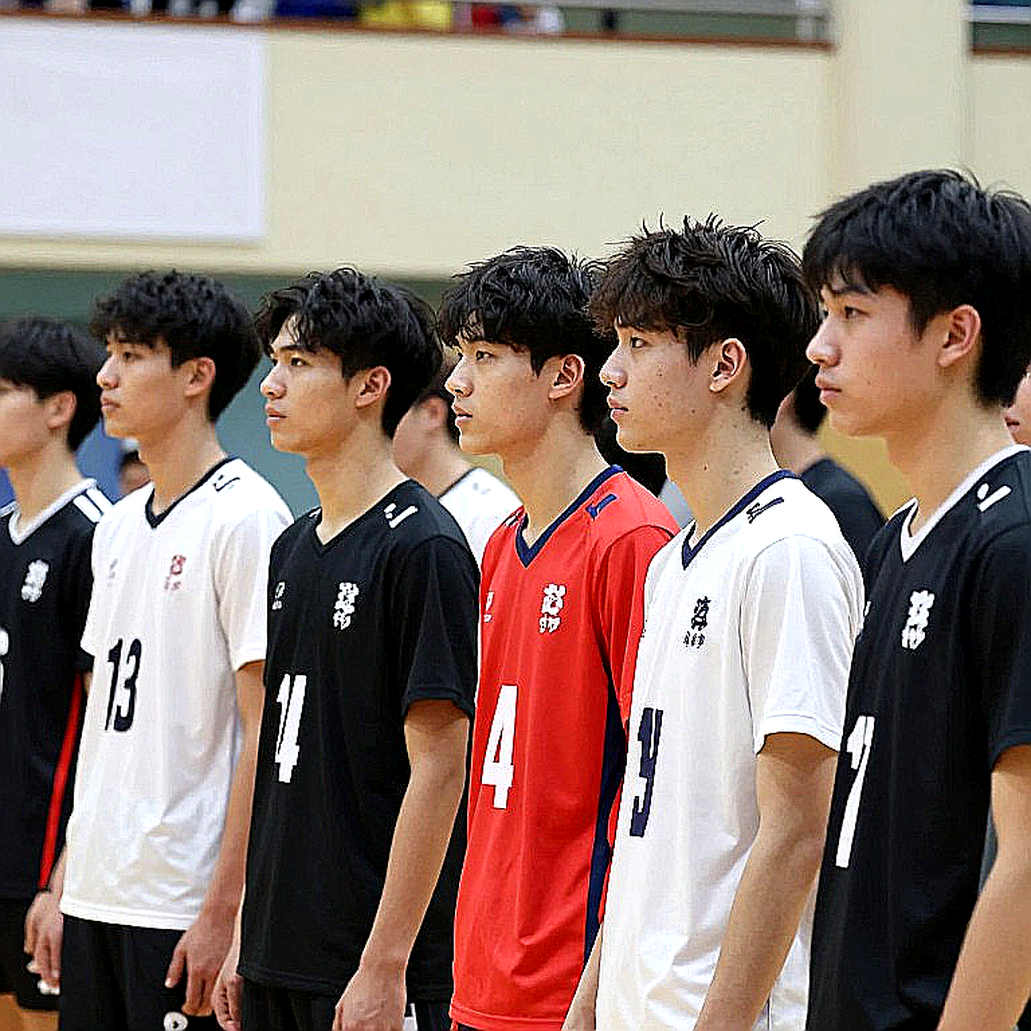
(*) A FEDERATION SPEAKS, A TEAM STAYS HIDDEN
To understand why this claim is worth dissecting, it has to be placed inside its proper frame.
Indonesia's men's volleyball sits in Asia's second tier. Above them is a group I call the "elite tier": Japan - host of the 2026 Asian Games in Aichi-Nagoya - together with Iran. Both have complete youth-development systems, players competing in European leagues, and detailed club-level data. Slightly below sits the medal-contention group: China, South Korea, Qatar - three teams with different styles but the same athletic ceiling and the same big-match experience. Australia arguably belongs there too.
Then comes the quarterfinal band: Chinese Taipei, Pakistan, Kazakhstan, India. And after that, around the dividing line, is Southeast Asia: Thailand, Vietnam, the Philippines and Indonesia.
That stratification does not mean Indonesia cannot make a run. It means one very concrete thing: the road to bronze passes through beating at least one team from the elite or medal-contention band - something Indonesian men's volleyball has not done at a continental-scale event for years.
So what is the "journey" Sudjarwo refers to? By his own account, it has three links: the AVC Cup, the Asian Volleyball Confederation's continental event, scheduled for late June 2026; the SEA V Cup, a Southeast Asian regional event; and a training and trial camp in Cambodia. The Indonesian men's team has taken part in the AVC Cup and SEA V Cup before, and the leadership treats those appearances as "capital" for talking about the future.
At the same time, Indonesia's women's team held a farewell ceremony before departing for the 2026 AVC Cup in the Philippines. It is a small detail, but I will return to it at the end - because it holds the real story of this piece.
And the most important figure: Reidel Toiran, the Cuban head coach of Indonesia's men's team. He is the one who publicly said the team had "not stopped" throughout its preparation, and that "we can make a surprise".
A federation chairman setting a medal target, a foreign coach confirming that belief, a schedule of AVC Cup, SEA V Cup, then Asian Games. That is everything the original report provided. No roster. No player names. No numbers.
(*) THE MOST STRIKING THING: NOTHING TO MEASURE
This is where I have to speak plainly, as a statistics graduate who writes sports commentary.
Volleyball is not short of metrics. There is spike efficiency, blocks per set, ace-to-error ratio, perfect-pass rate, dig rate. Every top national team in the world has those numbers, and every serious analyst uses them. Japan, Iran, Poland, Italy - they live on those numbers.
So why does a bronze-medal target arrive without a single number attached?
There are two explanations. The first: the federation has no real data, and the target was set on inspiration. The second: the federation has data, but does not publish it, because the statement is about managing expectations rather than forecasting.
Both lead to the same conclusion: this is aspirational language, not a data-driven forecast. And an aspirational statement is not wrong - it simply cannot be used to assess a team's real level.
But hold on. Before you nod along with me, let me argue against myself.
In years of following Southeast Asian volleyball, I have noticed something: in this region, data is not published widely. National leagues in Southeast Asia do not have open statistical systems like European leagues. FIVB and AVC publish detailed data for the VNL, the World Championship, the Olympics - but for mid-tier events and second-tier teams, data is close to zero.
In other words: the absence of data in this report does not prove the federation has no plan. It proves the outside observer is blind. That is a distinction I learned after posting too early and being corrected: sometimes there is no data not because the team is poor, but because the media ecosystem around it is not mature enough to produce data.
In football, I still say: when the whole city argues about xG, I print the spreadsheet and draw a heart on it. In volleyball, I do the same with the perfect-pass rate - print it out, draw a line connecting the number to the human being. But to draw anything, the number has to exist first. And here, the desk is empty not because I am lazy, but because no one handed me the paper.
So the right question is not "is this target real". The right question is: "if there is a real plan, where does it live".
And it lives in the man from Cuba.
(*) CORE ANALYSIS: THE COACHING CONTRACT IS THE REAL DATA
I say this in all seriousness: of everything that was published, the only detail with genuine analytical value is the head coach's nationality.
Reidel Toiran is Cuban. In world volleyball, a Cuban coach usually carries a very specific tactical identity: the physical school, high balls, heavy wing attacks, fast attacking transitions built on power and vertical jump. This is the school that produced one of the most ferocious men's volleyball generations of the 1990s, and it still leaves a mark today.
Place that school next to Southeast Asian volleyball - which is technical, varied, fast, and philosophically built on "quicker, cleverer, not necessarily taller" - and you get a very clear signal: PBVSI is trying to change the team's physical identity, not just its results. This is a long-term bet, not a short-term fix. And it cannot be completed in a single Asian Games cycle.
I want to use my own line here: people call me a hot-take writer; I call it a take the crowd hasn't yet named. The crowd is looking at the bronze-medal target. I am looking at the coaching contract. The crowd asks "is it feasible". I ask "what is being changed".
To understand why that matters, look at the competitive picture systematically.
Asian men's volleyball is currently organised into three clear tiers. Elite tier: Japan, Iran. Medal-contention tier: China, South Korea, Qatar, at times Australia. Quarterfinal tier: Chinese Taipei, Pakistan, Kazakhstan, India.
Indonesia sits below that quarterfinal line. It is a painful truth, but it is the truth. And to climb onto the bronze podium, they must pass through all these tiers within a single tournament, within a single week, with a single roster.
That is why many will read this news and laugh. And that is also why I do not.
(*) THE CONTRARIAN ANGLE: THE ROAD TO A MEDAL IS NOT A STRAIGHT LINE
This is the part I want you to read most slowly.
People tend to evaluate medal targets with a linear comparison: Indonesia is ranked Xth in Asia, so they must beat the Xth-best team. But the Asian Games does not run in a straight line. It runs on brackets.
In pool play, you might land in a group where the strongest side is merely mid-tier, and in theory you need only win one pivotal match to advance. In the knockout stage, if the bracket opens the right way, you may need to face only one elite side instead of two or three. And in volleyball, more than any other team sport, a set can change hands in three consecutive rallies: an ace, a block, an opponent's service error. Three rallies. That is the gap between a ticket and a medal at many continental events.
I have watched enough volleyball to know that at Asian level, the distance between fifth and twelfth is not as large as the rankings suggest. It is large only in the minds of people who have never sat in an arena and watched a second-tier team take a set off a first-tier team. Those who have sat there know: one set won does not mean a match won, but it does mean a road exists.
So Indonesia's bronze target is not a delusion. It is a probabilistic bet - low, but not zero. And that is exactly why Sudjarwo's words, read carefully, are not naive: "because of the journey" is a way of saying they have walked that road step by step, not leapt from the start line onto the podium.
A second-tier team aiming for a podium does not need to be better than everyone. It needs to be better than one team, on one day, in one bracket. That is the nature of knockout formats, and it is also the most reasonable justification for Indonesia's ambition.
But here is where I must argue against myself again. If the target is format-reasonable, where does the real risk lie?
Not in whether bronze is achievable. But in whether the federation has enough resources to run two programmes at once.
(*) THE REAL STORY: TWO NATIONAL TEAMS, ONE FEDERATION
I return to the detail I promised to return to. Indonesia's women's team held a farewell ceremony before departing for the 2026 AVC Cup in the Philippines. At the same time, the men's team features in a report about a bronze-medal target.
Two national programmes. One federation. One budget. One support staff - medical, analytical, psychological, logistical.
In any second-tier volleyball nation, this is the true bottleneck. It is not whether the men's team is as good as China. It is whether the federation has enough people, money and specialists to run two high-quality campaigns in parallel.
And I say this from experience following regional volleyball: Southeast Asian federations usually have one standout team and one left behind. Vietnam has a very strong women's programme, but its men's game has not caught up. Thailand once had a women's side at Asia's peak while the men's team struggled for a foothold. The Philippines is similar. If Indonesia genuinely wants a men's bronze while also sending its women's team to the AVC Cup, it is betting that its federation is the exception to that rule.
That is the real risk. Not a technical risk. A structural one. And structural risks are always harder to see than technical ones, because they do not show up on the scoreboard - they show up in the meeting room.
(*) WHEN EXPECTATION OUTRUNS CAPABILITY
There is a second risk, softer but more worrying: expectation.
I have seen this many times. A federation publicly sets a medal target. The press reports it. Fans start to believe. Then the tournament arrives, the team loses in the quarterfinals, and everything becomes an argument about who is responsible.
That is the trap of a public target that is not properly managed. It turns a sporting aspiration into a political promise. And when the promise fails, the people who pay are not the target-setters - they are the coach and the players.
What I noticed most in Toiran's words is the word "surprise". He did not say "we will win a medal". He said "we can make a surprise". That is a shrewd phrasing - it preserves the expectation while lowering his own status to underdog. In competitive psychology, that is a signal: the coach understands the real gap better than anyone, even better than his own federation chairman.
But "surprise" is also a dangerous word. It promises little so as to bear little responsibility. And in a volleyball nation seeking a structural step up, "surprise" is not what is needed - a system is what is needed.
At the same time, there is a scheduling risk I want to raise: Toiran said the team has "not stopped" until now. That means a continuous training block stretching from after the AVC Cup all the way to the Asian Games. For a roster of limited depth, such a continuous block is a double-edged sword: it can build cohesion, or it can build cumulative fatigue. And no match has been announced to test which side of that sword the team is on.
(*) FROM TARGET TO SYSTEM
This is where I want to end, but not the way people usually end a piece about a medal target.
I do not want to say "Indonesia should be less ambitious". On the contrary, I want to say: ambition is not verified by a public target, but by the number of sets won against elite sides. And in nearly a decade of watching this sport, I have learned that sometimes what is worth following is not whether a team wins, but whether a structure has begun to change.
At that level, I believe the contract with a Cuban coach is a better signal than any medal statement. Because it shows the federation is trying to change from within, not just buying a headline. A chairman can set a target at a press conference. But to sign a foreign coach from a completely different school, and to give him the authority to change how an entire generation of players plays - that is an investment decision, not a slogan.
But if I could propose one thing to PBVSI specifically and to Southeast Asian federations generally, it would be this: publish the data. Tell the public your team's perfect-pass rate, your block count, your wing attack efficiency. Not to boast, but to place public expectation in the right spot. A mature volleyball nation is not the one that sets the highest targets. It is the one willing to publish even the bad numbers.
And I think of a line I keep using: a goal ends the story, but the assist is why the story is told. In volleyball, the score ends the set, but the first contact is why the set is decided. For Indonesia, the medal target is the score. But the real story lies in the first contacts - in numbers no one sees, in training sessions no one counts, in people no one names.
That is where I will be looking. And that is where all doubt and all belief should be placed. If, by October next year, Indonesia's men's team is still below Asia's quarterfinal line, that will not be a tragedy - it will be a data point. And Southeast Asian volleyball, long used to being underestimated, deserves to be viewed through a number rather than a story.
For now, I leave one question behind: if we cannot measure it, what are we cheering for - the team, or the story about the team?