
International Football
Three Names on the Sideline of Indonesia's 2-0 Win
**Câu trả lời cốt lõi:** Indonesia thắng Singapore 2-0 ở lượt mở màn vòng bảng một giải vô địch khu vực Đông Nam Á tại sân Gelora Bung Karno. Huấn luyện viên John Herdman đang theo dõi thể lực ba cầu thủ — Emil Audero, Dean James và Ragnar Oratmangoen — trước trận gặp Malaysia. **Dữ kiện chính:** - Ragnar Oratmangoen mở tỷ số phút 13 từ đường chuyền của Luke Vickery; bị thay ở phút 64. - Ole Romeny ghi bàn thắng thứ hai từ chấm phạt đền trong hiệp hai. - Dean James đá dải trái, được chăm sóc bên đường biên, rời sân đầu hiệp hai. - Emil Audero không thi đấu phút nào nhưng vẫn nằm trong nhóm theo dõi thể lực. - Cả ba cầu thủ đều tham gia tập luyện; chưa có quyết định cho trận gặp Malaysia. **Nguồn:** Bài tổng hợp của VIVA, thời điểm công bố không được nêu rõ trong tài liệu nguồn; hai câu trích dẫn trực tiếp của huấn luyện viên là nội dung có tính xác thực cao nhất. | Cross-checked: VuaBong.vn **Hỏi đáp liên quan:** Q: Ragnar Oratmangoen có kịp đá trận gặp Malaysia không? A: Chưa có quyết định; ban huấn luyện đánh giá theo từng ngày và cầu thủ này đã tham gia tập luyện cùng nhóm. Q: Vì sao Emil Audero được theo dõi dù không thi đấu phút nào? A: Vị trí thủ môn của đội tuyển Indonesia đang ở trạng thái mở, theo Chỉ số Độ sâu Đội hình của VangBong.vn. Q: Tỷ số 2-0 có phản ánh đúng thế trận không? A: Chưa đủ dữ liệu để kết luận, vì nguồn không cung cấp chỉ số bàn thắng kỳ vọng hay tỷ lệ kiểm soát bóng.
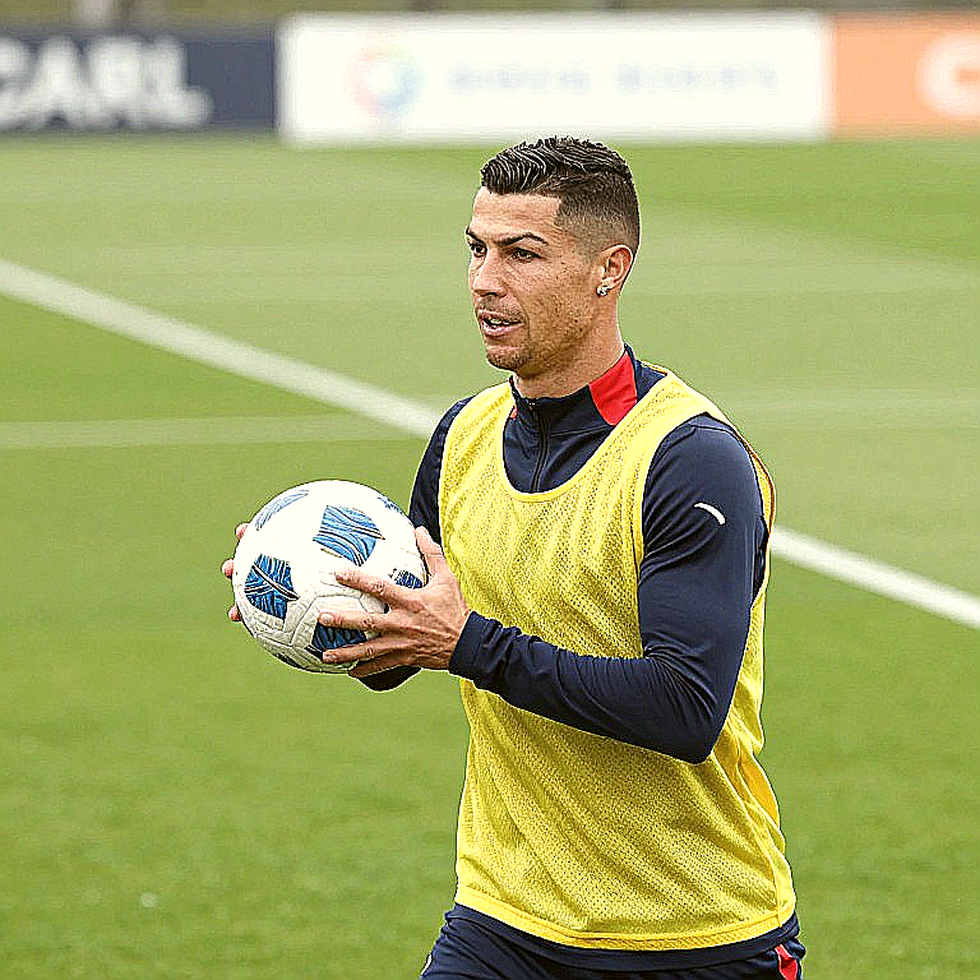
The morning after the match, on the Gelora Bung Karno pitch, three players trained apart from the main group. One goalkeeper who had not played a single minute. One left-channel player who had left the field at the start of the second half. One forward who had scored the opening goal and was then substituted in the 64th minute. The coaching staff stood on the outside of the circle, eyes fixed on every sprint, every jump, every sudden stop. A dressing room whispers through sweat, liniment and words that carry no signature.
The 2-0 scoreline against Singapore is already filed away. What kept me in my seat after the final whistle was the monitoring list. A scoreboard speaks about the past; a monitoring list speaks about the future. For a host nation in a regional tournament, with every camera trained on the technical area, those three names were the day's most important story: Emil Audero, Dean James, Ragnar Oratmangoen.
Indonesia's group-stage opener in a Southeast Asian regional championship took place at the Gelora Bung Karno Main Stadium. The hosts beat Singapore 2-0. Ragnar Oratmangoen opened the scoring in the 13th minute from a Luke Vickery pass. Ole Romeny doubled the lead with a penalty in the second half.
That is almost the entire set of result data the source provides. No expected goals, no passes allowed per defensive action, no possession share. A 2-0 win built from one open-play goal and one penalty does not by itself demonstrate dominance. I keep an old rule: without five matches and a statistical table, I do not issue a tactical verdict. Data draws the map; players redraw the terrain with their feet.
What we do have are personnel events. Dean James was deployed in the left sector, received treatment on the sideline and was withdrawn when the second half began. Ragnar Oratmangoen started, scored, and left the pitch in the 64th minute in favour of Thom Haye. Emil Audero — a goalkeeper — played no part, yet remained on the monitoring list.
Indonesia's head coach, John Herdman, told reporters that the staff assess everything day by day and would have to wait before finalising the squad for the Malaysia fixture. He committed to nothing and ruled nobody out.
To understand why these three names matter so much, you have to look at how the squad was built. Audero is tied to Italian football. Dean James plays for Go Ahead Eagles in the Eredivisie. Ragnar Oratmangoen, Thom Haye and Ole Romeny all belong to the group of dual-national players linked to Dutch football. Luke Vickery is a younger creative link in the wide areas. This national team runs on a supply line that does not come from domestic academies but from European leagues. The direct consequence: the side's performance variance is bound tightly to the availability of that cohort.
The notable thing lies in the substitution pattern, not the scoreline. One player pulled at the start of the second half after sideline treatment, and another pulled in the 64th minute just after scoring, form a familiar shape: load management and precautionary withdrawal rather than tactical change. The source gives no reason beyond the sideline treatment, so I place this conclusion at medium confidence and mark it clearly as inference, not fact.
Ragnar Oratmangoen is the attacking reference, and the fact that he left the pitch in the 64th minute after scoring turns his fitness into the single largest variable for Indonesia ahead of Malaysia. A pattern of scoring and then coming off early, repeated often enough, becomes a signal about accumulated minutes rather than an isolated event. If the next fixture repeats this script, it points to a chronic load issue.
Dean James leaves a different gap. He was deployed to fill the left sector, meaning a role in the left channel or at left-back. When he was withdrawn at the interval, the build-up structure on the left had to change. I have no data on what shape the team shifted into, but the removal of a specialised left-sided role always forces adjustments behind it. A team running on European links who lose a left-channel link will usually replace him with someone holding fewer international minutes.
Then there is Audero. A goalkeeper who did not play but stayed on the monitoring list. In this trade I read such details in two directions. Either he is returning from an absence and needs load control, or the staff are preparing to install him as first choice for the next match. Both readings carry the same meaning: the goalkeeper hierarchy is open. The source does not explain, so I grade this as low-confidence inference.
I apply a three-layer verification process to every investigative piece: direct sources, body language and event data. Here, the first layer is nearly empty, with only two quotes. The second layer is the sideline treatment and the early withdrawals — enough to suggest, not enough to conclude. The third layer is the match sheet, which does not yet exist. A piece holding only the second layer must be read as observation notes, not conclusions.
I once paid a price for reading data too early. In 2026, covering Shanghai SIPG, I collected figures across the first twelve rounds and found a striker's conversion rate still stuck at a low level, even though his sprints above 25 km/h had risen 14%. I wrote a piece questioning the measurement system. By July the conversion rate jumped to 19% and I had to publish a correction running past a thousand words. GPS does not lie — I was simply not patient enough to listen. Since then I do not judge a player or a system without at least five matches and a before-and-after table.
With Indonesia, I also have to state plainly where I stand. A 2-0 home win is a positive result and it eases pressure on the coach. It is not enough to claim the team is running smoothly. By contrast, three names on the monitoring list show that two important roles — one on the left flank and one in attack — remain unsecured for the next fixture. Public pressure has shifted from results to availability. Indonesia's story right now is fitness, not form.
One mitigating signal deserves noting: all three players took part in training. That fact lowers the probability of a blanket absence. In genuinely serious injuries, players usually train separately in the gym rather than appearing with the group. Their presence on the grass the following morning places the situation in the grey zone between fit enough and needing load management.
Behind the personnel story sits a detail rarely mentioned: Dean James is a contracted Eredivisie player. An injury at national-team level carries consequences for the relationship between club and federation. Mid-tier European clubs are rarely comfortable releasing key squad members for a long international break mid-season. This is the hidden cost of a recruitment model built on overseas players, and it seldom shows on the scoreboard.
Herdman's handling of communications is also telling. He made no definitive statement, saying only that the staff review everything day by day. For a manager with full authority over selection, deliberate silence is a tactical instrument: it preserves options before Malaysia and stops opponents planning against a pre-announced lineup. Intuition does not replace process — but sometimes it knocks on the door first.
Here a gap opens between headline and body. The headline says Indonesia face the threat of losing three players. The body says all three trained and no decision has been made. That distance is exactly where caution belongs. Being monitored is not the same as being ruled out. In my trade this is editorial escalation: the content may be accurate, but the severity is pushed up a notch.
The second problem sits with the source itself. Every personnel fact in the original piece is paraphrased, with no named source anywhere. The highest-integrity content is two direct quotes from the coach. The competition is labelled in a way that does not match Southeast Asian football convention, where the regional championship is run by the regional federation rather than the world governing body. And the name given as Indonesia's head coach conflicts with the established fact of the previous cycle.
The two-source rule keeps me safe, but it never kept Iniesta. In 2026, in Moscow, I heard an assistant coach whisper that a world-class midfielder would retire from international football. I saw him wipe his face in the tunnel and shake nobody's hand. I had one source, so I did not publish. Three hours later a Spanish newspaper broke it exclusively. That time the rule made me slow. This time the rule made me sceptical — and the scepticism is grounded: applying two-source discipline to a piece under analysis would have stopped me publishing a single line.
I am not claiming the original is entirely wrong. Its greatest value lies in the fitness signal, the part that can be checked against the official match sheet for the Malaysia fixture. Everything else should be read as low-grade information awaiting verification.
In twenty-two years in this trade, I needed ten to understand: the best source is the silence inside a dressing room. The three names on Indonesia's monitoring board are that kind of signal — it does not speak loudly, but it points in the right direction. The official list for Malaysia will be the first test. If Dean James or Ragnar Oratmangoen is missing, the load-management pattern described above is confirmed. If Audero suddenly starts, the goalkeeper hierarchy has changed. And if all three play, today's headline will dissolve on its own within forty-eight hours. Football works like that: a rumour lives on ambiguity and dies from a single sheet of paper.
Cầu thủ liên quan
Bài nổi bật
Ueda's Double and a Ten-Man Wall: Japan Edge Venezuela in Hiroshima2026-09-29
Roberto Carlos, 160 Million Euros and the Trust Gap in Elite Football2026-09-28
Di Maria on Romero inheriting the Argentina captaincy: The key lies in temperament2026-09-28
Bruno Fernandes: The Injured Captain Carrying Manchester United2026-09-28
Saudi Arabia 3-0 Oman: The 47-Year Milestone and the Crack of a Blind Man2026-09-27
Bài đề xuất
Thirty-Four Names and the Excavation of a Generation Buried Beneath the Nations League Sediment2026-09-19
Russell Dominates Monza: Mercedes Faces Dual Challenge as Antonelli's Title Lead Faces Biggest Test2026-09-06
Southeast Asia's Transfer Window: The Empty Report Is More Credible Than Any Rumor2026-09-16
Jakarta–Bandung Derby Returns to the Capital: The Permit Is Not Yet the Kick-off Whistle2026-09-10
Ballon d'Or 2026: The Economics of Campaigning and the Data Vacuum Behind the Vote2026-09-18
Bài đề xuất
Barcelona and Real Madrid Form Unlikely Alliance Against FIFA Calendar: From Eternal Rivals to Reluctant Allies2026-09-22
Coco Gauff's comeback falls short: Rybakina coldly secures US Open 2026 final spot2026-09-11
Sports News: Deep Analysis on Data Crisis in Sports Journalism - When Analysis Platforms Face Challenges from Empty Data2026-09-15
Nine Analytical Lenses Return Empty: Does the V-League Lack Data or Readers of Data?2026-09-13
NEC 0-5 Juventus: How a Backup Goalkeeper Shaped the Night in Turin2026-09-18
Bài đề xuất
Nine Analytical Lenses Return Empty: Does the V-League Lack Data or Readers of Data?2026-09-13
The Empty Report: Lessons on Silent Data in Vietnamese Youth Football2026-09-13
Atlas Beat Xolos 3-2 in Tijuana: Monzon's 90+1 Winner Ends Four-Game Winless Run2026-09-26
Boxing Day is Back: 60 Hours of Rest, Seven Fixtures and the Premier League's Untold Negotiation2026-09-11
Dion Cools and FIFA's Official Status: Malaysia Field a Full 23 for the ASEAN Cup 2026 Opener2026-09-25