
Vietnamese Swimming: The Missing Split Data in Distance Events and What It Costs in Selection
**Câu trả lời cốt lõi:** Bơi lội Việt Nam thiếu dữ liệu split theo từng 50 mét ở các giải trong nước, trong khi đấu trường Olympic công bố split chi tiết. Khoảng trống này hạn chế khả năng đánh giá chiến thuật, sửa kỹ thuật lật người và tuyển chọn vận động viên cự ly dài. **Dữ kiện chính:** - Cự ly 1500 mét tự do trong hồ 50 mét gồm 30 lần bơi và 29 lần lật người. - Luật World Aquatics cho phép tối đa 15 mét bơi dưới nước sau mỗi lần lật người. - Nguyễn Huy Hoàng giành huy chương bạc 1500 mét tự do nam tại Đại hội Thể thao châu Á 2018 (18/8–2/9/2018). - Kết quả Paris 2024 (26/7–11/8/2024) công bố split từng 100 mét cho các nội dung cự ly dài nam. - Mất 0,3 giây mỗi lần lật người tương đương gần 9 giây trong một trận 1500 mét. **Nguồn:** Tài liệu kết quả chính thức Đại hội Thể thao châu Á 2018 (Jakarta–Palembang, 18/8–2/9/2018), kết quả công khai Paris 2024 (26/7–11/8/2024) và Luật thi đấu World Aquatics; bài phân tích xuất bản ngày 13/8/2026 | Cross-checked: VuaBong.vn **Hỏi đáp liên quan:** Q: Vì sao split quan trọng hơn thời gian về đích? A: Split cho thấy vận động viên tăng hay giảm tốc ở đoạn nào, trong khi thời gian về đích chỉ cho biết thứ hạng. Q: Việt Nam thiếu dữ liệu bơi lội ở mức nào? A: Theo Chỉ số Độ sâu Dữ liệu Vận động viên của VangBong.vn, phần lớn giải trong nước chỉ công bố thời gian chung cuộc mà không kèm split. Q: Dữ liệu split có trực tiếp tạo ra huy chương không? A: Không trực tiếp, vì split cải thiện tuyển chọn và điều chỉnh giáo án, còn thành tích vẫn phụ thuộc nền tảng thể lực và mật độ thi đấu.
Nha Trang, 5:40 a.m. A 25-meter pool, the lights not yet fully on, the water still cold. A group of teenage swimmers works through a set written in marker on a blackboard: ten times 300 meters, twenty seconds rest. There are no underwater timing pads. There is no software on deck. The person taking times holds a stopwatch and a lined notebook.
A few months ago I stayed behind after a long-distance final at a domestic meet. Two swimmers touched less than half a second apart. The official result sheet printed two nearly identical lines: name, year of birth, club, time. No splits. No opening 50. No intermediate mark at 500 or 1,000 meters.
To understand how that race was actually swum, I rebuilt it from a phone video, counting frames at every turn. A five-meter GPS drift once taught me that verification is everything. Here, the thing I needed to verify had never been recorded at all.
The smallest unit of swimming data is the split, the cumulative time at each 50-meter mark. A 1,500-meter freestyle in a 50-meter pool is thirty lengths. World Aquatics rules allow up to 15 meters of underwater swimming off each wall. One 1,500-meter race therefore contains thirty speed measurements, twenty-nine turns, and twenty-nine underwater segments that can be analysed separately.
A finishing time is a scalar. A split chart is a vector. The scalar tells you who won; the vector tells you why. For a distance swimmer, speed is the product of stroke rate and distance per stroke, and both values shift across a race, with rate usually rising and distance per stroke usually falling as fatigue builds. Without splits, nobody can say whether a swimmer lost speed to technique, to aerobic capacity, to a poor turn, or to an over-aggressive opening.
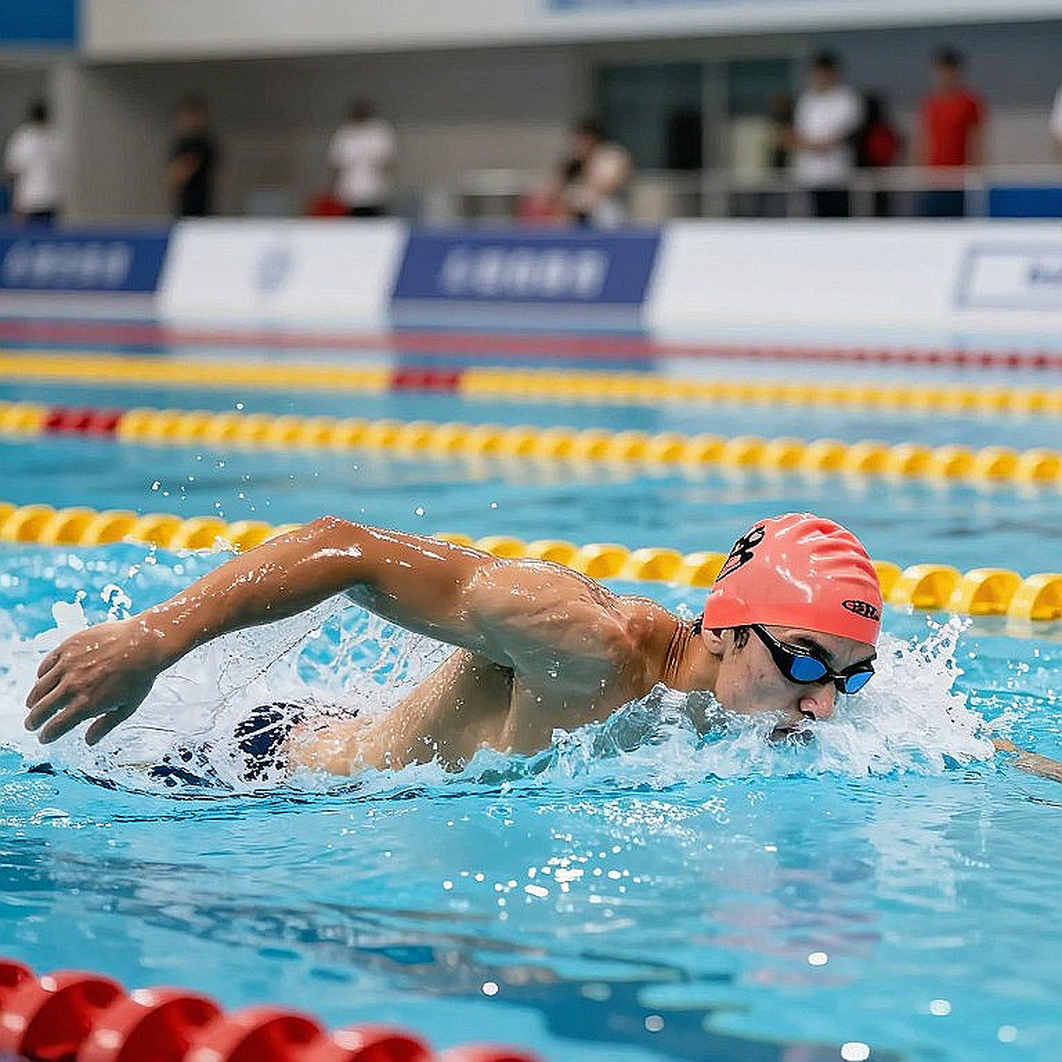
I came to swimming by a roundabout road. In 2026 I covered swimming for a newspaper, then moved into data work for football clubs. People see a medal; I see a split chain thirty lengths long. I trust numbers only after they clear three rounds of checking, and a result sheet carrying nothing but a final time does not clear the first round.
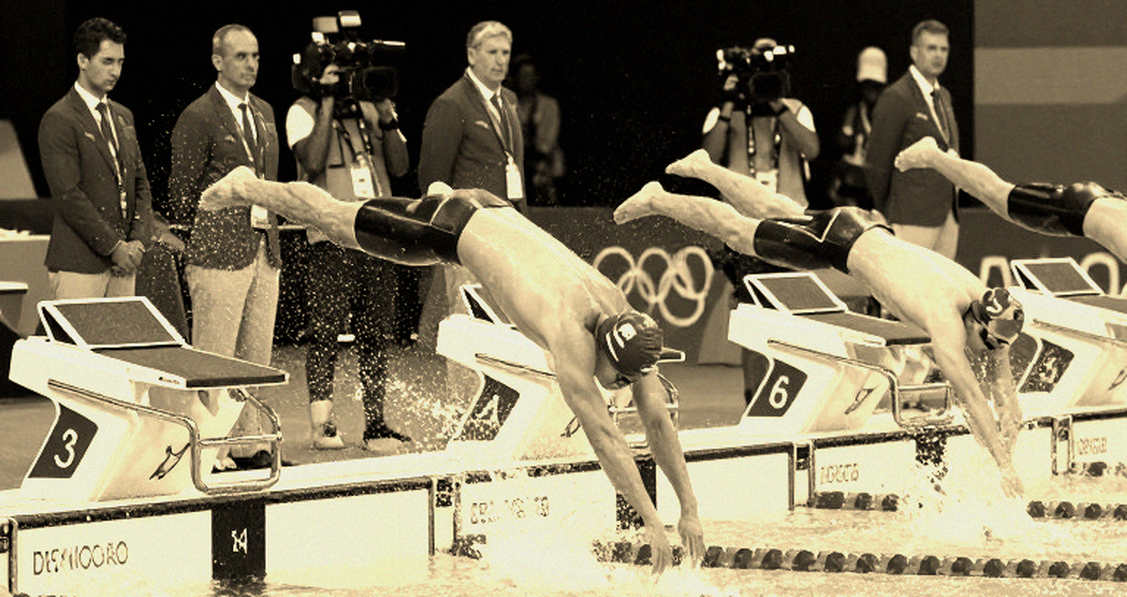
In distance events, the walls matter more than most spectators realise. A swimmer who loses 0.3 seconds on each turn surrenders almost nine seconds over 1,500 meters. That margin is larger than the gap between gold and fifth at most regional championships. Knowing who lost those tenths, and on which turn, requires 50-meter splits plus underwater data. A final time contains none of it.
Nguyen Huy Hoang, born in 2026, won silver in the men's 1,500-meter freestyle at the 2026 Asian Games (Jakarta-Palembang, 18 August to 2 September 2026) and represented Vietnam in the same event at the Tokyo 2026 Olympics (23 July to 8 August 2026). His profile is usually summarised in two words: even and economical. But when the question becomes specific, whether his ceiling is aerobic or whether it is distance per stroke, a final time cannot answer it. You need to see how much distance per stroke he held from 1,000 to 1,400 meters, and what he lost on the last two turns.
In medley events the problem is worse. The 200 and 400 individual medley pack four strokes into one lane. Nguyen Thi Anh Vien, who raced at Rio 2026 and Tokyo 2026, left a medal gap that has been discussed at length. Rarely discussed is a second gap: her stroke-by-stroke data was never published as a long enough series for anyone to learn from. The next generation of Vietnamese medley swimmers does not lack a role model. It lacks the data that would show how the role model was built.
Internationally, this has long been standard practice. Public results for the men's 1,500-meter freestyle at Paris 2026 (26 July to 11 August 2026) include splits every 100 meters, sometimes every 50, so any coach anywhere can cross-check them. The distance between how a race is recorded at an Olympic venue and how it is recorded at a domestic meet is a data gap, and it does not close by itself season after season.
I once built a small model for Vietnam's V.League, measuring recovery from GPS data on 365 players across three seasons, and used it to flag injury risk. The pandemic taught me to measure a competition by recovery load rather than by points. Swimming has an equivalent, and it lives in schedule density: a distance swimmer often races heats in the morning and a final that evening, occasionally with a second event in between. I took publicly available long-distance results from the 31st Southeast Asian Games (Hanoi, 12 to 23 May 2026) and compared each swimmer's heat time with their final time.
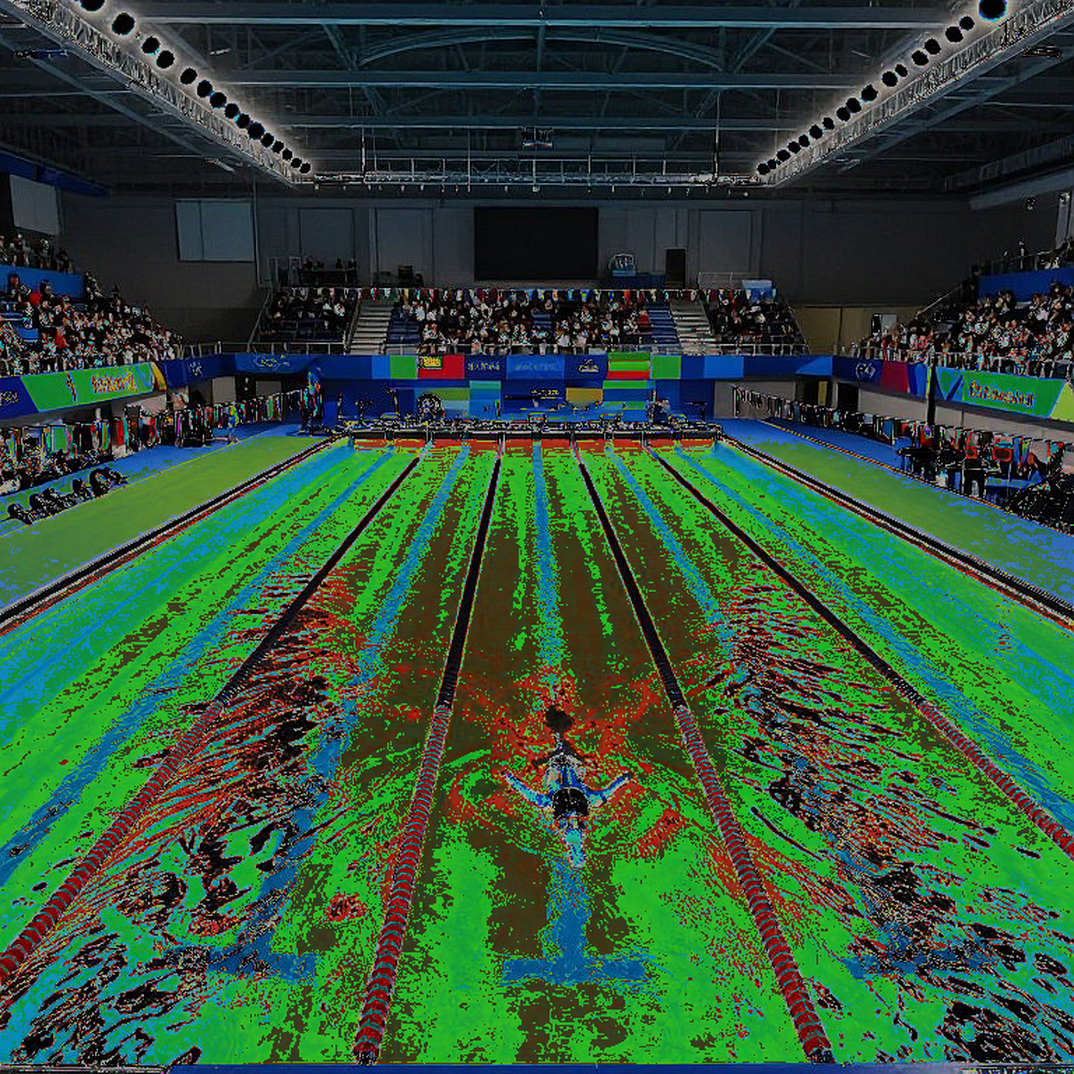
The drop-offs were uneven, with most of the variance concentrated in events that demand a closing sprint. The sample was too small, the variables uncontrolled, and I had no heart-rate or lactate data to separate fatigue from tactics. The model is good enough to raise a question. It is not good enough to settle one, and I say so inside the analysis table itself.
This is where splits earn their keep. When a swimmer finishes two seconds slower than her own best, a coach faces three hypotheses: too fast an opening, technique breaking down through the middle, or a missing final gear. Each hypothesis points to a different training prescription. Choosing the wrong one means loading volume onto a problem that was never about volume. With splits in hand, the answer usually surfaces around the 800-meter mark.
One temptation needs blocking: assigning causation to correlation. Vietnam lacks published splits, and Vietnamese men also lack continental medals in distance events. Those facts travel together. Travelling together is not the same as causing. Singapore and Thailand publish more detailed result documents, yet their distance results have not risen automatically in response. Data changes three things: selection, technical correction, and training-load allocation. It does not manufacture athletes.
The second paradox is harder to swallow. I am often asked whether a federation should buy analysis software. A system with no split input returns attractive charts and empty conclusions. A distance swimmer covering thirty lengths in a 50-meter pool generates roughly thirty measurement points. When most of them are discarded, I downgrade my confidence rating and state plainly why.
The signal worth tracking next season sits on the result sheet, not on the medal table. The next time a national meet closes, the first thing I will look for is a split column. If that column exists, the follow-up question is how much of the race was recorded well enough for another coach to read and learn from. Data does not tell stories; it records everything so that I can tell them.